
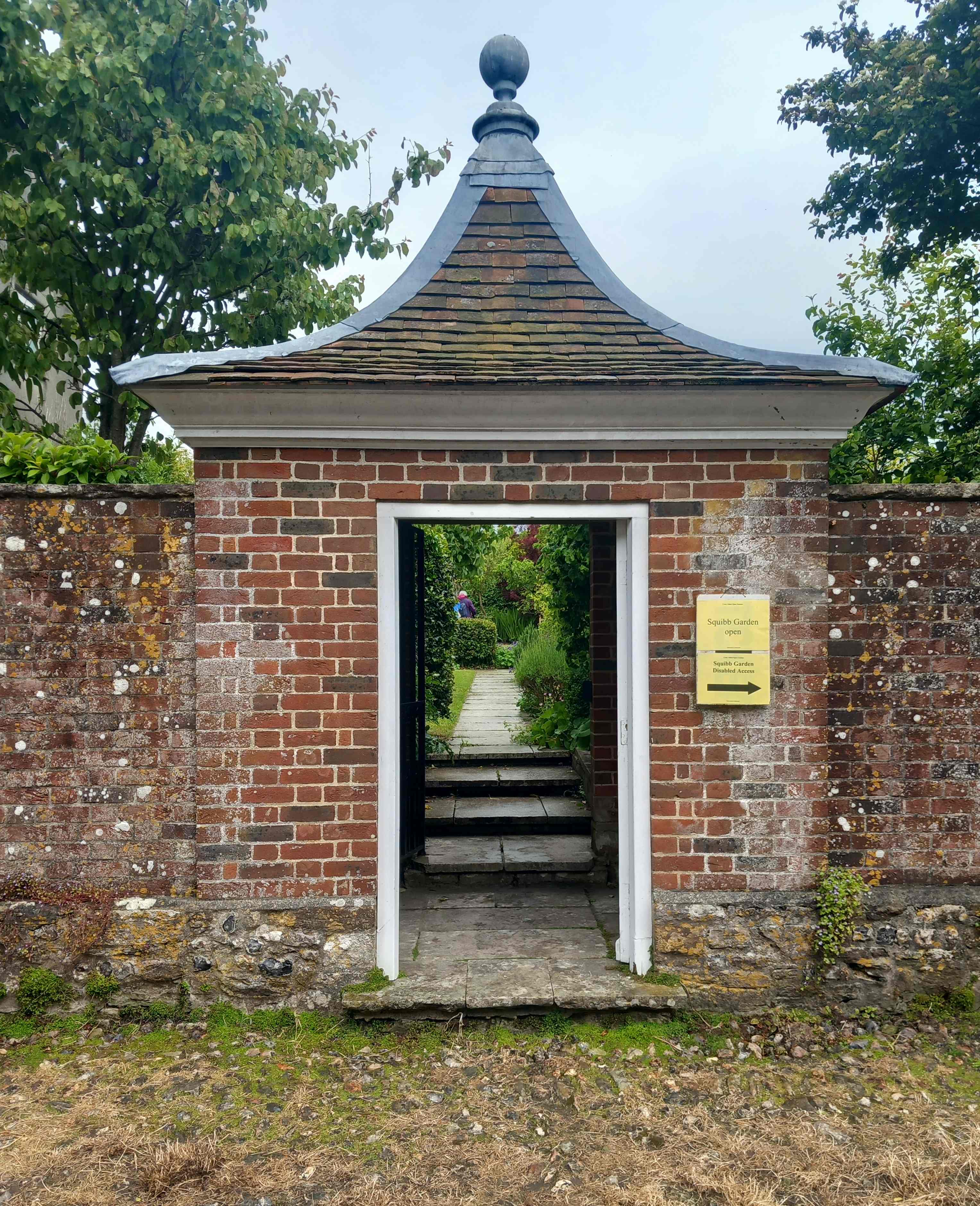
Entrance to the Squibb Garden next to St Mary’s Church, Cerne Abbas. This garden is maintained by volunteers for the benefit of the village community.
One of the pleasures of summer in the UK is visiting gardens that open to raise funds for charity. For a nominal sum we are admitted to places usually closed to the public, where we can examine planting schemes and gain inspiration for our own gardens. Many open as part of the National Garden Scheme, while others have a long tradition of independence, relying on posters in shop windows, village halls and social media to spread the word locally.
Now in its forty eighth year, Cerne Abbas Open Gardens is one such independent opening. On the third weekend in June, green fingered residents in this historic village issue an invitation to visit their gardens, with teas served at the vicarage garden in Back Lane and a plant stall on Long Street. This year a total of thirty three gardens, both large and small, opened over the weekend – a feast indeed for the garden visitor.
Cerne Abbas is situated in the chalk downlands of Dorset a few miles to the north of Dorchester. Famous for the mysterious Cerne Abbas Giant, carved into the hillside and now managed by the National Trust, it’s also home to Cerne Abbey, a Benedictine monastery founded in 987, and from which the village takes its name. Beautifully clear chalk streams fed by the river Cerne run through some of its streets and gardens.
Below, I share impressions of this wonderful event. Despite being an avid garden enthusiast, I was unequal to the challenge of seeing all twenty nine gardens open on the Saturday afternoon when we visited, but all those we saw were a delight.

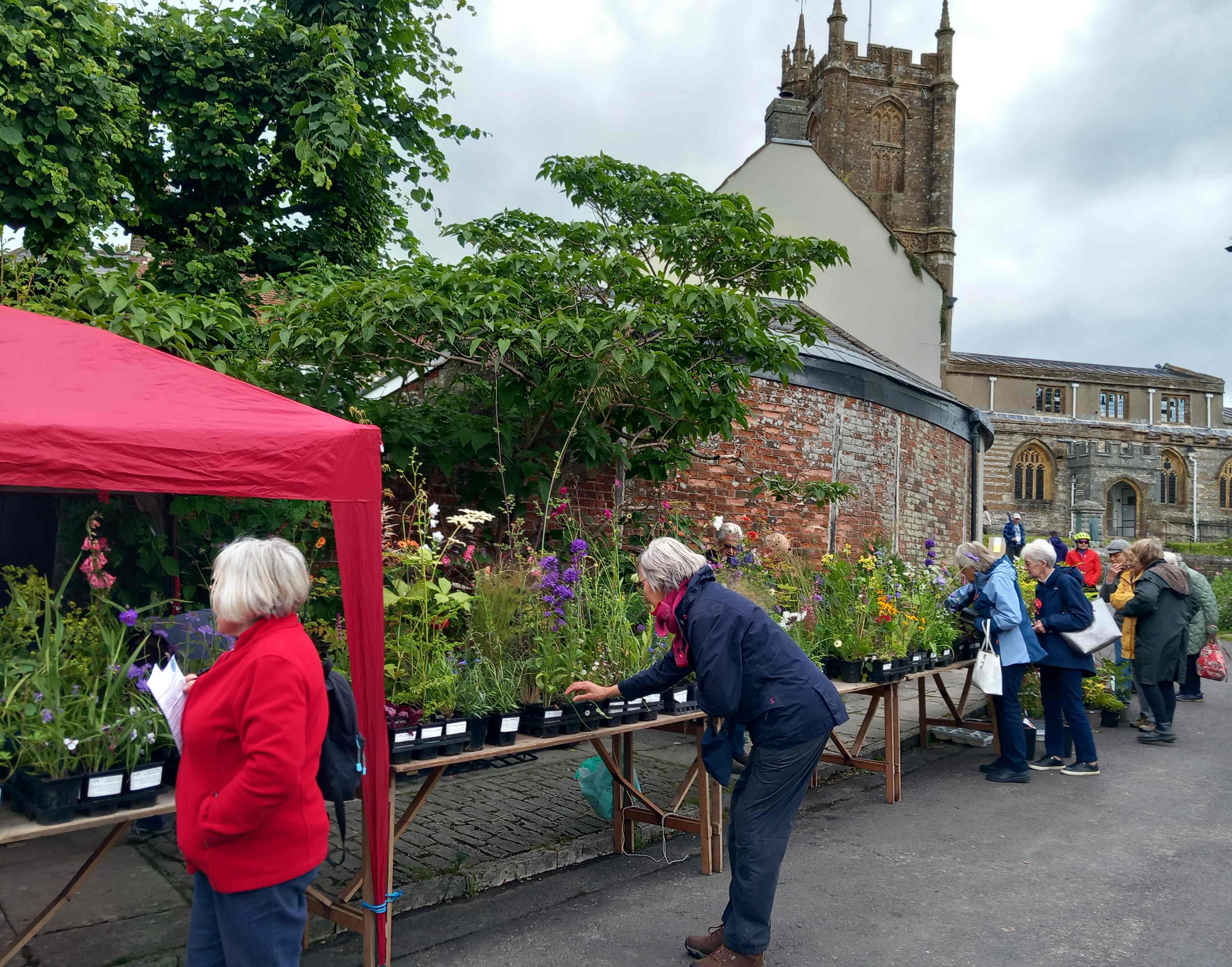
Plant stall on Long Street packed with tempting perennials
On arrival we purchased tickets and were provided with a map of the open gardens, and the all important tea venue, with further information about each garden listed on the Cerne Abbas Open Gardens website.
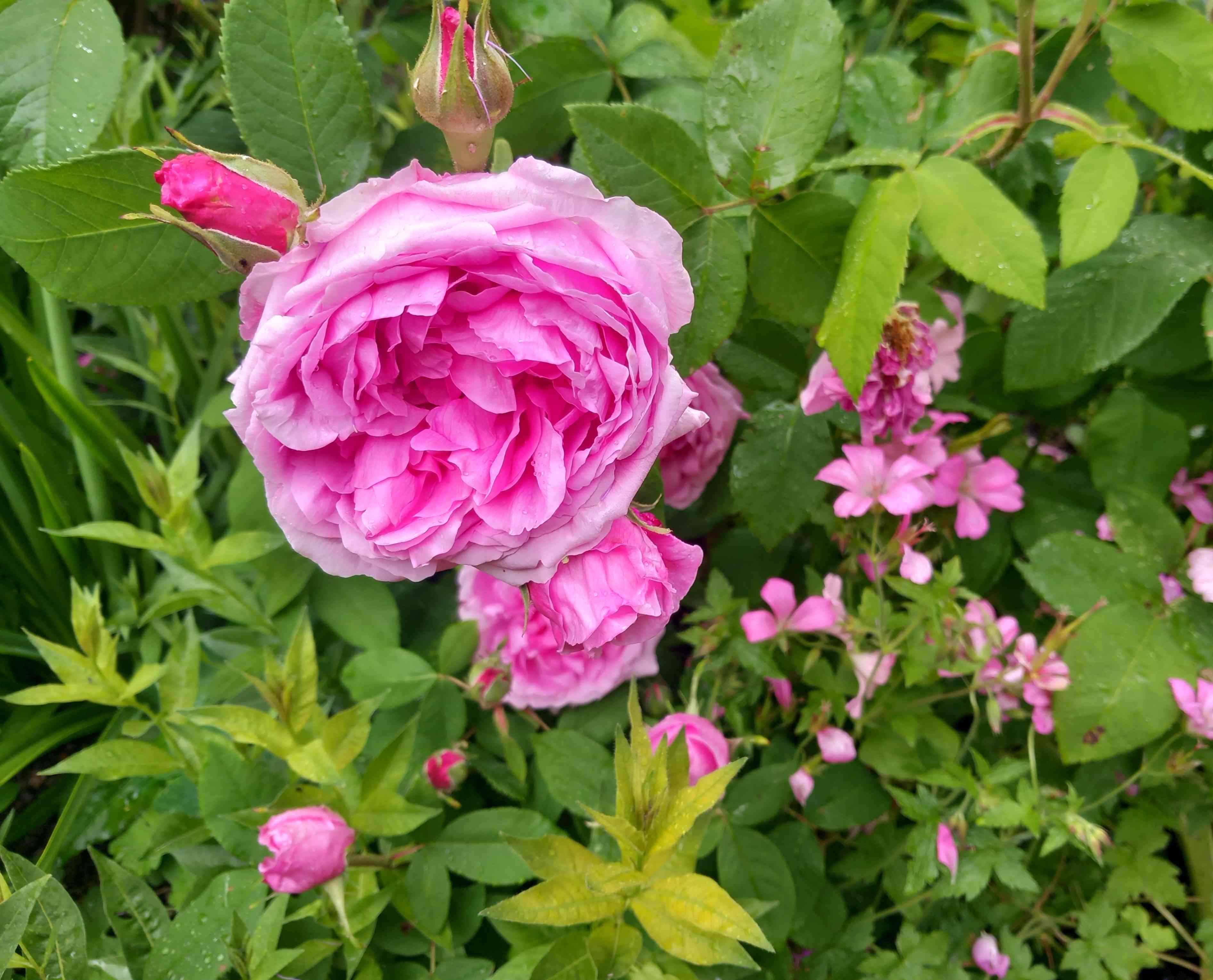
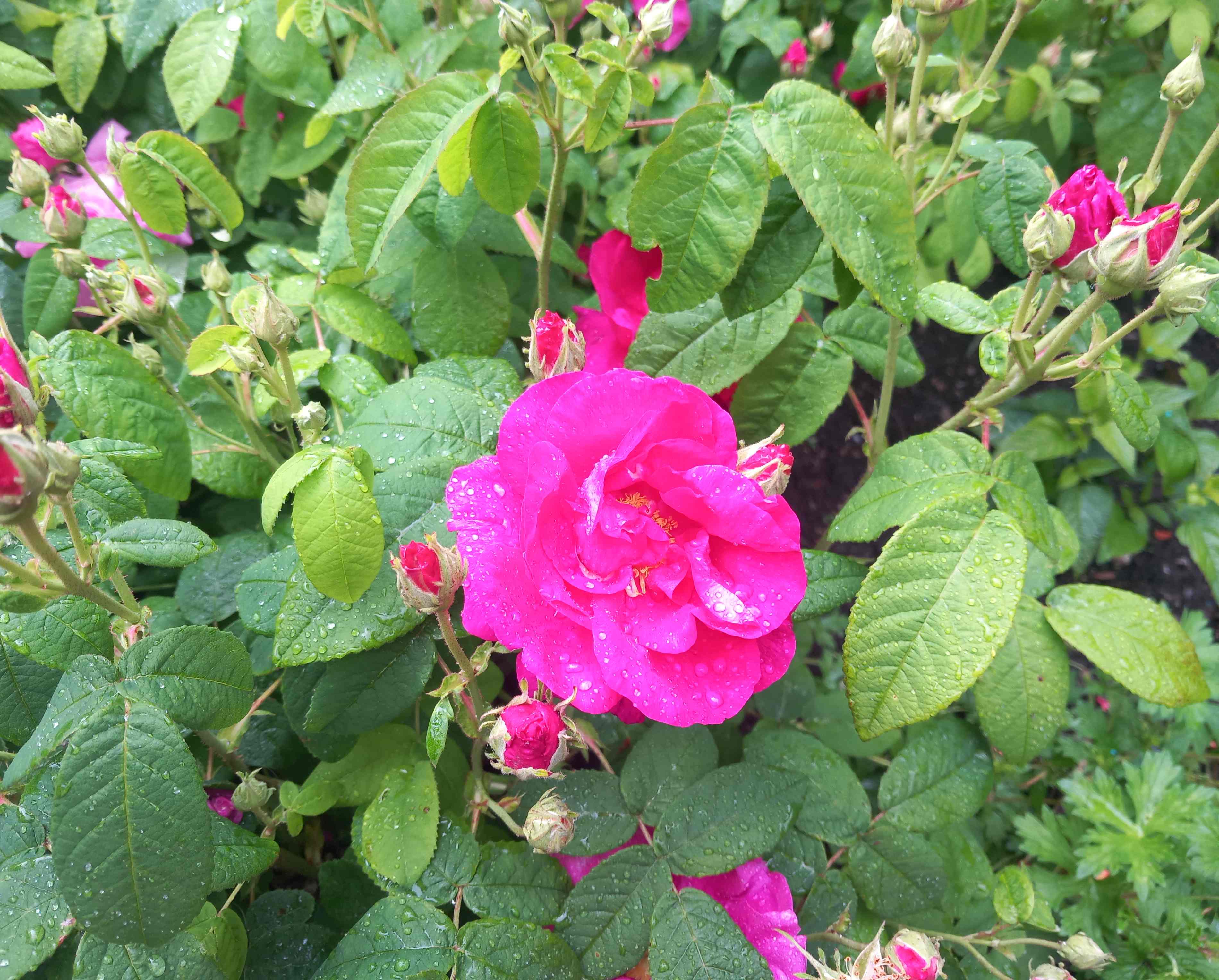
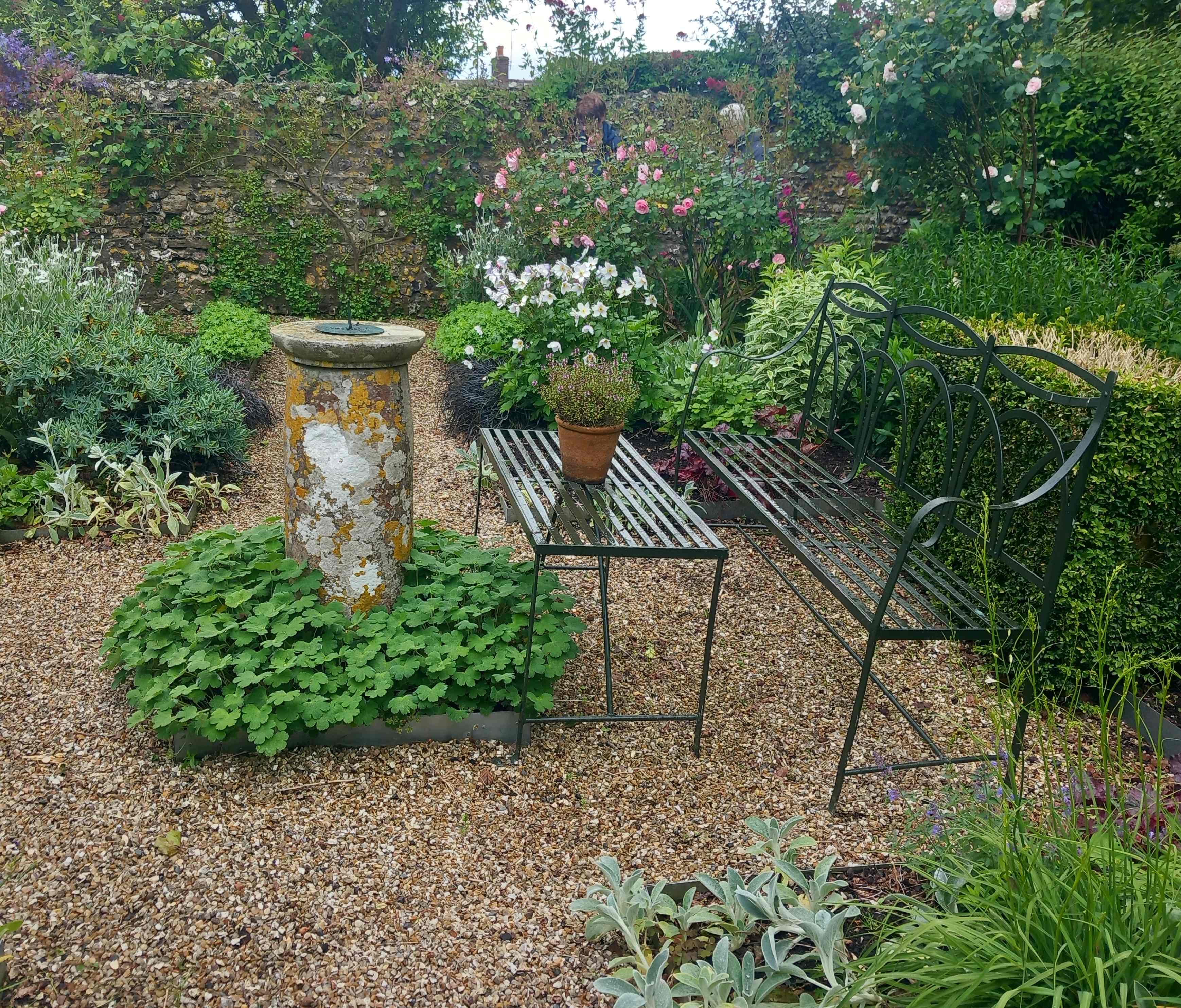
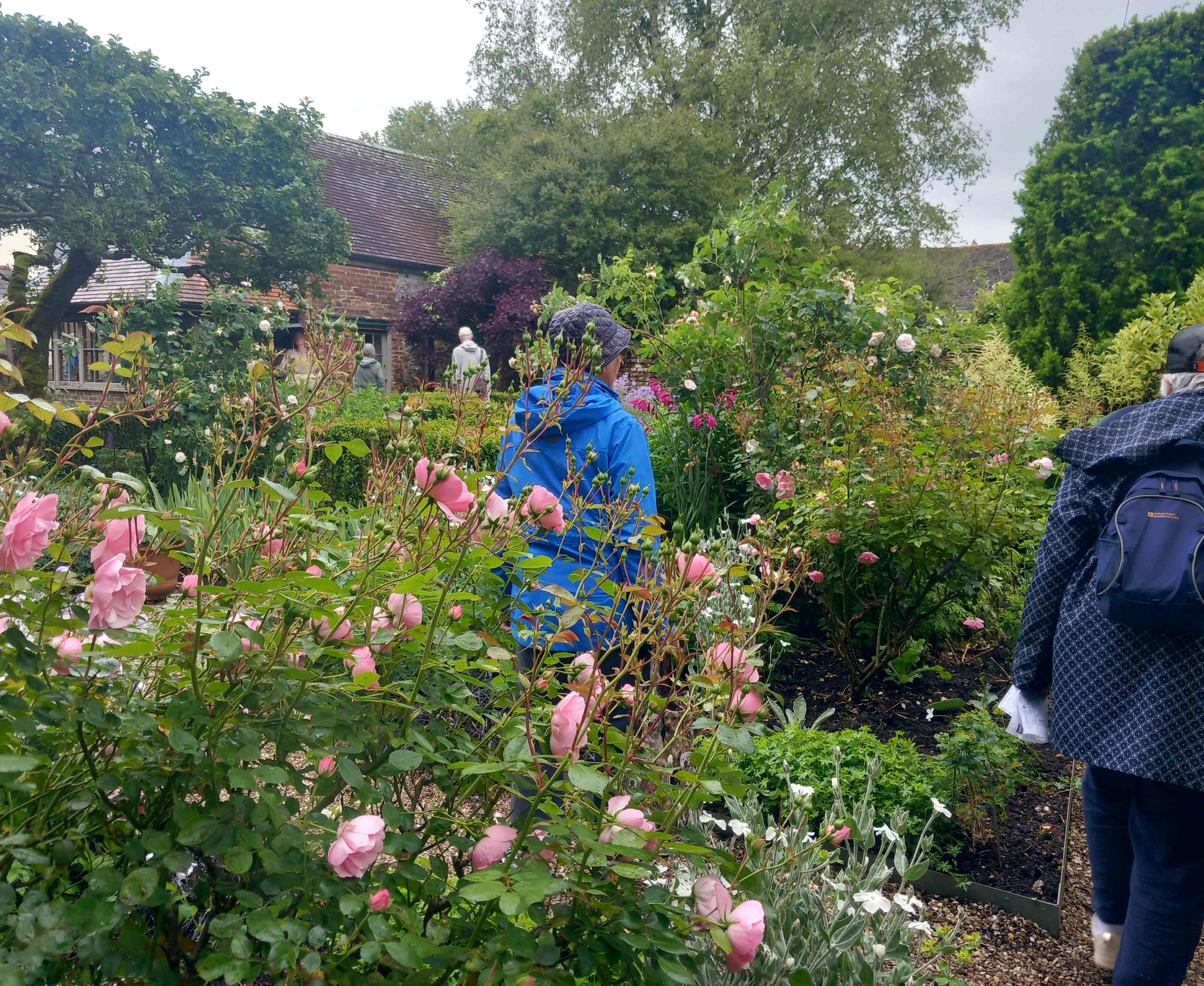
Deciding to start our journey in Abbey Street, we discovered the villagers’ love of roses, and how these plants thrive here in the local soil. At Barnwells the gardens behind the house are unexpectedly extensive. According to the owners, they cover approximately one third of an acre, and were designed by the artist Joseph Benwell Clark when he was a resident here in the 1920s. Using hedges of various heights, the space has been skillfully divided into rooms, the English garden style popularised by Lawrence Johnson at Hidcote and Harold and Vita Sackville West at Sissinghurst in the early part of the 20th century.
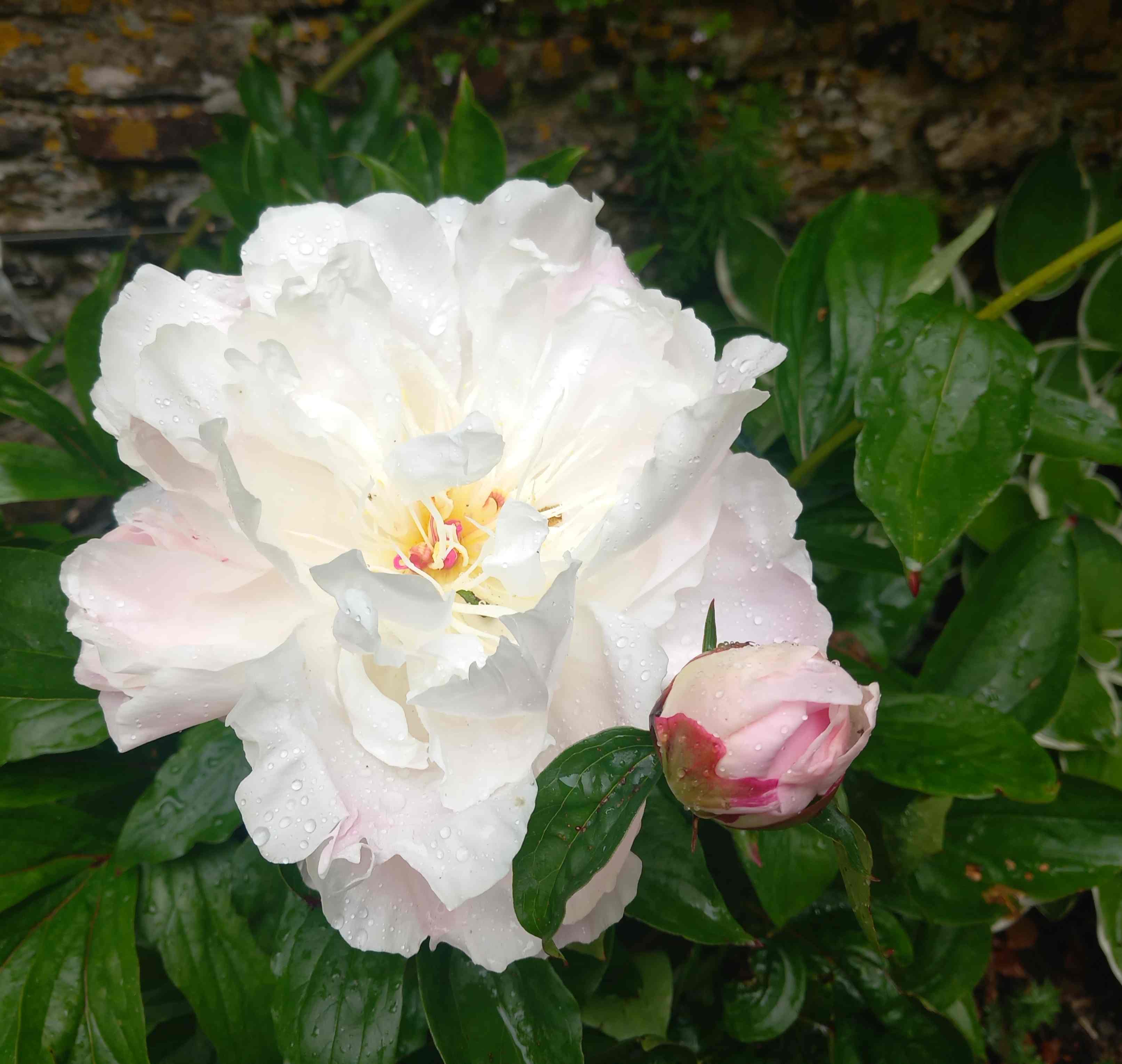
The current owners have preserved the structural bones of Clark’s layout, and although the planting has evolved over time, the garden retains the distinctive character of the age when it was created. The planting in each section has been expertly chosen and maintained, and never feels regimented. Directly behind the house are borders generously planted with heritage roses and perennials.
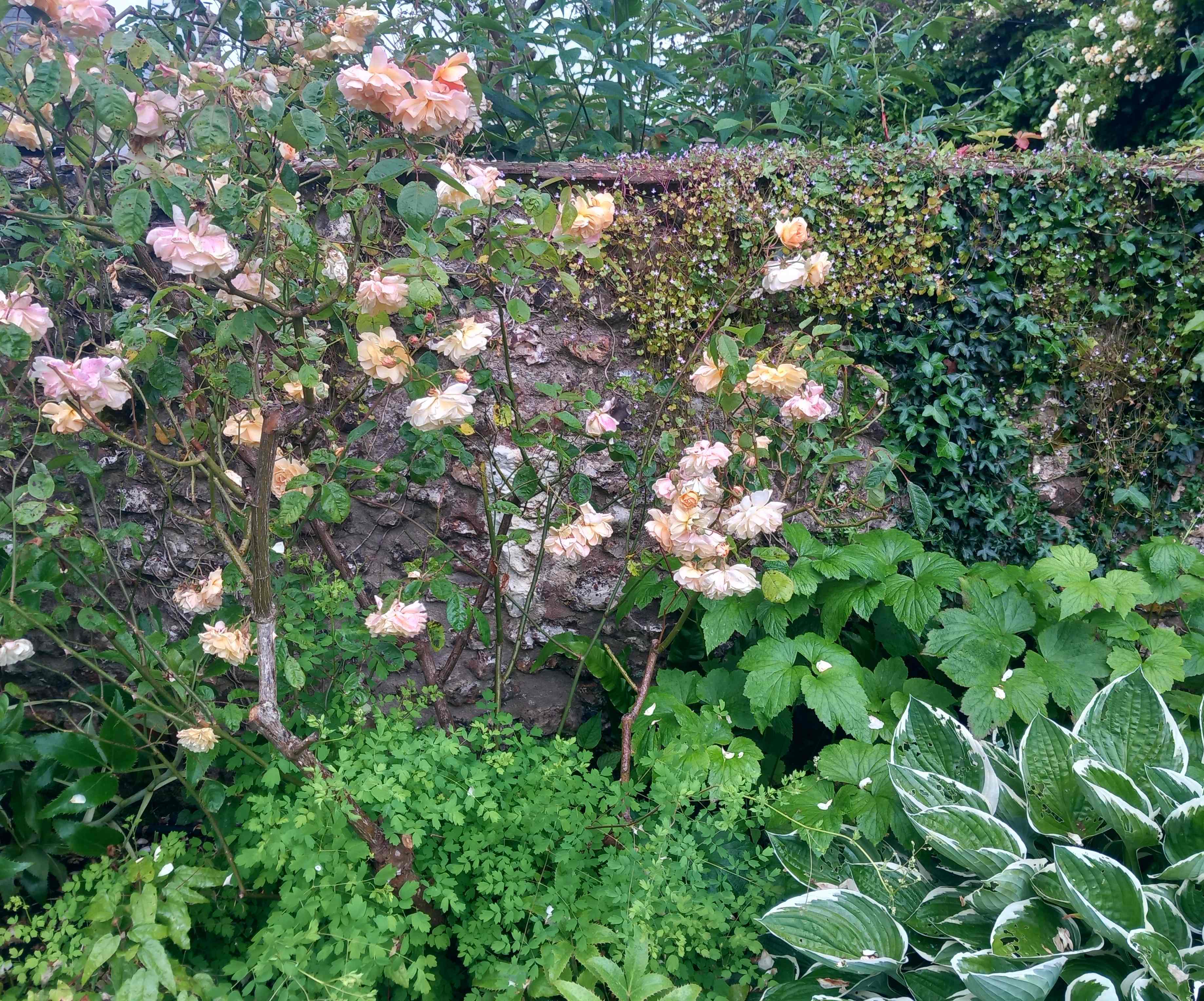
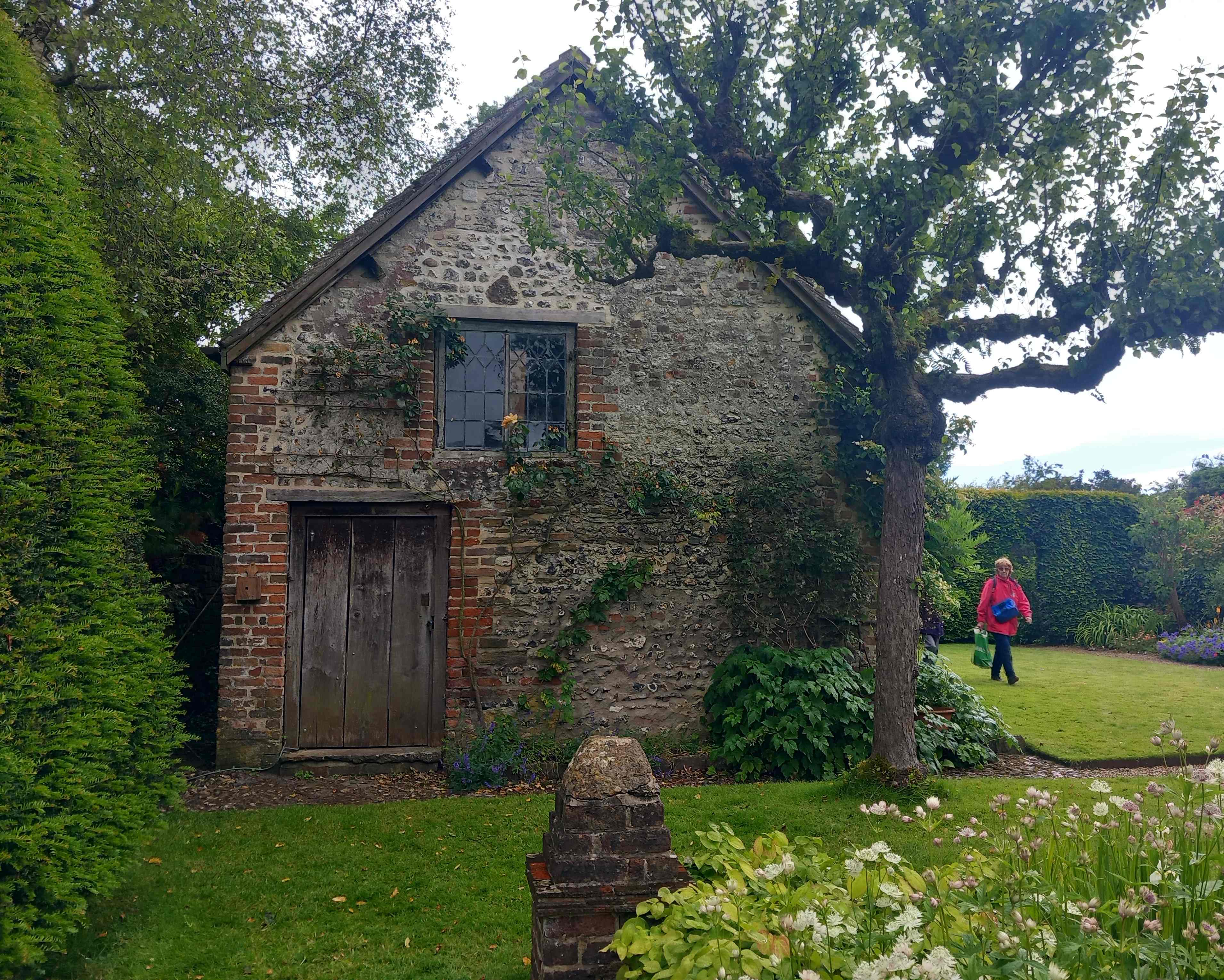
Flint knapped wall at Barnwells in Abbey Street. Many of the gardens in Cerne Abbas have garden walls like this one.
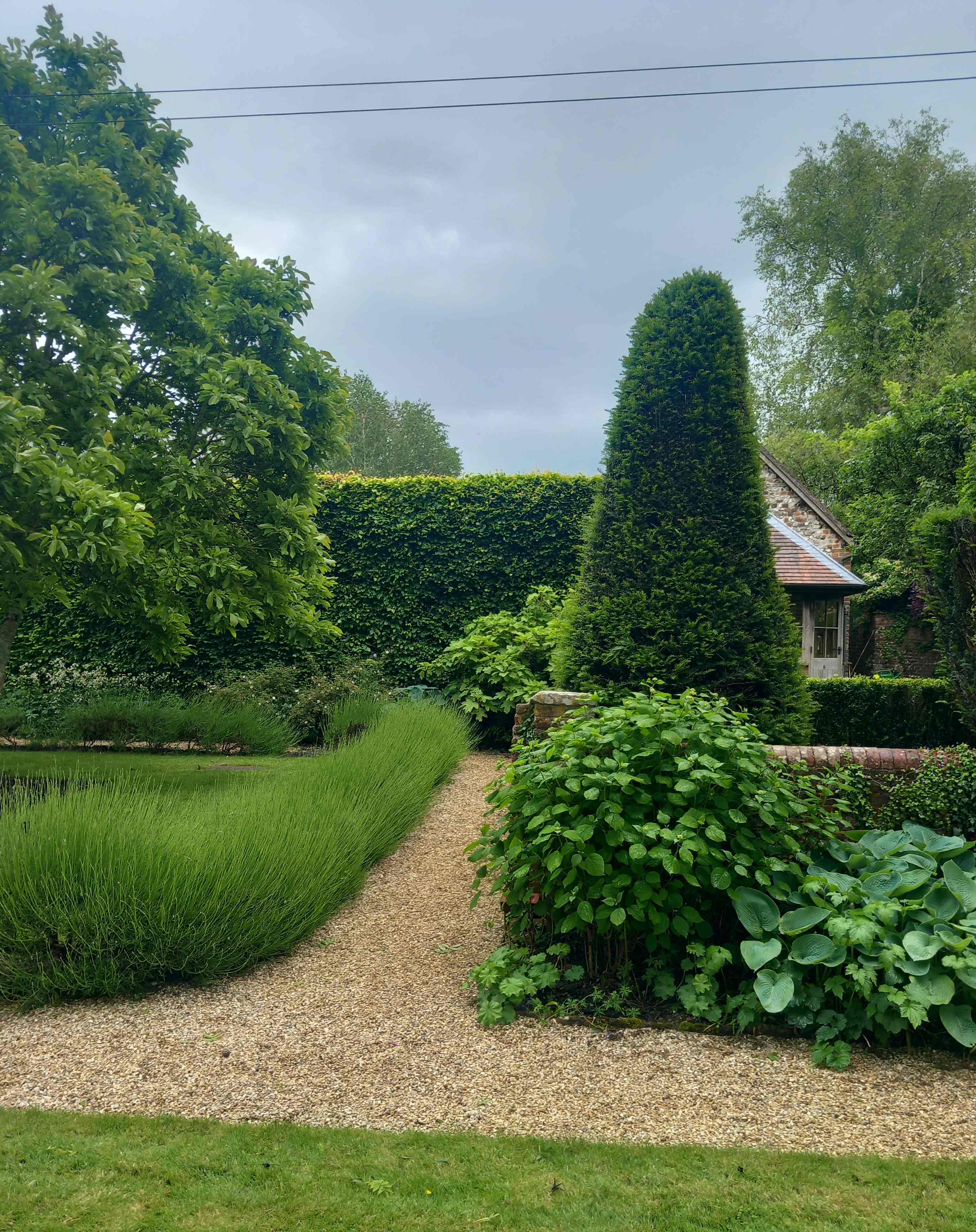
Topiary and lavender hedge
Passing through an opening in a tall beech hedge, gravel paths lead past the spreading canopy of a Magnolia soulangeana to an area enclosed by a box hedge and planted with flowers and roses. This was formerly the vegetable patch, until the 1980s. Beyond this is a knot garden with herbs, and topiary frames a view of St Mary’s church.
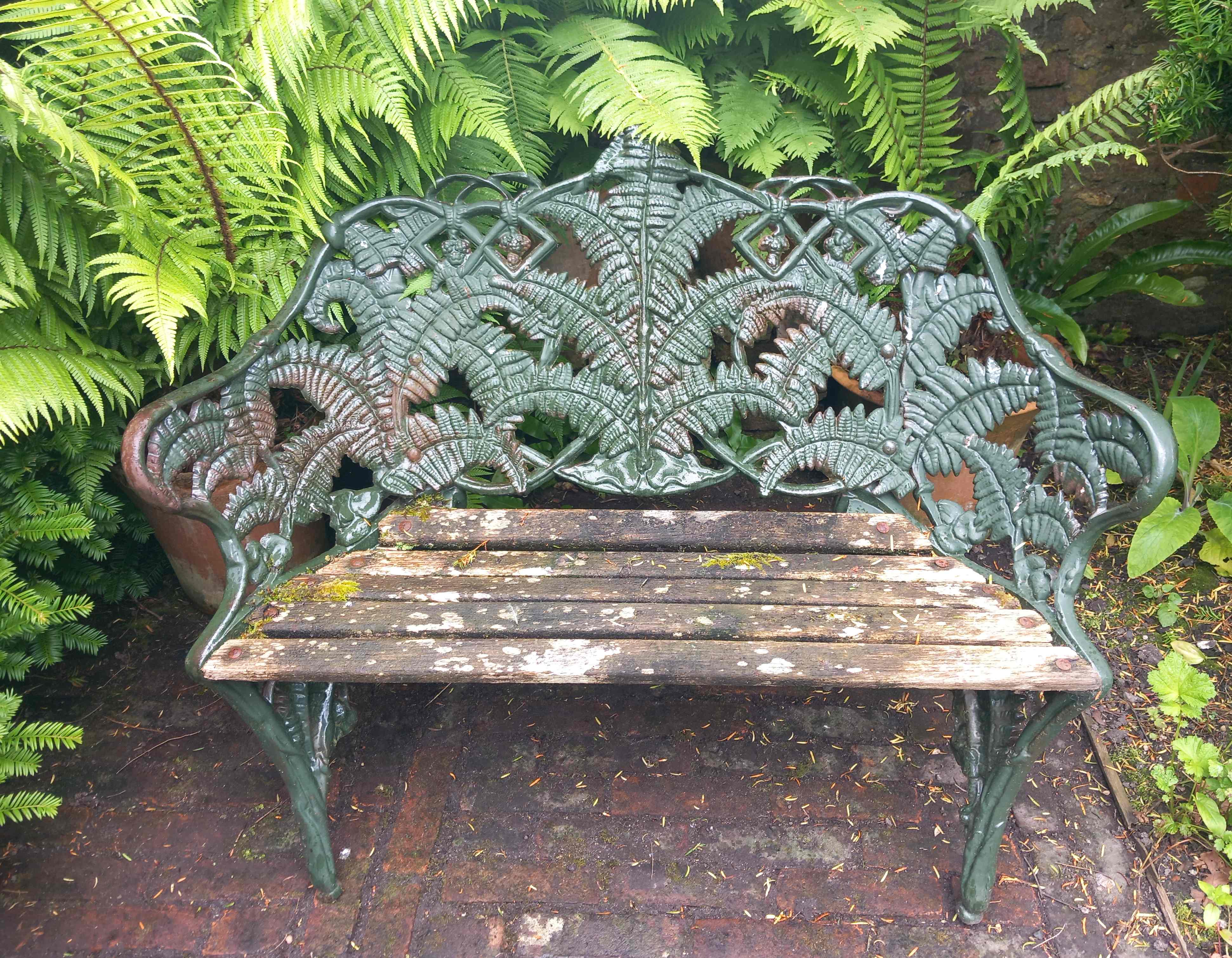
Coalbrookdale garden bench
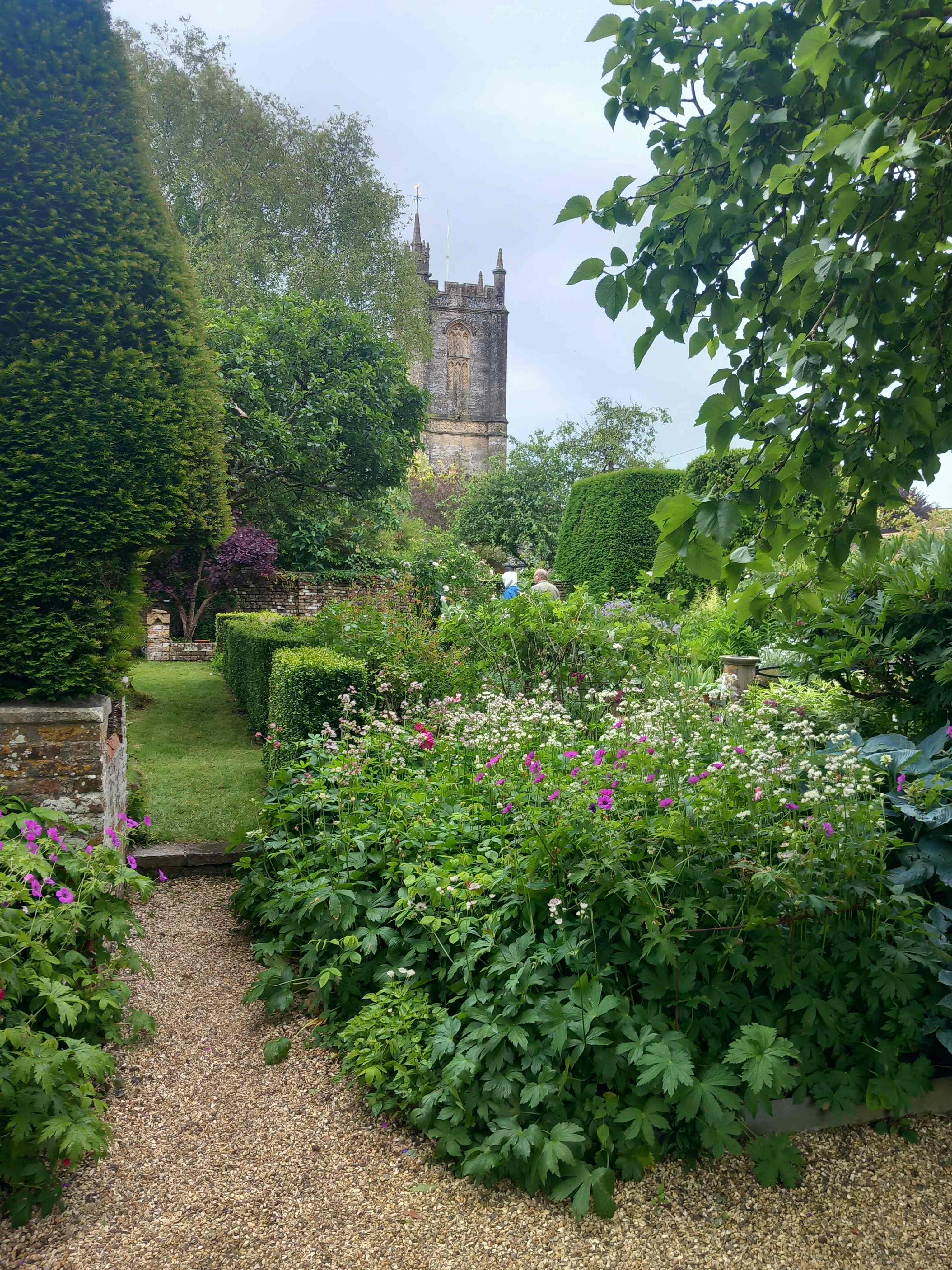
Garden on Abbey Street with views of St Mary’s Church
Behind Middle House on Long Street lies a garden belonging to Patricia Vale, a long time resident of this village. A intensely peaceful place, this abundant garden slopes upwards from the house towards Back Lane, its narrow paths leading through beds of roses and other cottage garden favourites, beneath apple trees, and arriving finally at a vegetable and fruit garden. According to Patricia, the garden layout has been largely unchanged for a century and she remembers how the previous owners, Mr and Mrs Thorne, grew vegetables and flowers for the church.
Last year Patricia was interviewed for the Cerne Historical Society Magazine on the occasion of her one hundredth birthday. Recounting her remarkable life, serving with the RAF in World War II and afterwards working as a teacher, she speaks about the ongoing importance of the garden to her today. Sadly, the weather wasn’t warm enough for Patricia to be outside, but her friends told us she still works in the garden, assisted by her gardener and family.
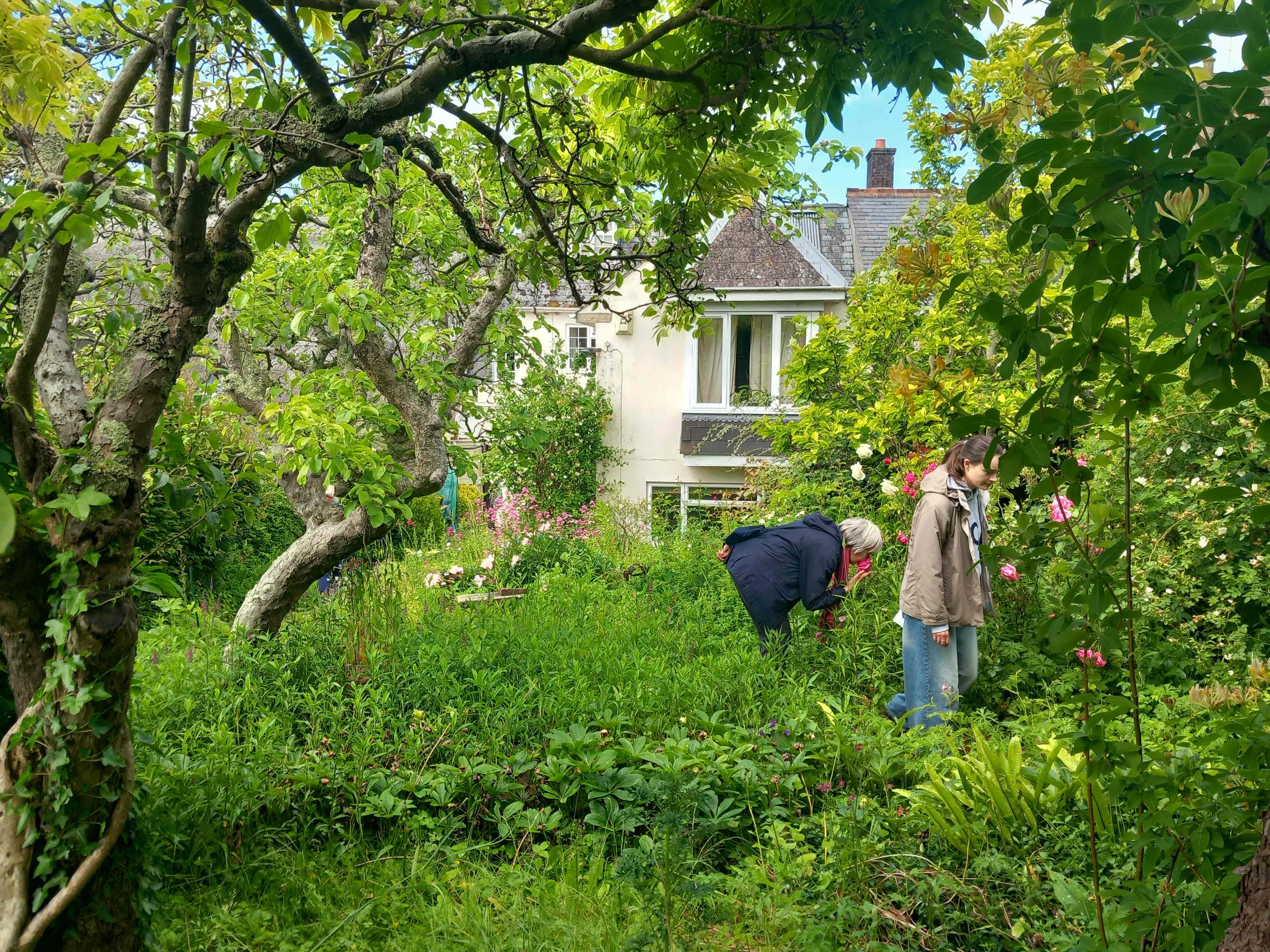
Patricia Vale’s garden, Long Street
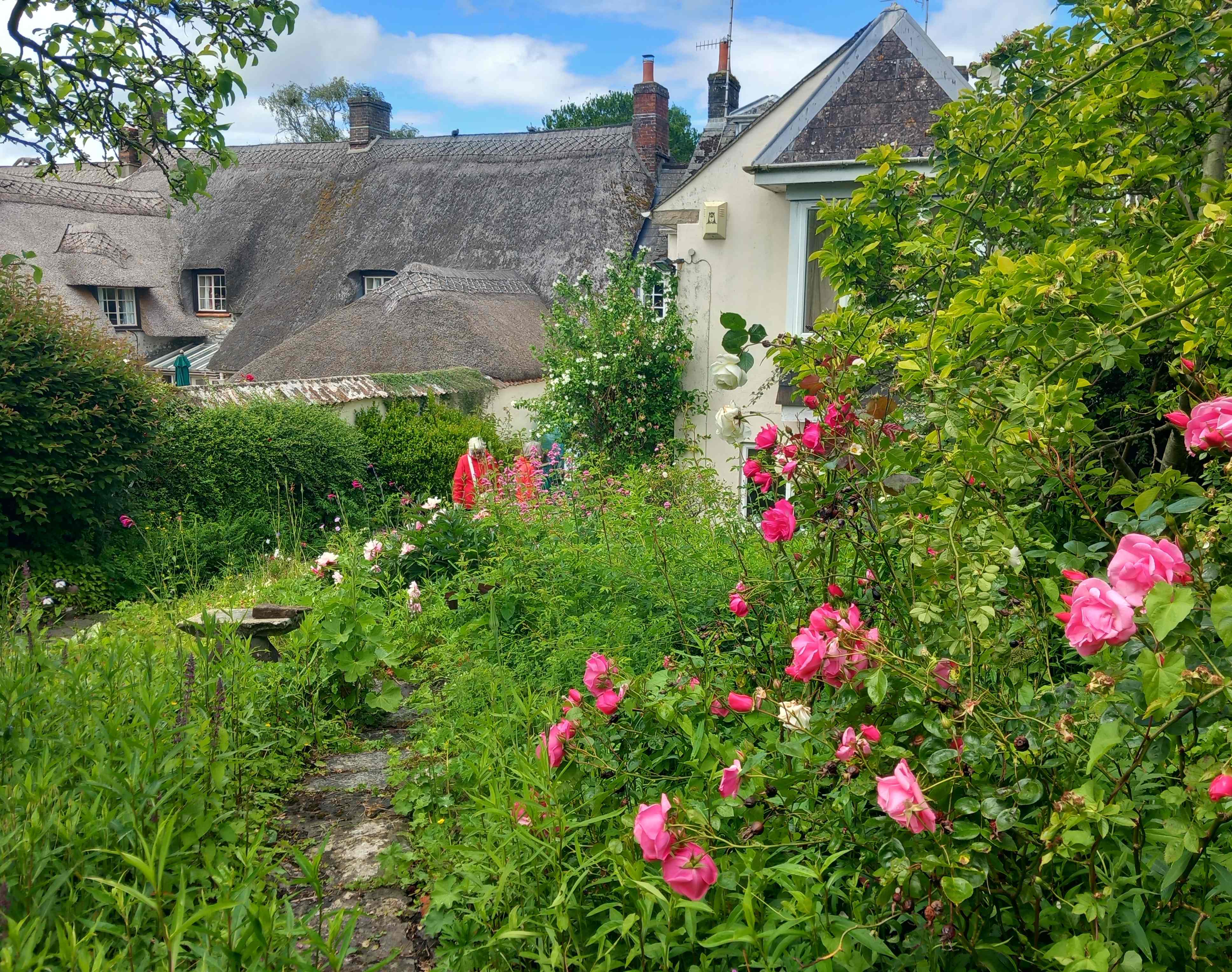
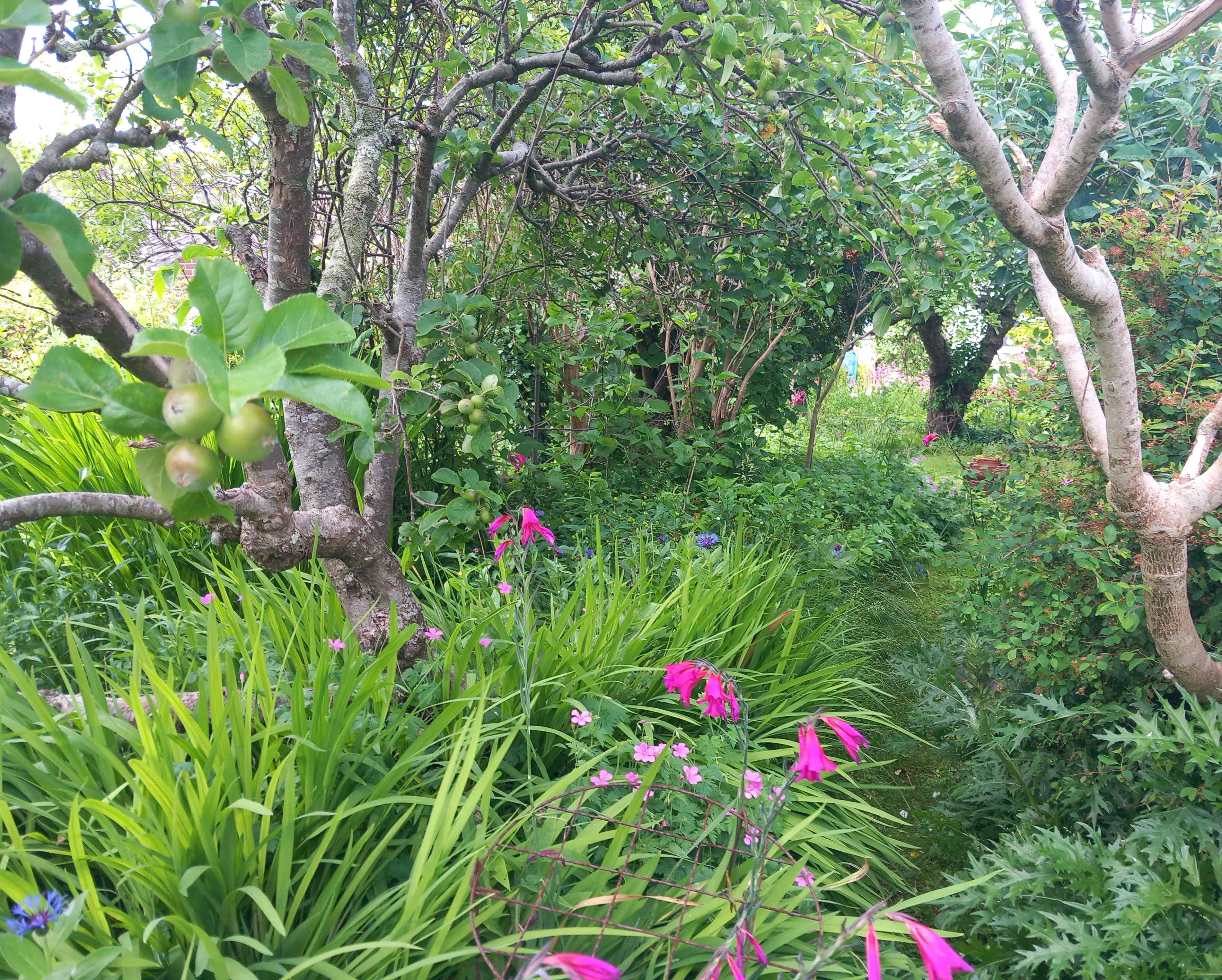
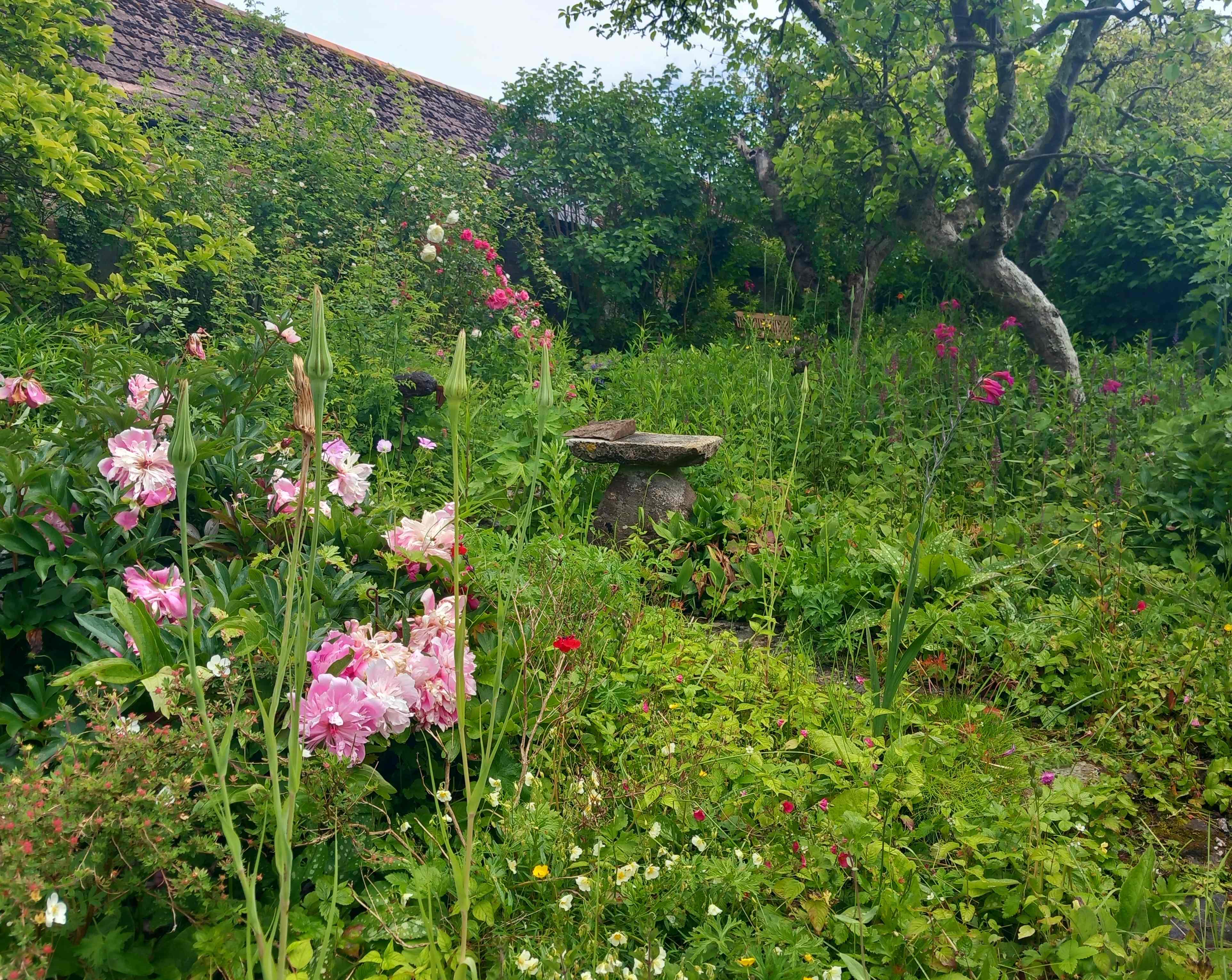
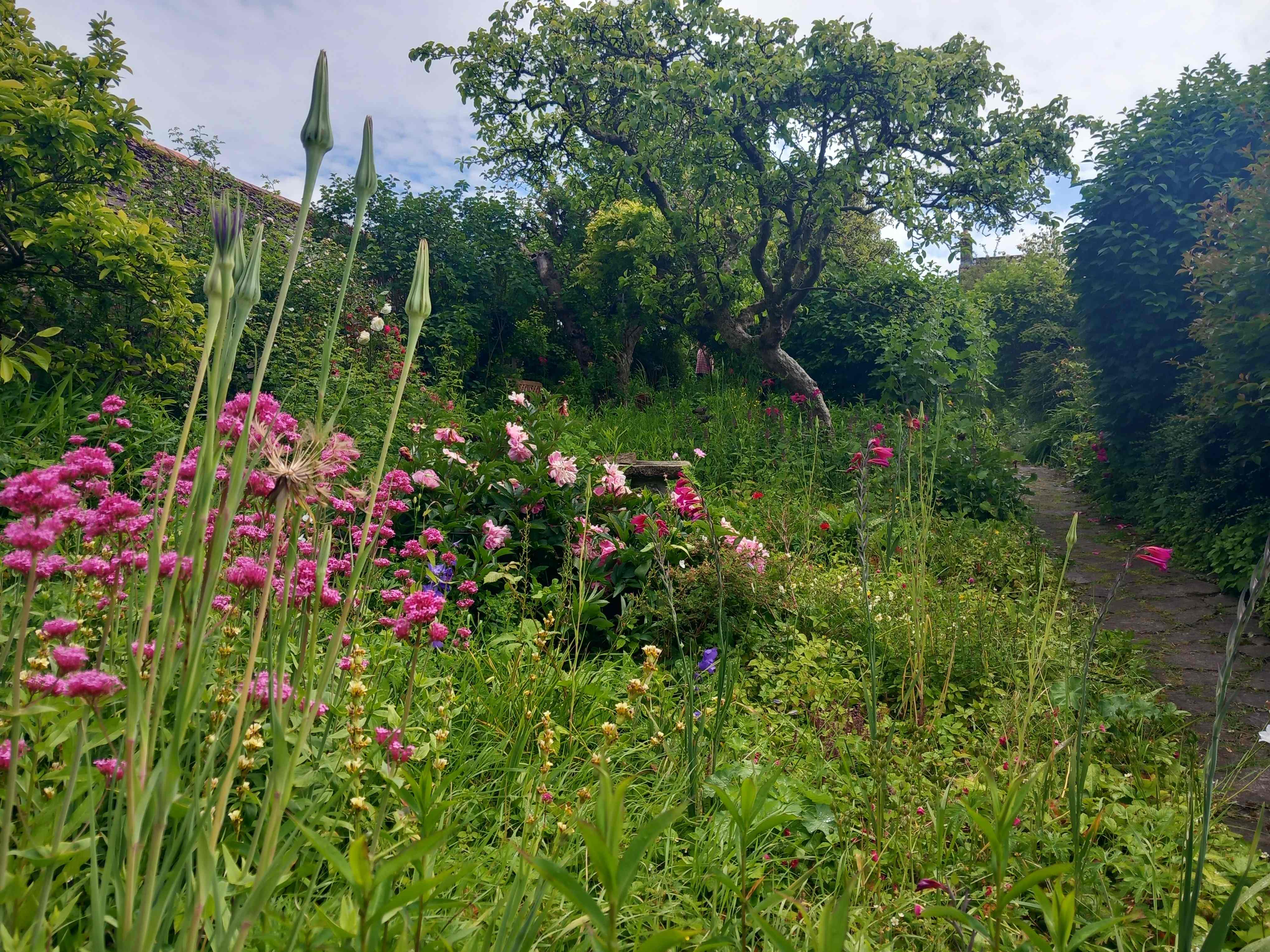
After a restorative cup of tea and excellent fruit scones at the vicarage we passed an open garden notice on the gate to Barton Farm. At the end of this ordinary looking driveway we were astonished to discover a large medieval tithe barn, constructed by monks in the 14th century and now partly converted into a private residence.
With its ancient walls clothed with climbing roses, honeysuckle and self-seeded white centranthus, the loose, relaxed planting style softens the outline of this vast building, making its presence less austere. Behind the barn, through a pale green painted doorway, lies the courtyard garden, where this planting style is continued with more roses and borders of geranium, herbs and the Mexican daisy, Erigeron karvinskianus. Full of atmosphere, this is a magical place.
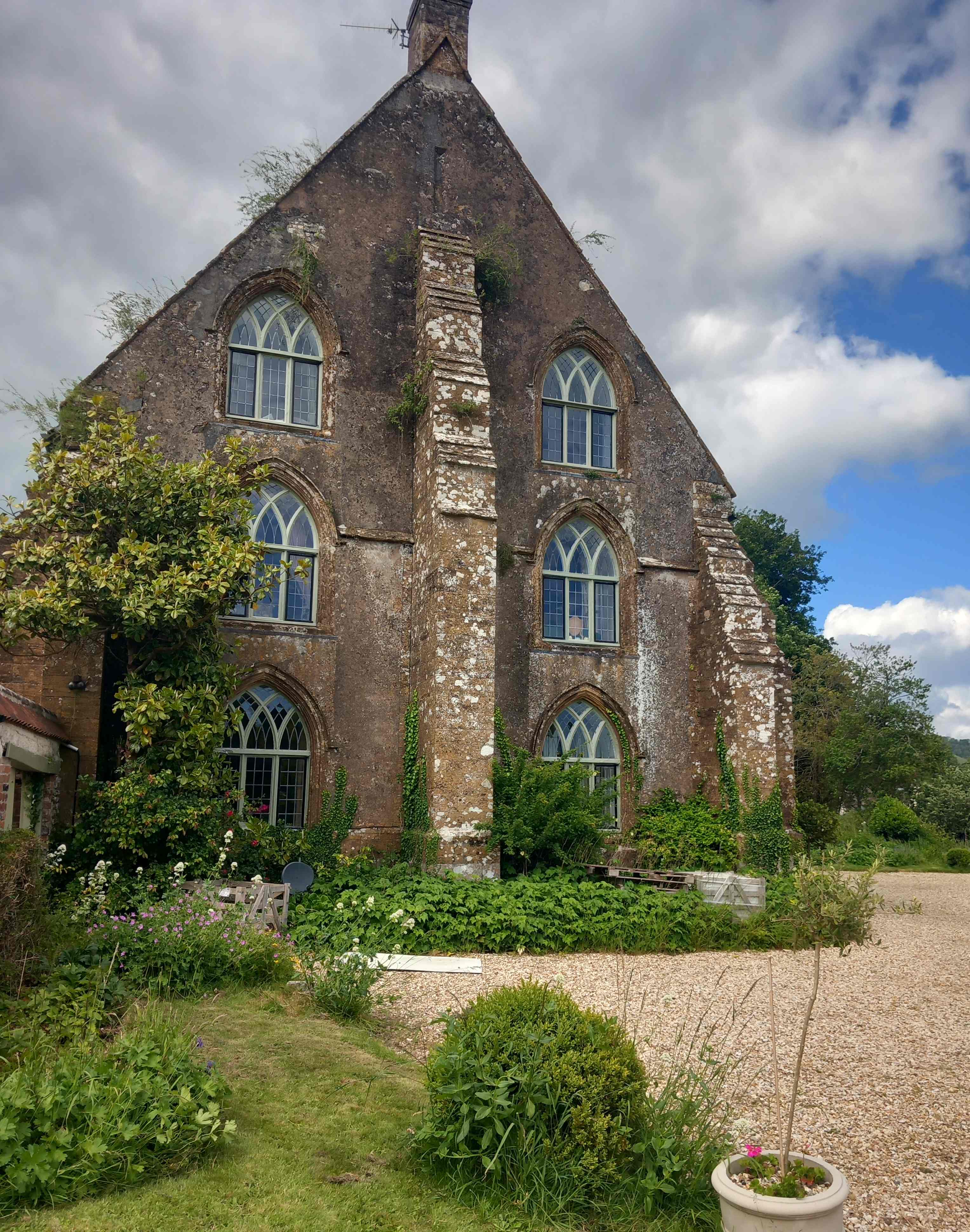
The Tithe Barn at Barton Farm, Cerne Abbas
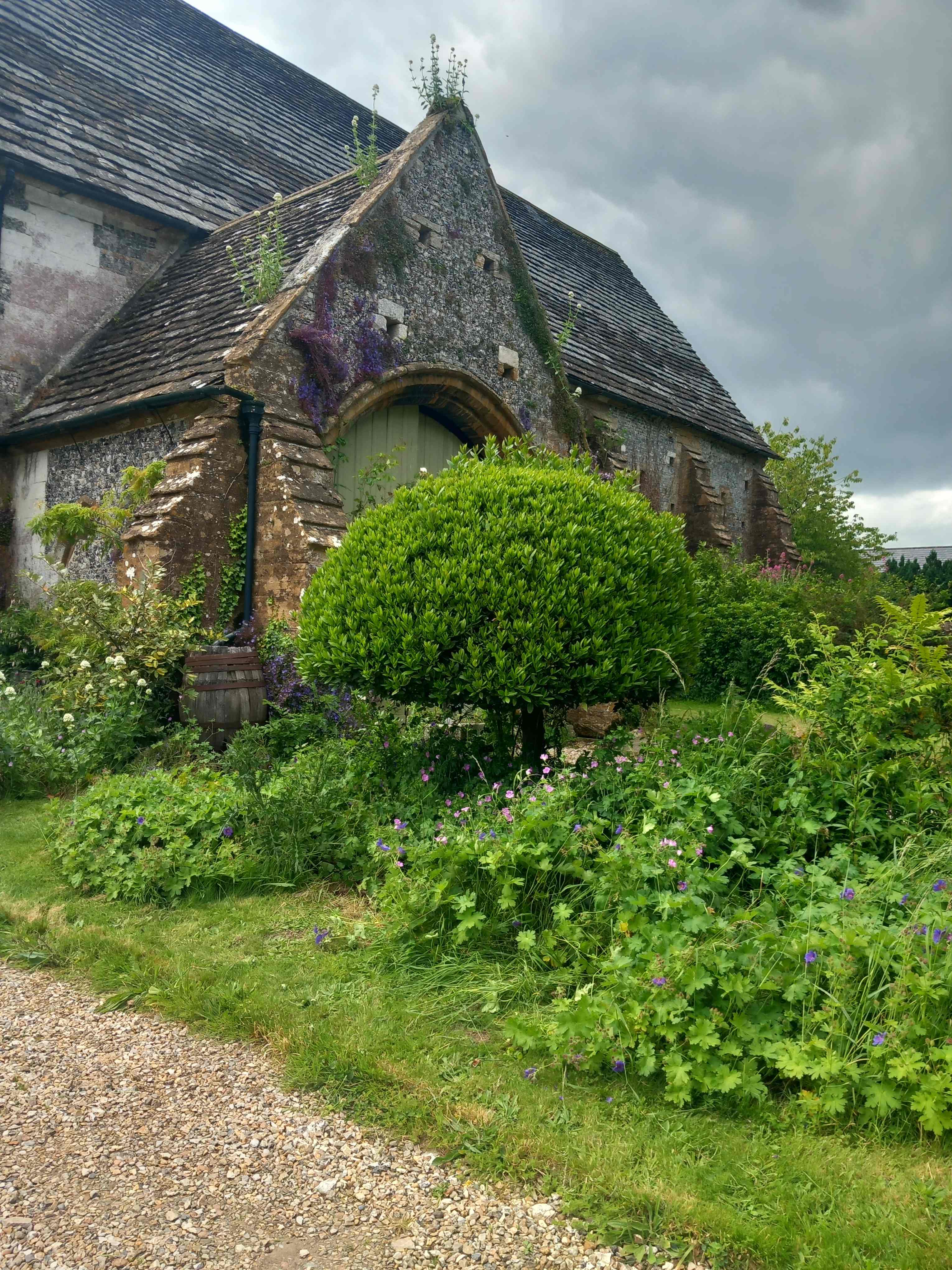
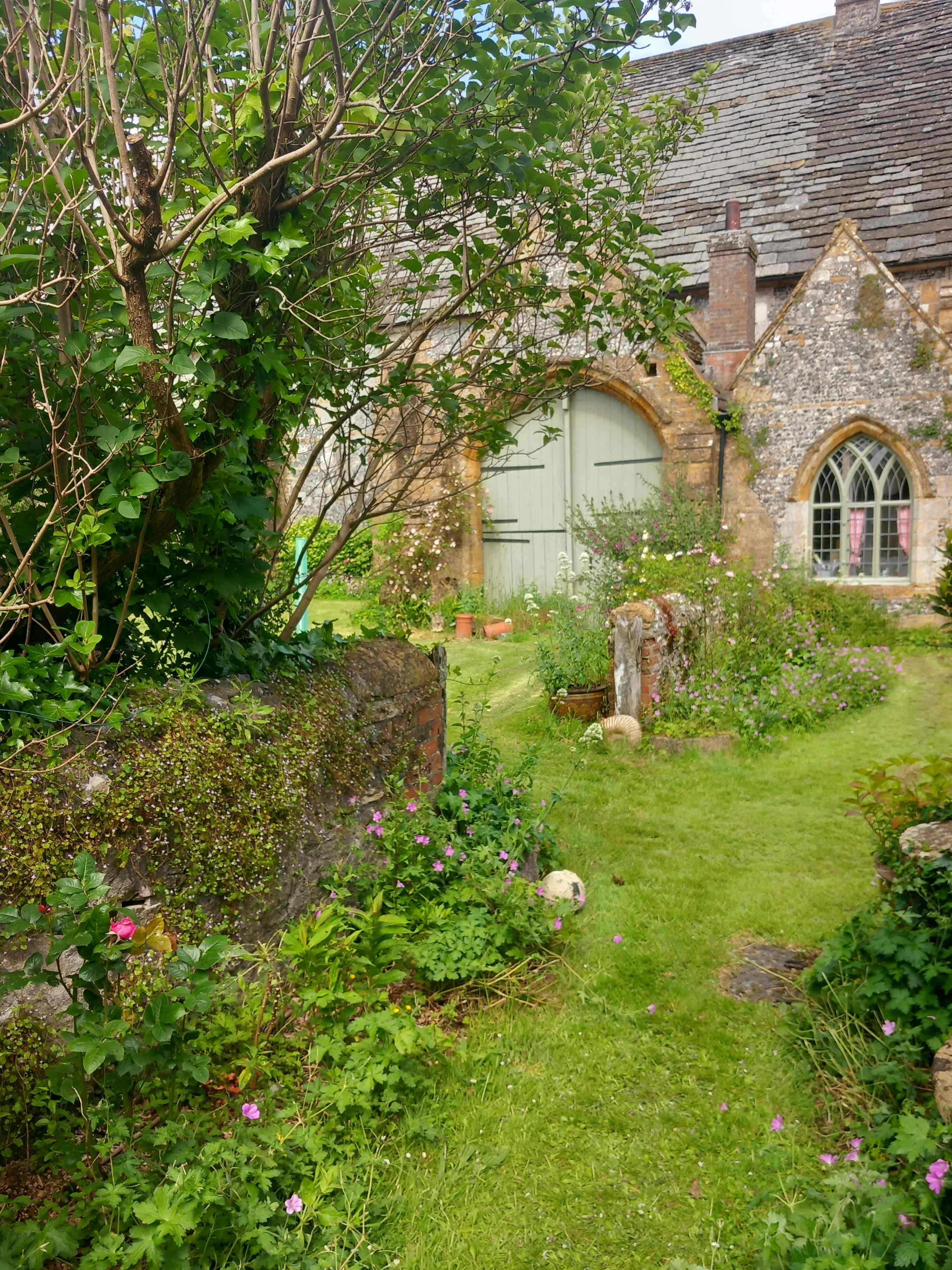
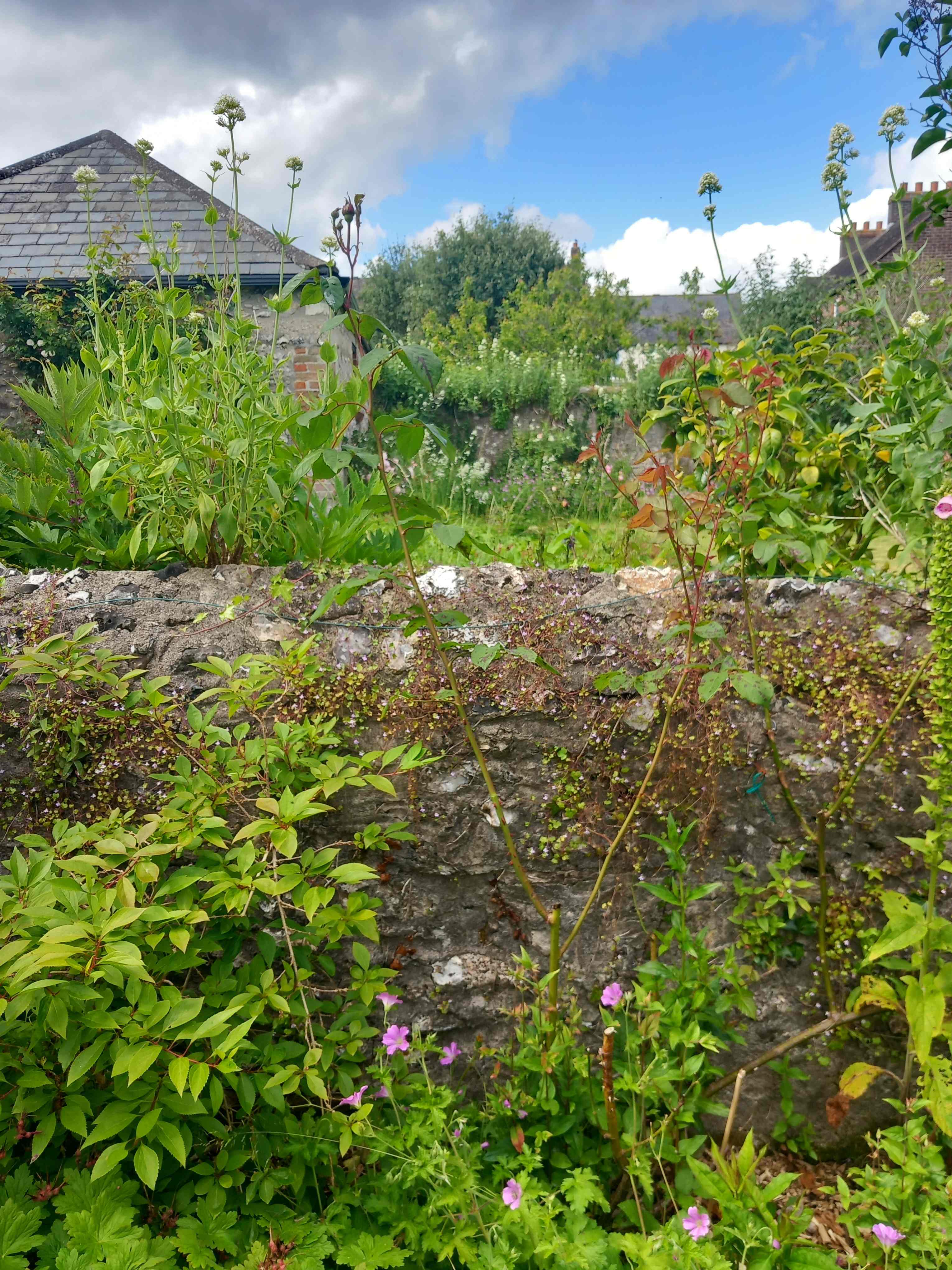
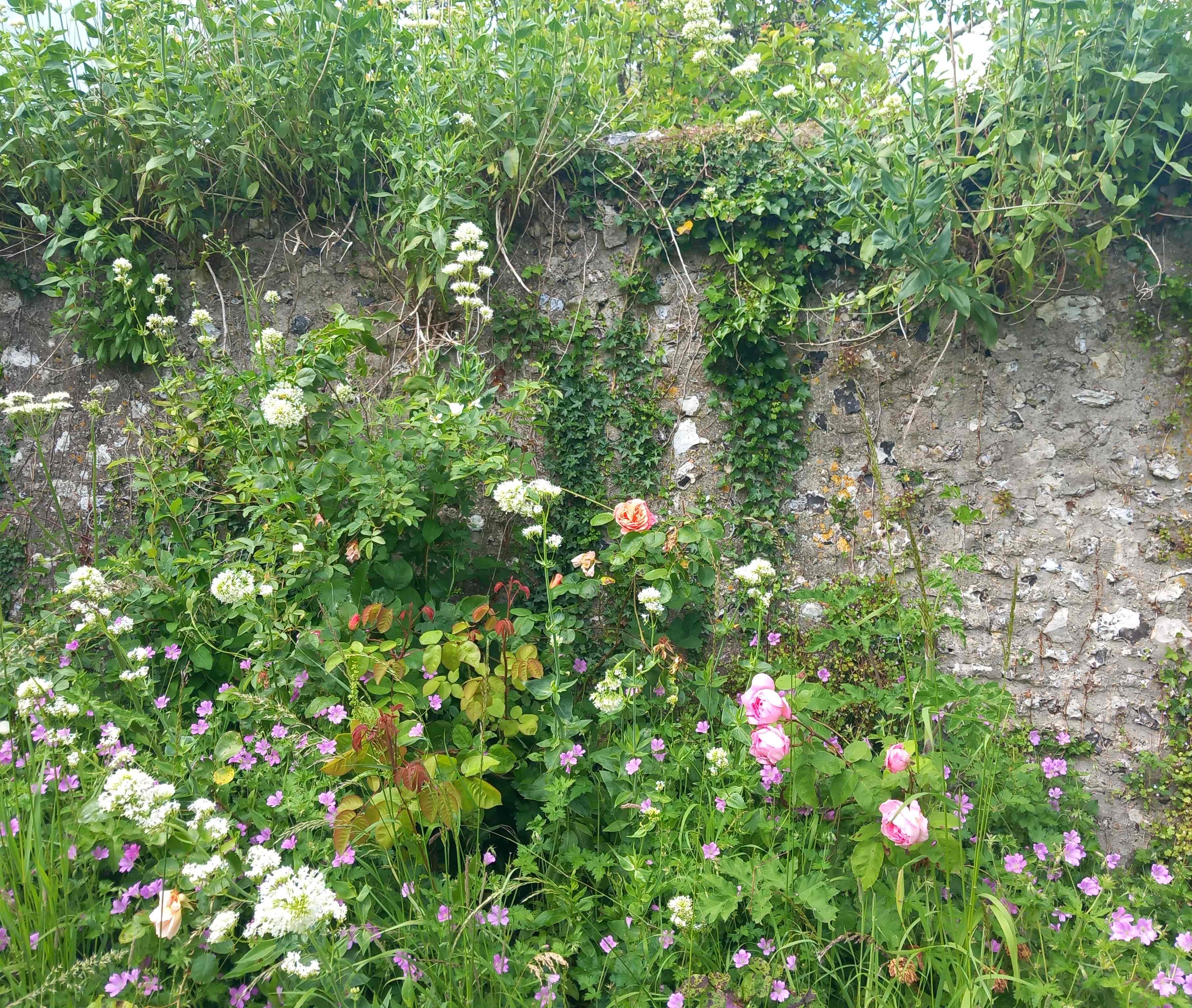
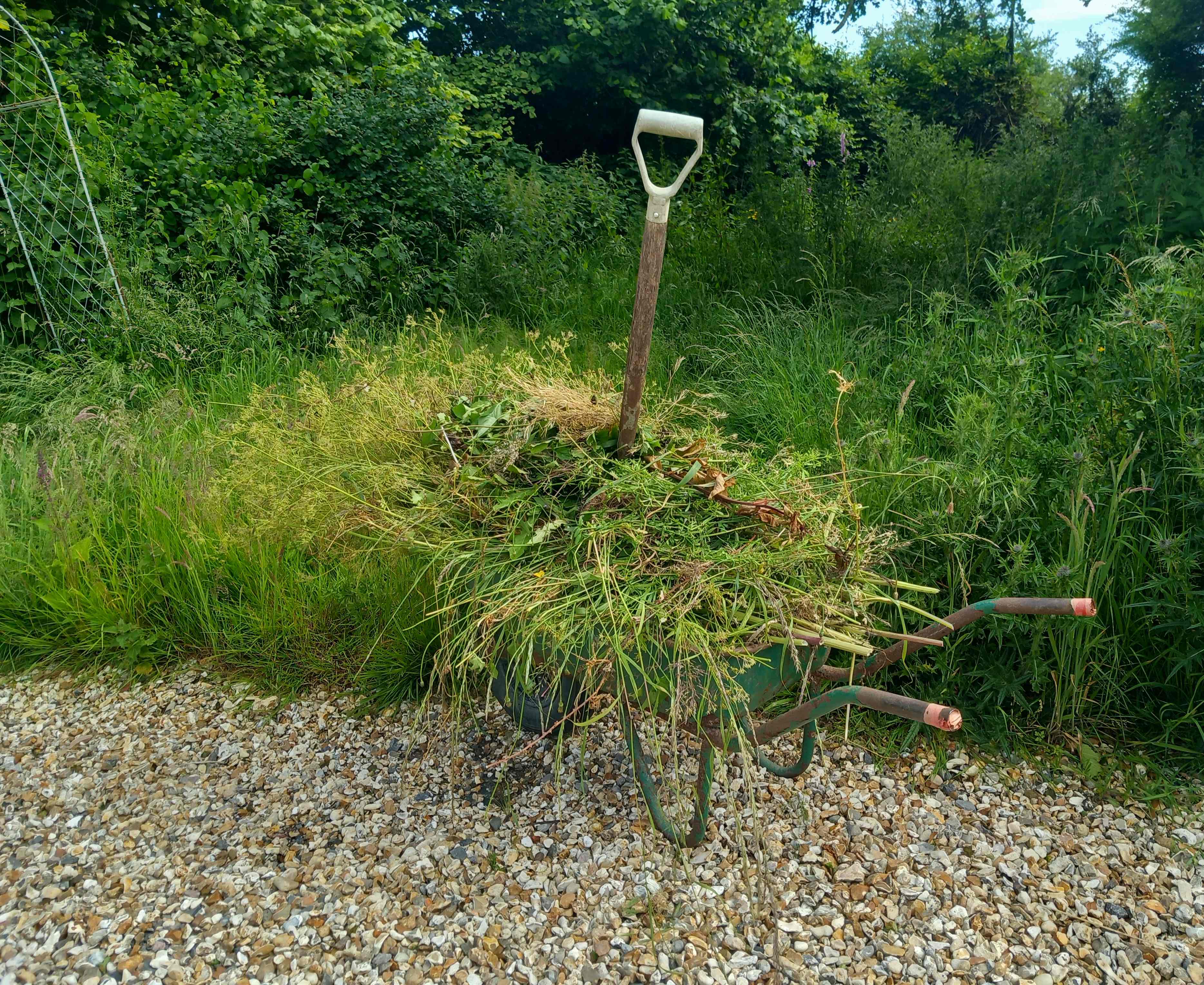
Throughout the afternoon it was great to explore the lanes and pathways of the village and have a chance to chat to some of the owners about their gardens. Over the weekend the Cerne Abbas Open Gardens welcomed over one thousand visitors and over £9,000 was raised which will be divided between Godmanstone Church Restoration Fund and Cerne Historical Society. An enormous effort goes into planning an event like this, so a special thank you to everyone involved for giving their time and making it such an enjoyable day.
Further reading:
Cerne Abbas Open Gardens Website here
Cerne Historical Society – Interview with Patricia Vale here
Historic England Tithe Barn, Cerne Abbas here
Open Gardens: The UK National Directory – a very useful list of independently organised open gardens arranged by county here
 Planting Diaries