
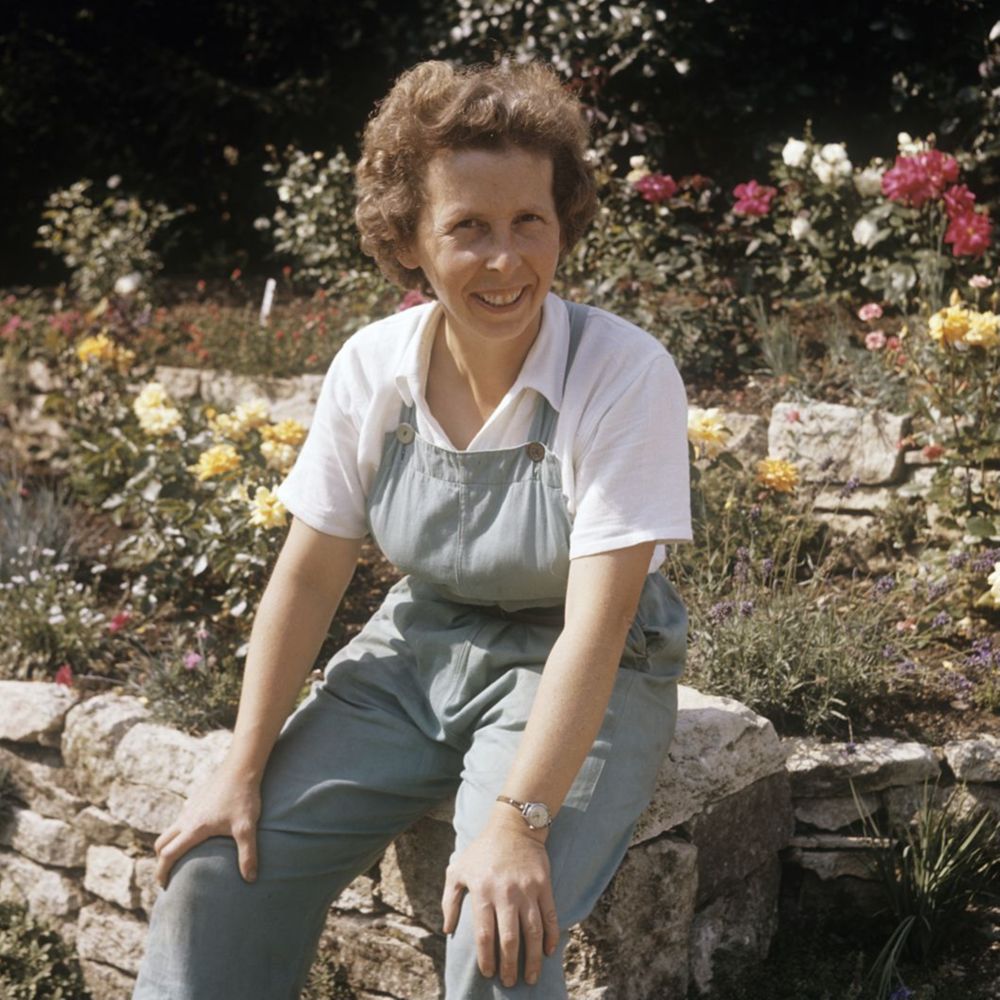
Photographer and alpine expert Valerie Finnis (1924-2006) sitting on a wall at the Waterperry Horticultural School. All images RHS Lindley Collections unless otherwise stated.
Valerie Finnis 31st October 1924 – 17th October 2006
The end of this month marks the centenary of Valerie Finnis’ birth, which seems like a perfect time to celebrate her life and photography. A professional gardener, alpine specialist and prolific photographer, Finnis produced still life images of plants and portraits of gardeners from her wide acquaintance in the world of horticulture, where she was exceptionally well connected.
Finnis trained at Waterperry Horticultural School for Women in the early 1940s, continuing at the Oxfordshire based school as a tutor. Following her marriage to retired diplomat Sir David Scott in 1970 she left Waterperry and continued to pursue her interests in gardening, photography and activities with the Alpine Garden Society and the Royal Horticultural Society from their home, at the Dower House of Boughton House, in Northamptonshire.
After her death in 2006, friends of Finnis took steps to preserve her extensive photographic archive, which was eventually housed by the RHS and a biography of Finnis by Ursula Buchan, Garden People (Thames & Hudson 2007), brought details of her life and her extraordinary images to a wider audience.
Valerie Finnis’ centenary happily coincides with the recent online publication of her photographic archive by the RHS. With around five hundred images released to date, including some previously unpublished work, this provides an ideal opportunity to revisit her photographic legacy, in particular her portraits of gardeners.
Finnis was taught how to use a camera and photograph alpine plants by Wilhelm Schacht, curator of Munich Botanic Gardens, and who gave Finnis the Rolleiflex camera she continued to use throughout her career. Other than this, Finnis had no formal photographic training, which raises some questions. How did she develop her distinctive portrait style, with people at work in their gardens, bending, stretching, kneeling and using tools? And who were the photographers she whose work she admired, from whom she drew inspiration?
As far as I know, these questions weren’t ever put to Finnis, but a visit to Waterperry in 1943 by photographer Cecil Beaton supplies some interesting clues. In his capacity as an official war photographer, Beaton’s assignment was to record crop production at the school, and his photographs show students, staff and land girls planting, pruning, harvesting and using agricultural machinery. This style of photograph, showing workers doing their jobs, was used extensively by the Ministry of Information to elevate ordinary people and their tasks, transforming them into heroic and inspirational figures, intended to boost public morale and encourage participation in the war effort.
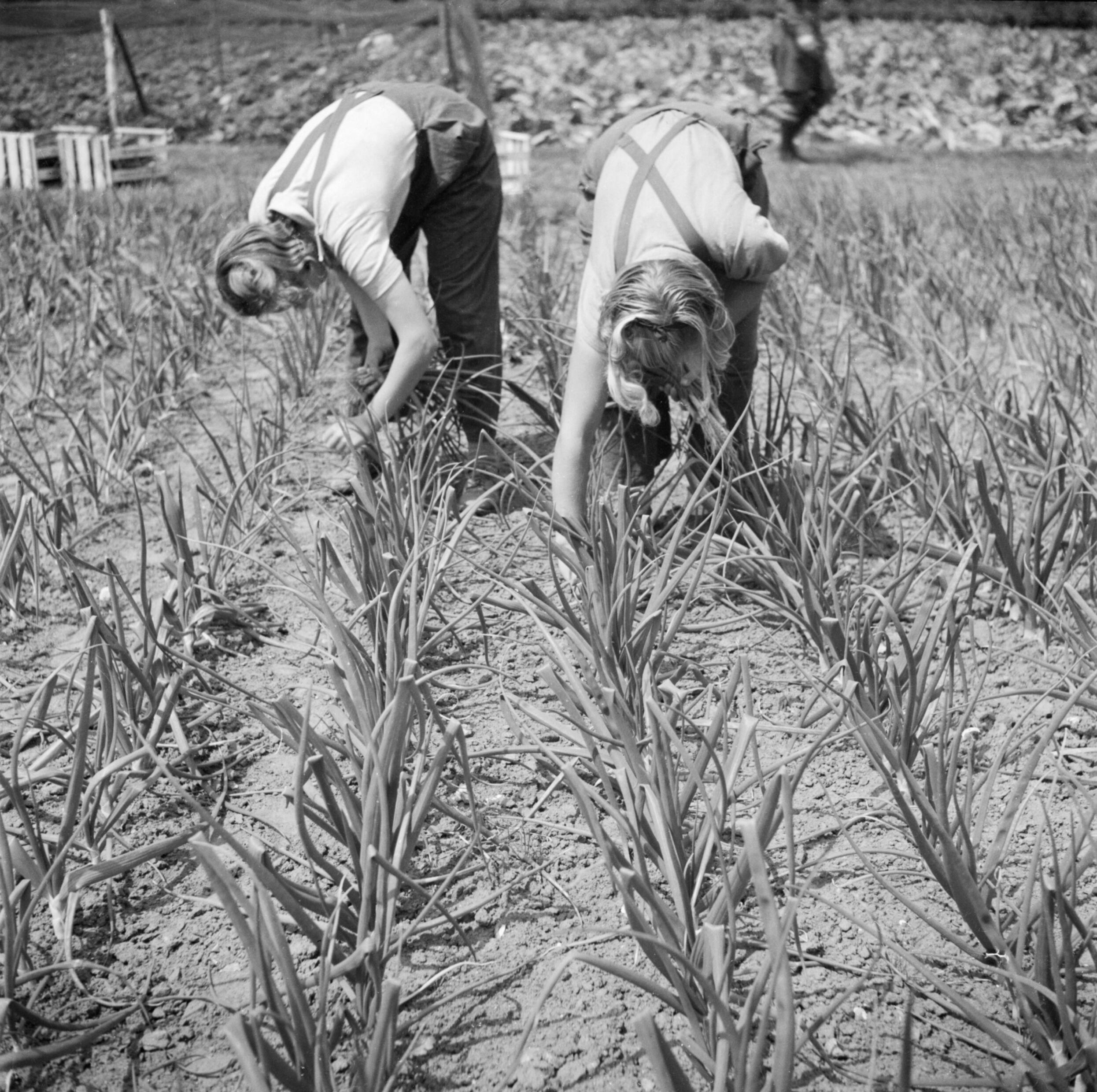
‘Thinning onions and assuring a good crop and no more onion shortages for the housewives of Britain.’ DB264 CECIL BEATON PHOTOGRAPHS: WOMEN’S HORTICULTURAL COLLEGE, WATERPERRY HOUSE, OXFORDSHIRE, 1943. Copyright: © IWM.
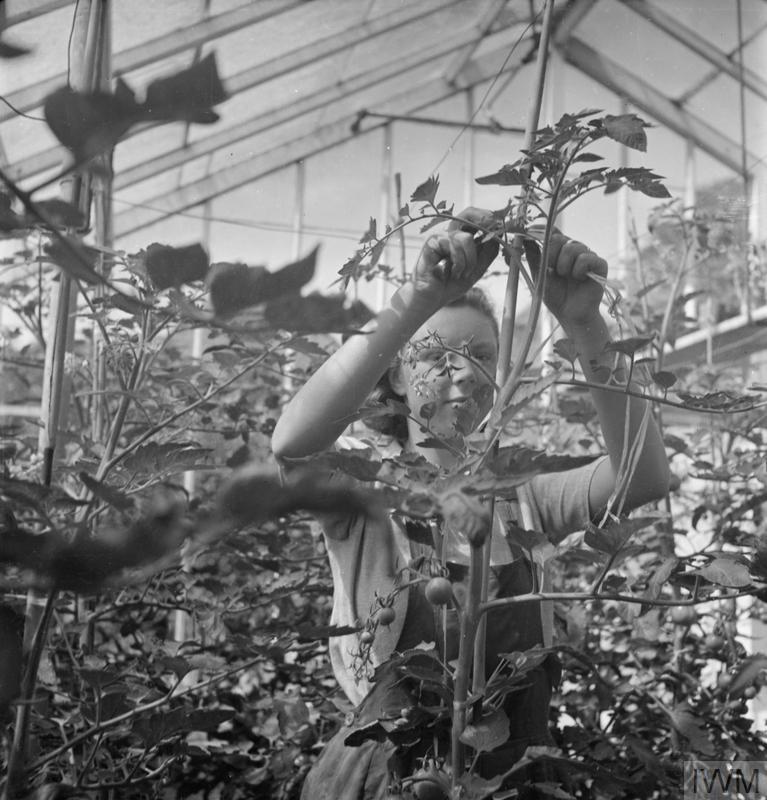
‘In the tomato houses trimming and training plants takes neat fingers, work for which women are especially suited.’ DB249 CECIL BEATON PHOTOGRAPHS: WOMEN’S HORTICULTURAL COLLEGE, WATERPERRY HOUSE, OXFORDSHIRE, 1943. Copyright: © IWM.
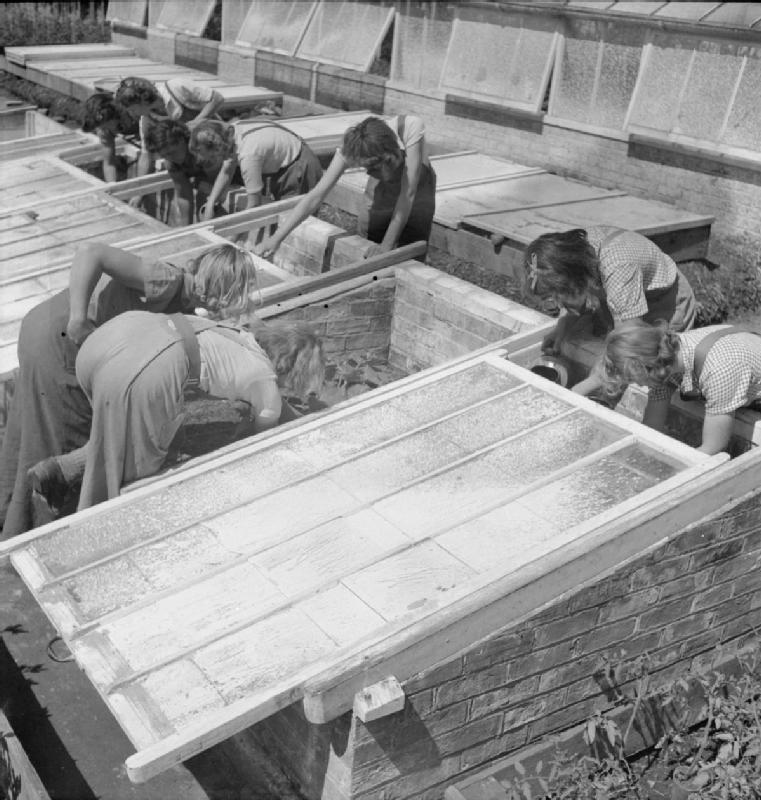
‘Watering time in the frames for the cucumbers and marrows.’ DB247 CECIL BEATON PHOTOGRAPHS: WOMEN’S HORTICULTURAL COLLEGE, WATERPERRY HOUSE, OXFORDSHIRE, 1943. Copyright: © IWM.
Finnis was a student at Waterperry at the time of Beaton’s visit and could even be one of the young women in his photographs. We also know that Waterperry kept a set of these images in their archive, which would likely have been available to staff and students. Finnis’ early portraits of Waterperry students, taken in the 1950s, look very much like a re-working of Beaton’s wartime photographs. Two students on ladders pruning a wall trained peach tree have a wonderful symmetry, and all her subjects possess a quiet dignity as they go about their gardening tasks.
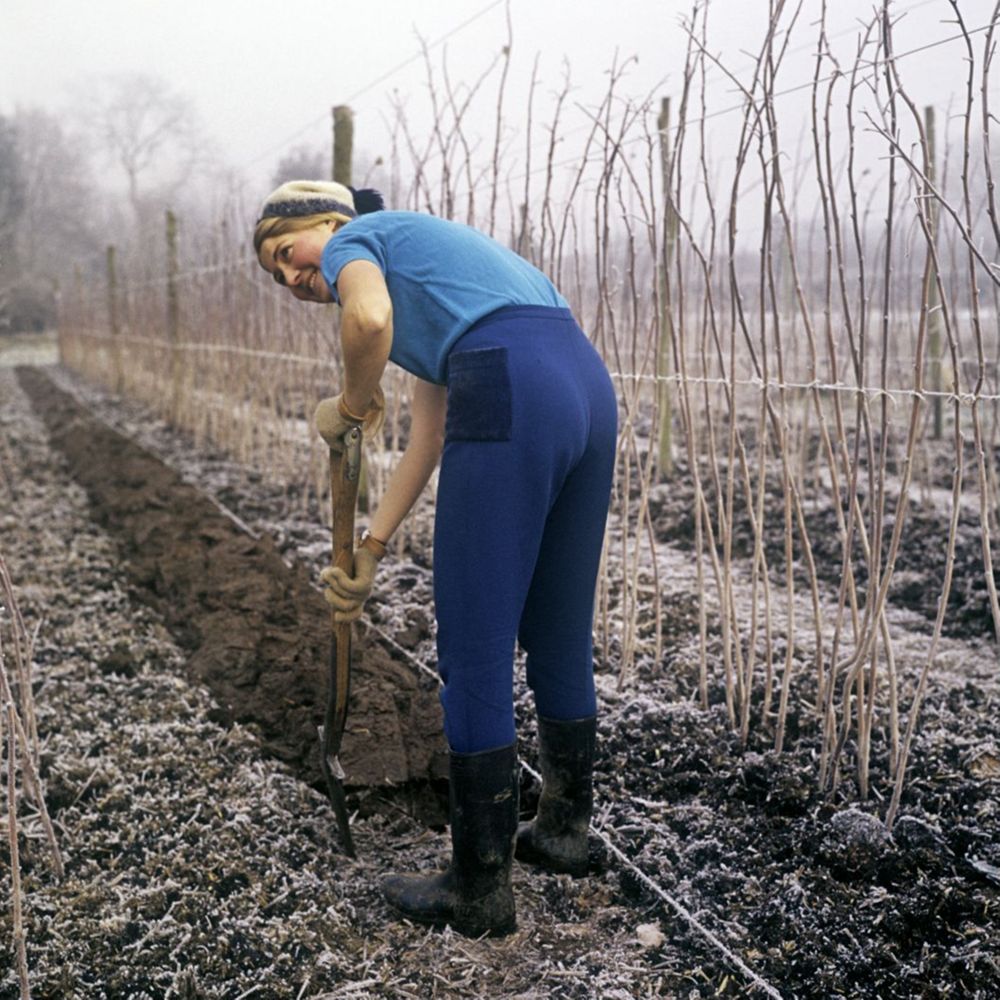
Student from Waterperry Horticultural School digging frosty ground.
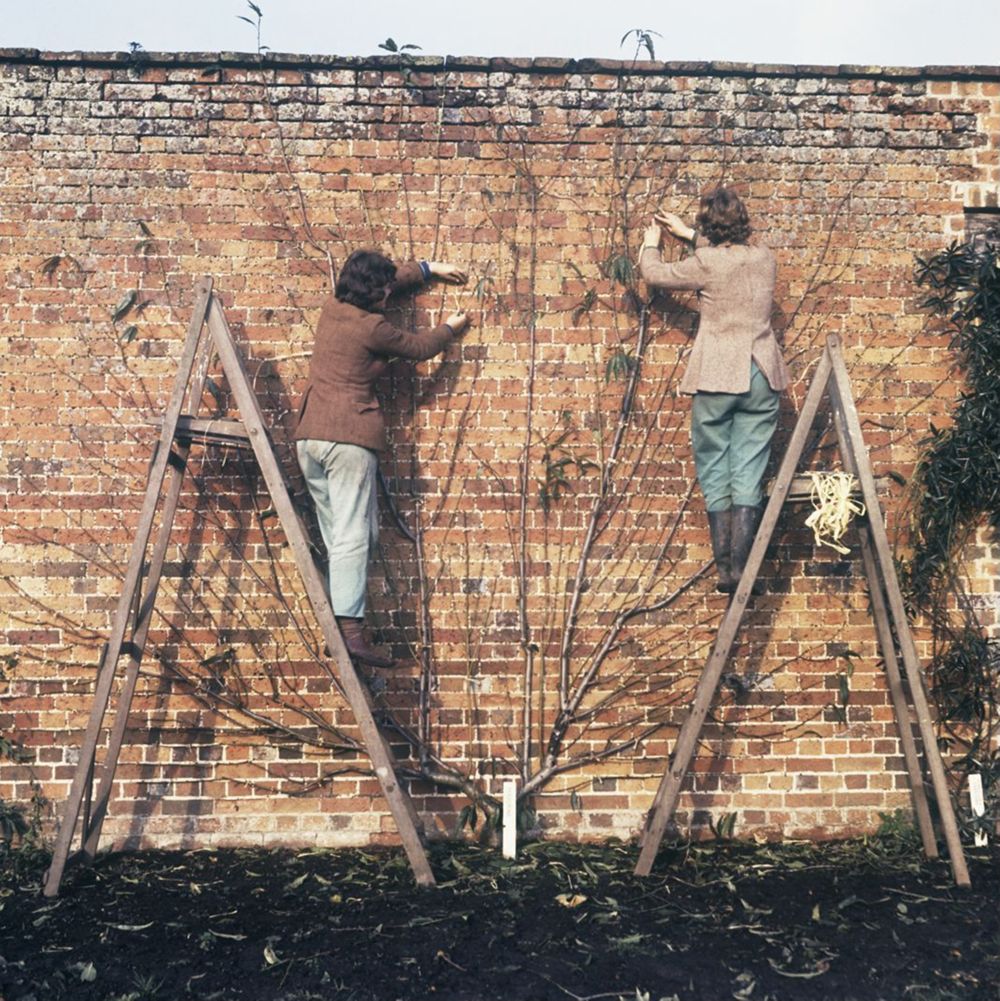
Students training a peach tree on a wall at Waterperry Horticultural School.
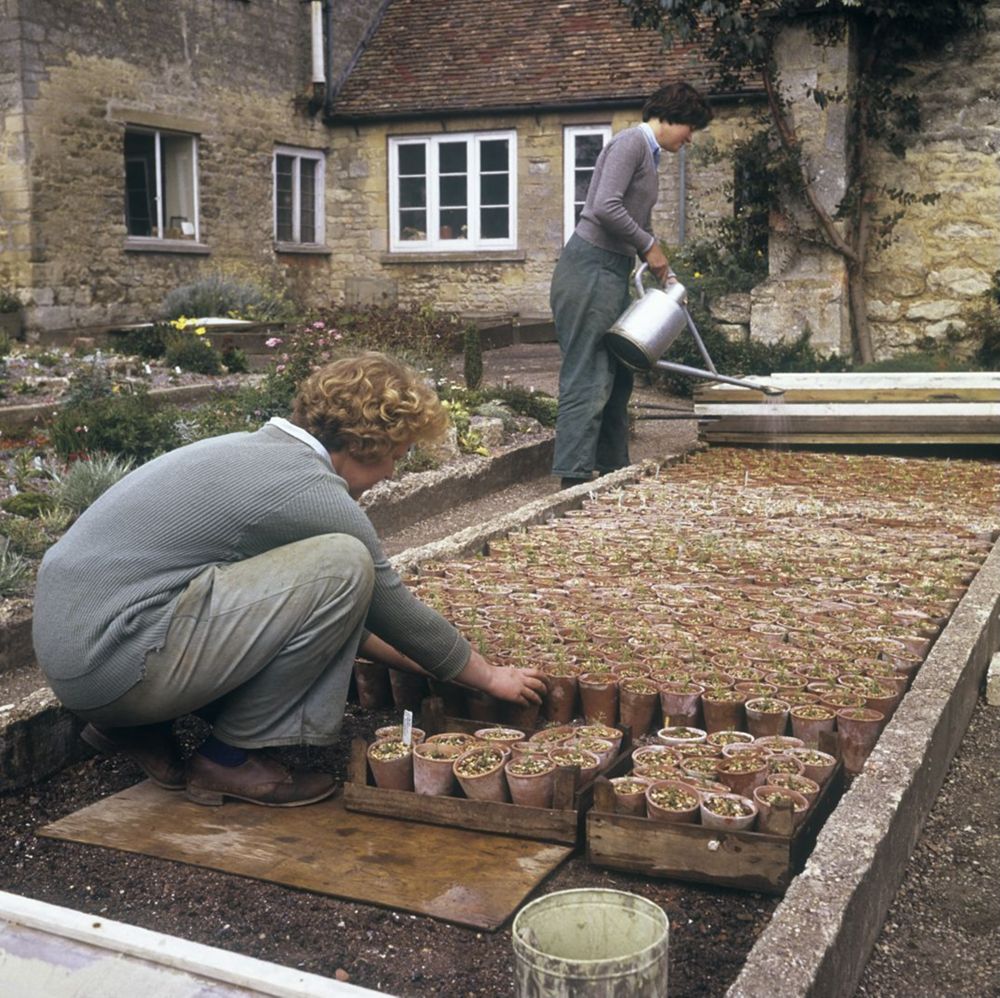
Two students watering pots in Valerie Finnis’ Alpine Nursery at Waterperry Horticultural School.
As Finnis became interested in alpine plants and established her network of friends in the Alpine Garden Society, she began to photograph them tending their plants, using her own version of Beaton’s ‘Ministry of Information’ style. Finnis also recorded interviews with these experts, intending to publish the material as a book, but this project wasn’t realised.
Viewed together, the intense concentration of Finnis’ alpine enthusiasts on their tiny plants is an intimate and involving record of this community in UK gardening history, but also has the effect of making them and their activities look quite nerdy. An image of an alpine plant sale in Kent, where experts are listening intently to a speaker, with their tiny terracotta plants at their feet, ready for the sale, has an slightly absurd and surreal quality.
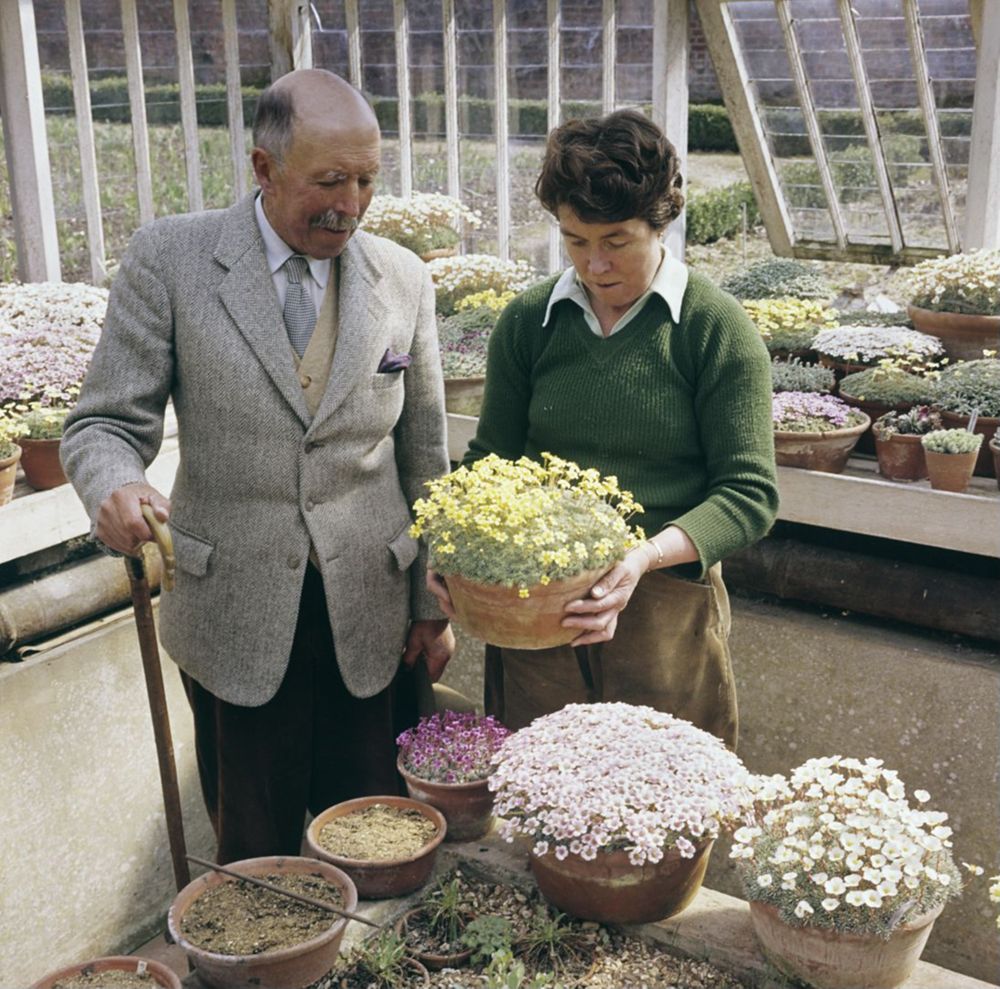
Cecilia Christie-Miller and her father admiring alpine plants in the alpine house. Undated. Valerie Finnis / RHS Lindley Collections
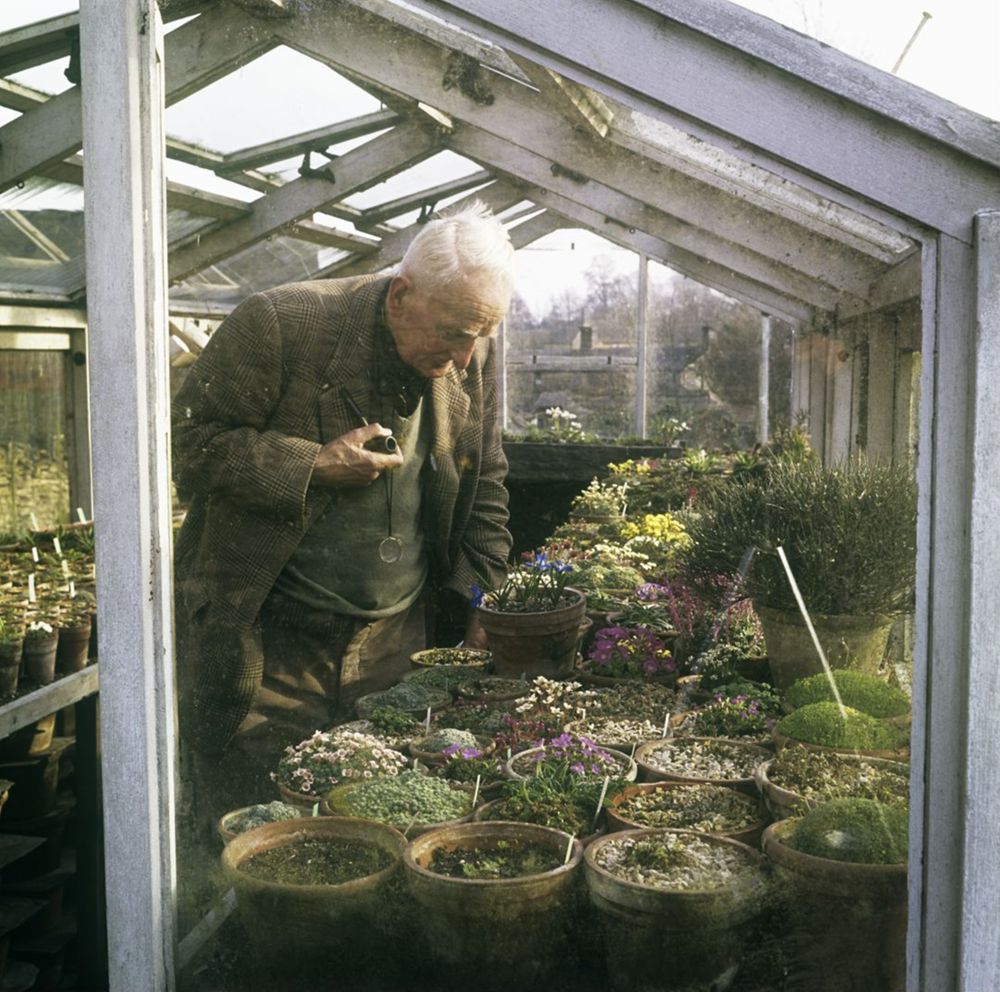
Plant collector Clarence Elliott (1881-1969) in his glasshouse at Broadwell, Gloucestershire. Elliott is wearing a magnifying glass round his neck.
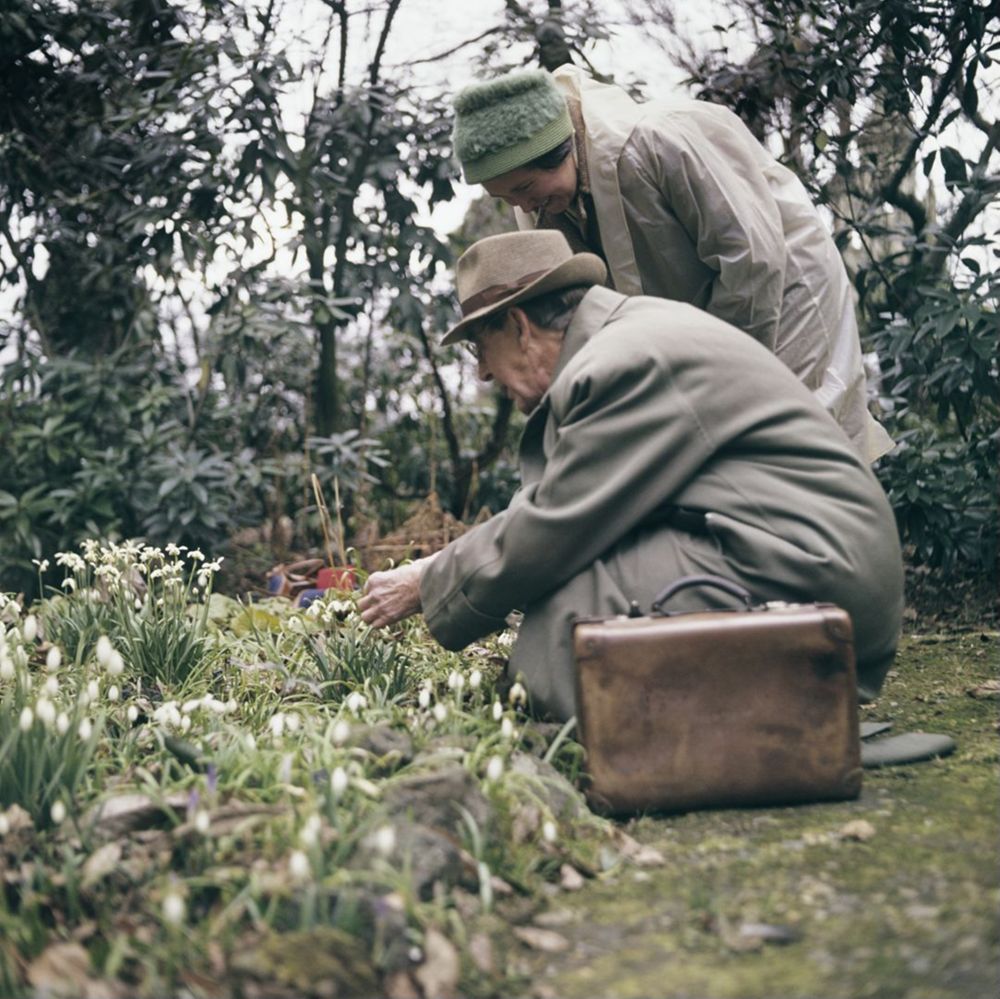
snowdrop enthusiasts Gerard Parker (1891-1977) and his wife Dora Parker (nee Scott), crouched over a snowdrop border at Myddelton House
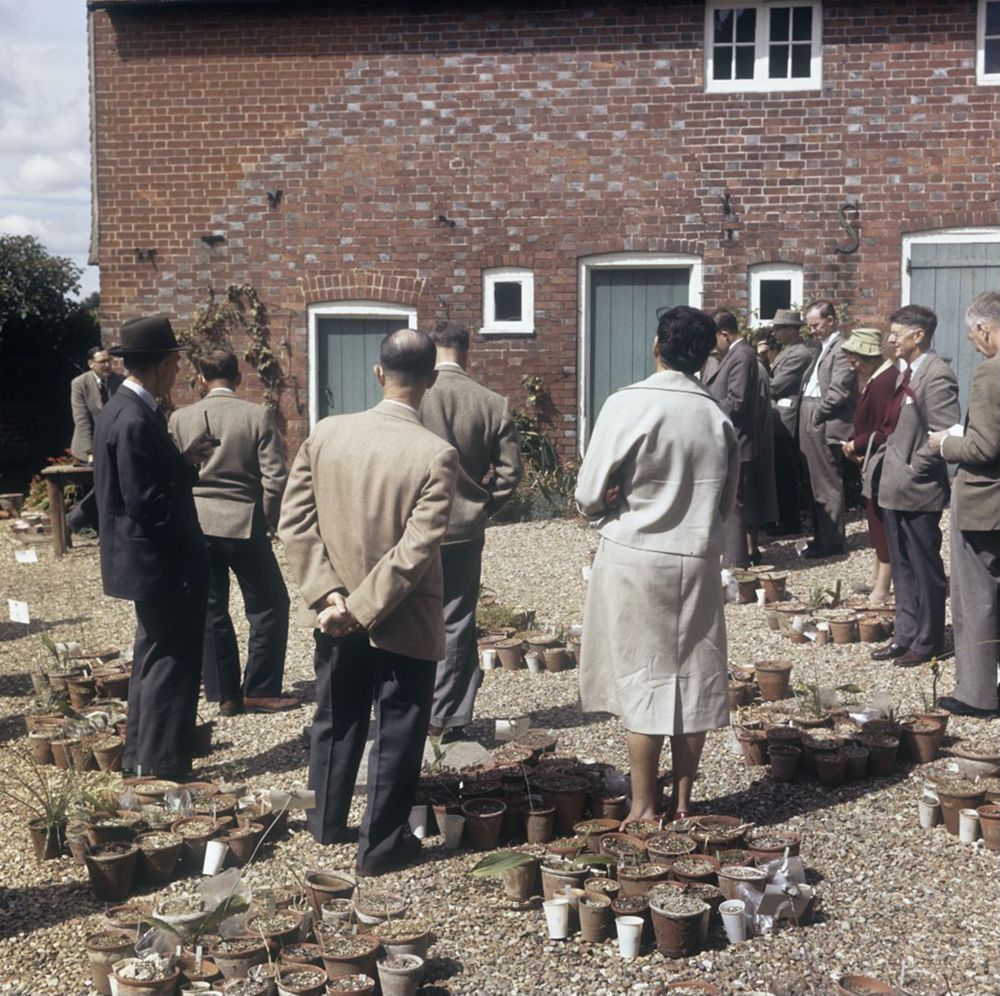
An Alpine Garden Society plant sale in Kent.
According to writer Anna Pavord, Valerie Finnis was something of a complicated character. In her obituary for Finnis from The Independent (21st October 2006), she says that alongside her enthusiasm for practical horticulture, ‘there existed a completely different Finnis, actressy, mischievous, a woman who adored gossip and outrageous hats.’ Pavord goes on to say, ‘She had a knack for engineering spectacular fallings-out with people, a process she thoroughly enjoyed.’
These observations are worth mentioning as they provide valuable context for Finnis’ portraits. Some of her images irreverent and opportunistic, catching people off their guard, with the feeling of humour at someone else’s expense. There’s perhaps a sense of the photographer’s enjoyment of her own power in these situations?
A photograph taken at Sissinghurst shows Vita Sackville West, cigarette in hand, peering into an urn alongside her new employees Pamela Schwerdt and Sibylle Kreutzberger is a good example of this tendency. Schwerdt and Kreutzberger were both trained at Waterperry and it’s likely Finnis and Beatrix Havergal, principal at the school, were visiting Sissinghurst to offer support and settle the young gardeners into their roles.
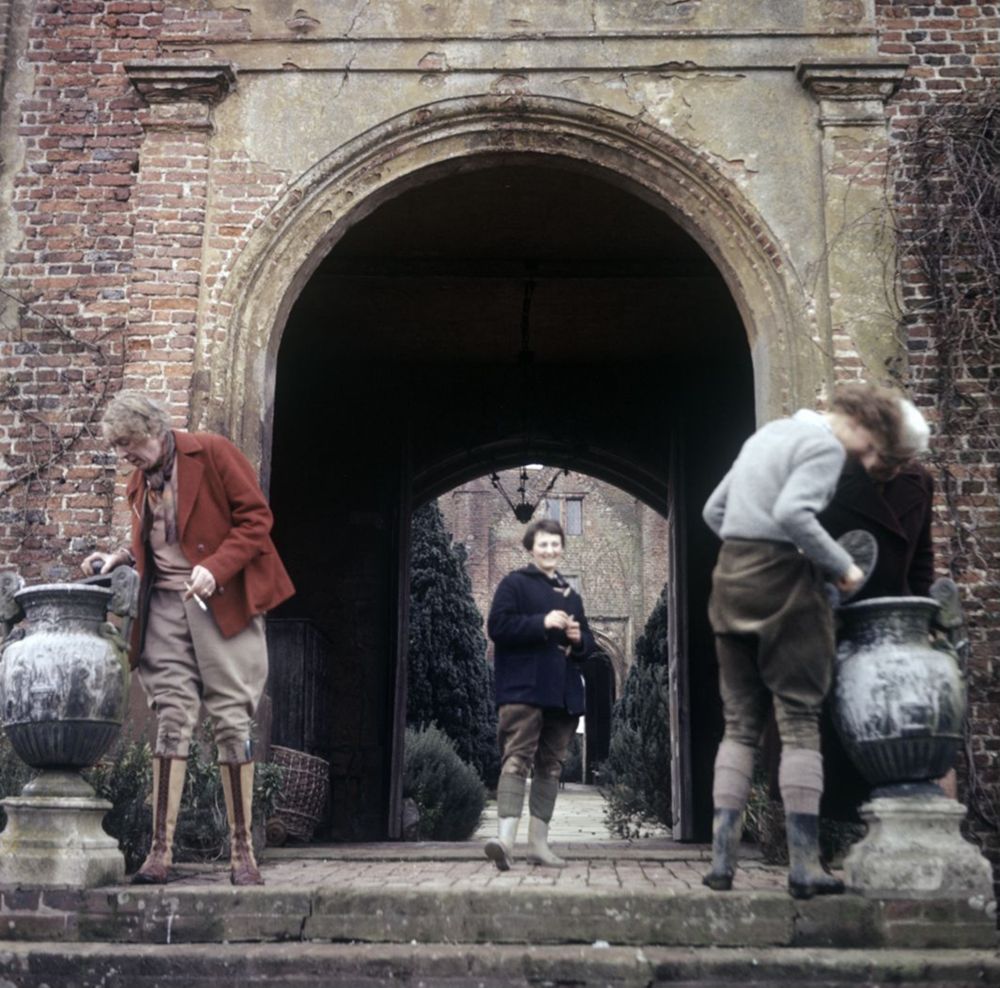
Garden designer and author Vita Sackville-West (1892-1962), head gardeners Pamela Schwerdt (1931-2009) and Sybil Kreutzberger [Sibylle] (b. c.1931) with Beatrix Havergal (1901-1980) at Sissinghurst Castle garden.
Highly staged, and characterised by a sense of fun, it’s wondrous to observe the outfits people have chosen to wear for their photographs. Renowned interior designer Nancy Lancaster appears in a straw sombrero with her elegant dogs leashed together in the foreground, presumably to stop them wandering off and spoiling the composition. Behind the dogs is one of the most unlikely pieces of garden kit I have ever seen – a wickerwork wheelbarrow. Others, like Dame Miriam Rothschild, seen serving tea in her garden, seem far less concerned about appearances, although the quality of her china teacups and silver teapot shatter the illusion this is any ordinary gathering.
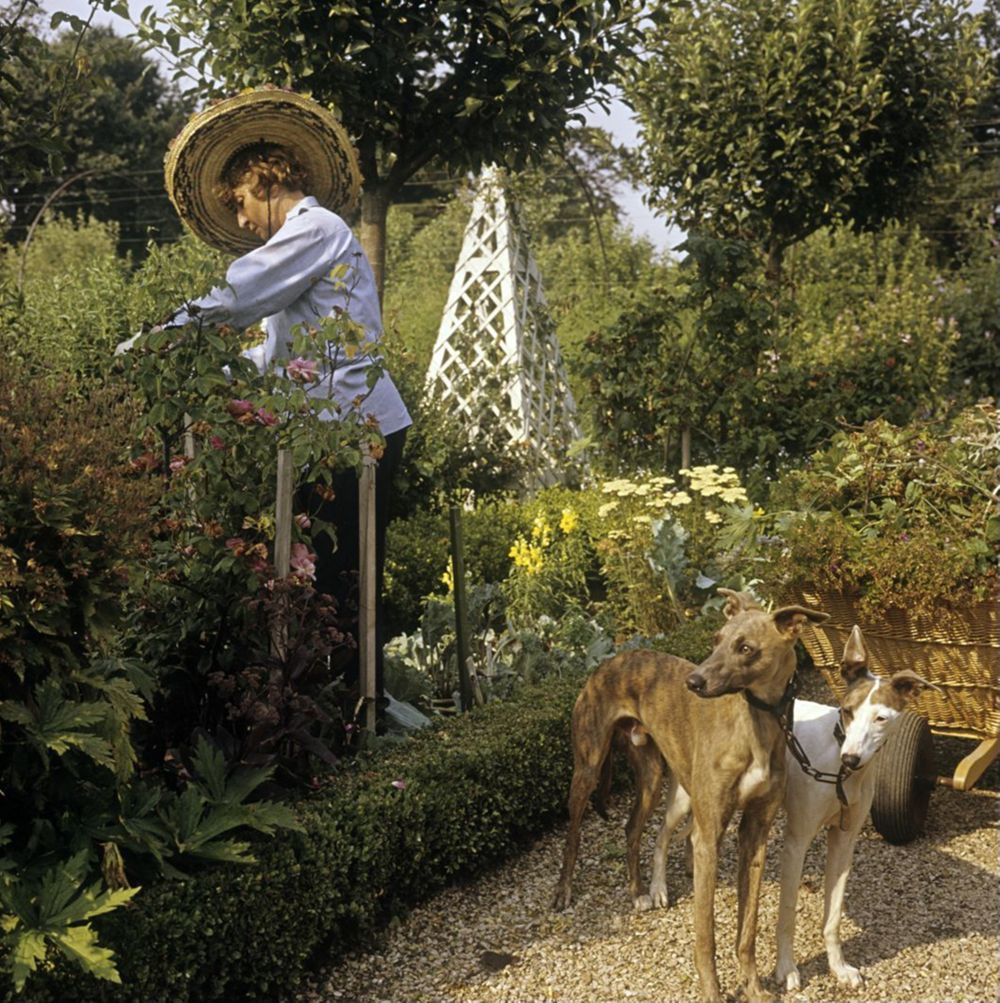
Interior and garden designer Nancy Lancaster (nee Perkins) (1897-1994) in her garden with two dogs at Haseley Court, Great Haseley, Oxfordshire.
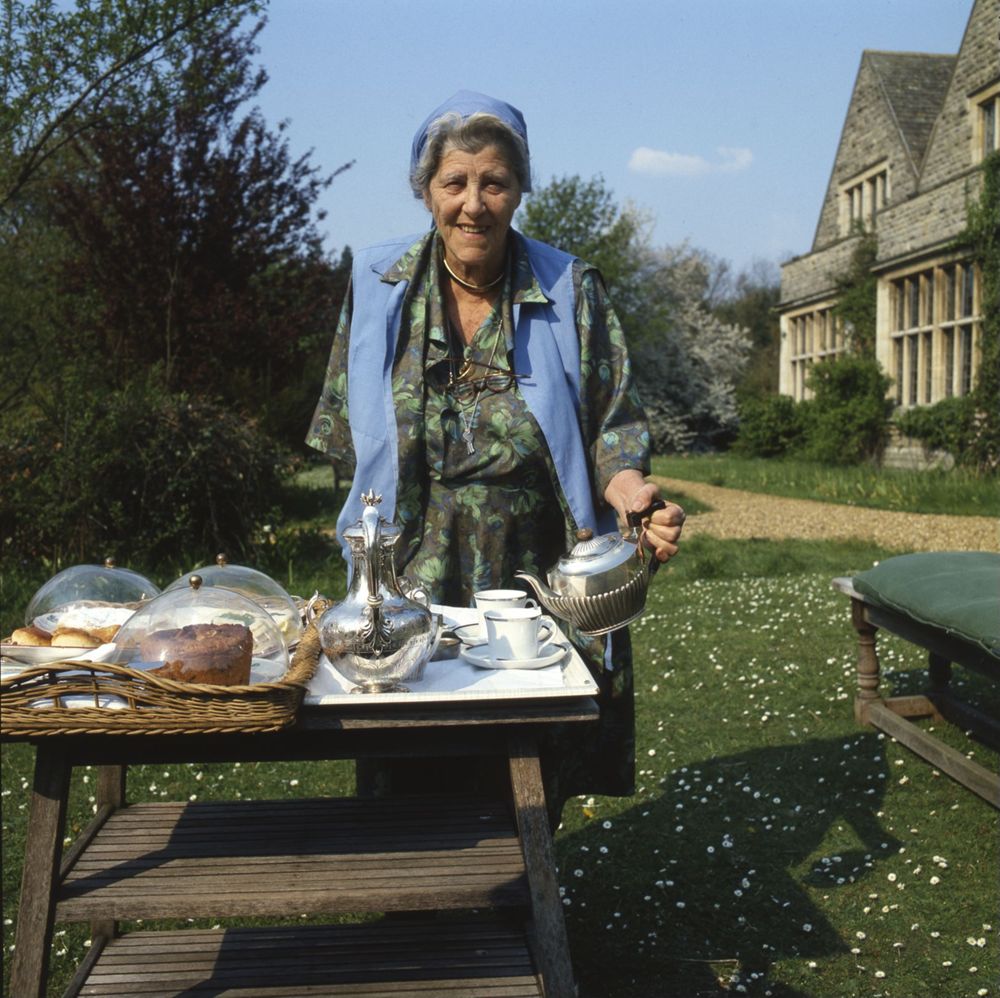
Natural scientist and author Dame Miriam Rothschild (1908-2005) pouring tea in her garden at Ashton Wold, Northamptonshire.
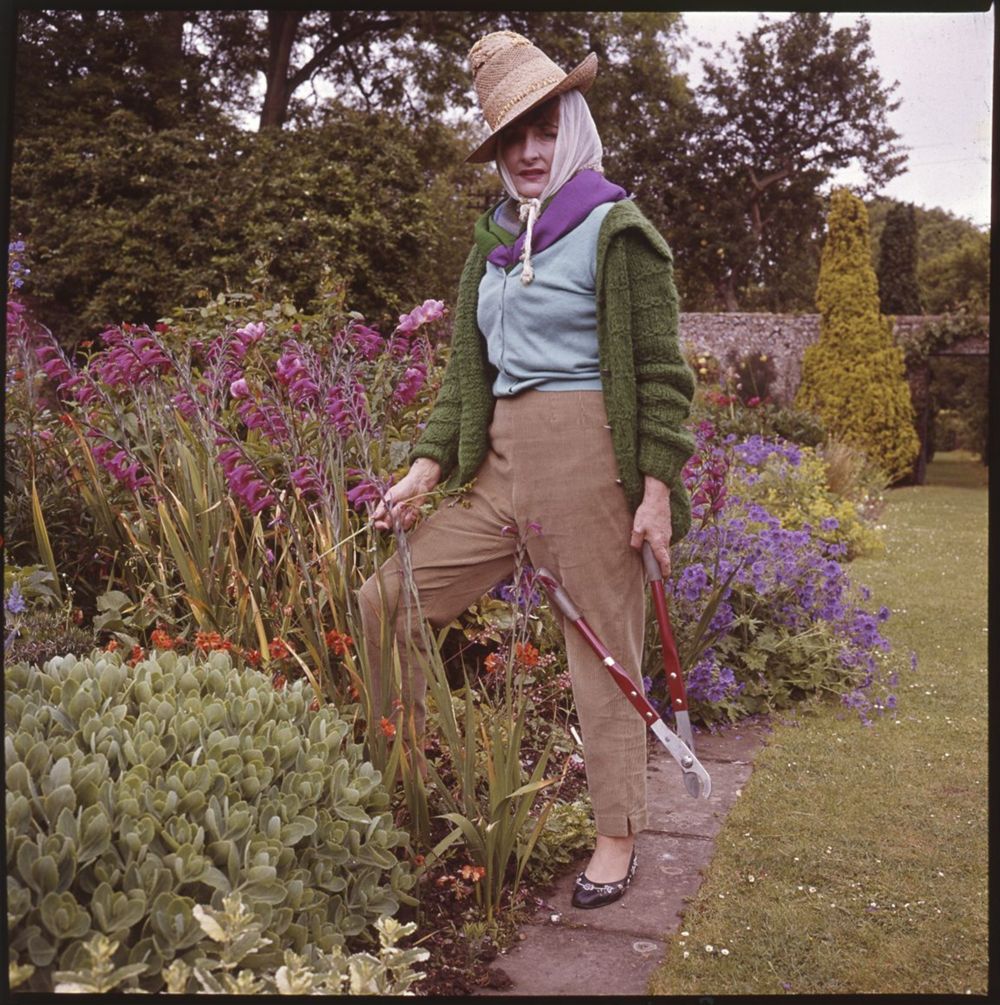
Model and plantswoman Lady Rhoda Birley (nee Lecky Pike) (1900-1981) holding a pair of garden shears in her garden at Charleston Manor, Sussex.
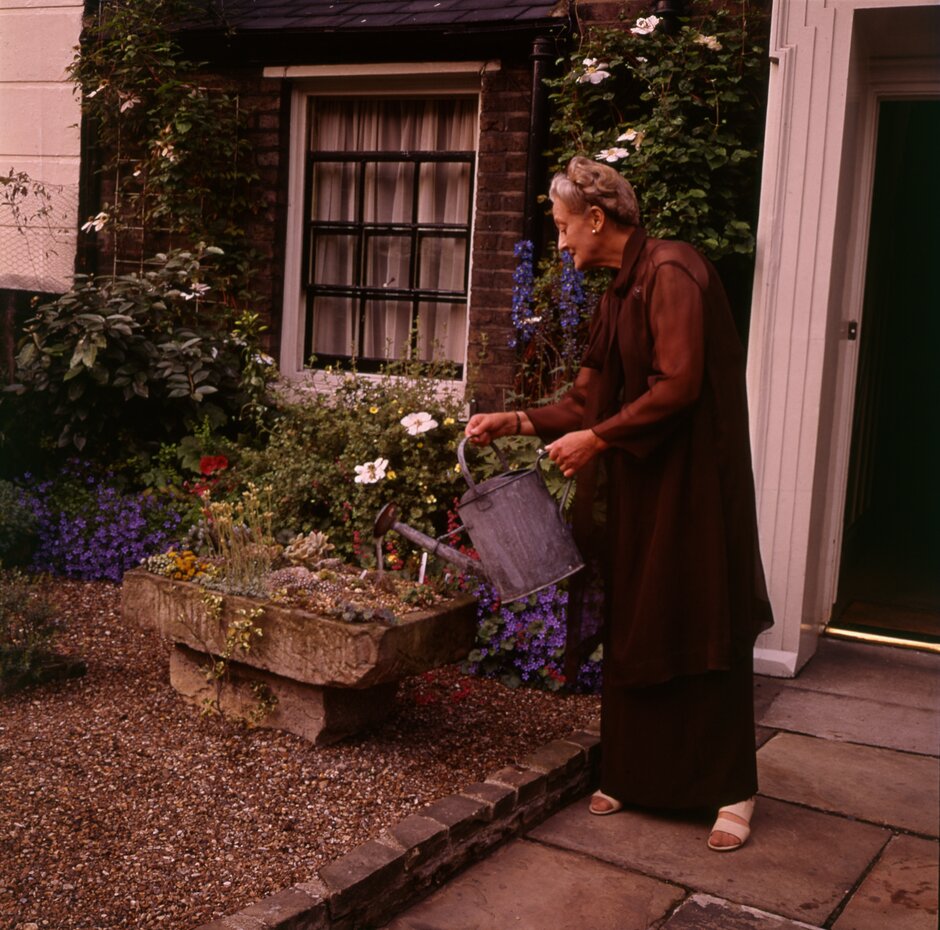
‘Mrs William ( Parsley) Mure, London [ Cecily Mure, Buckingham Palace Mews]. Undated. Valerie Finnis / RHS Lindley Collections
One hundred years after her birth, Finnis’ remarkable record of gardening personalities from the 1950s to the early 80s, and gardening culture in the UK, seems especially valuable now in a world continually hungry for new ideas, and where yesterday’s plants and experts are so quickly forgotten.
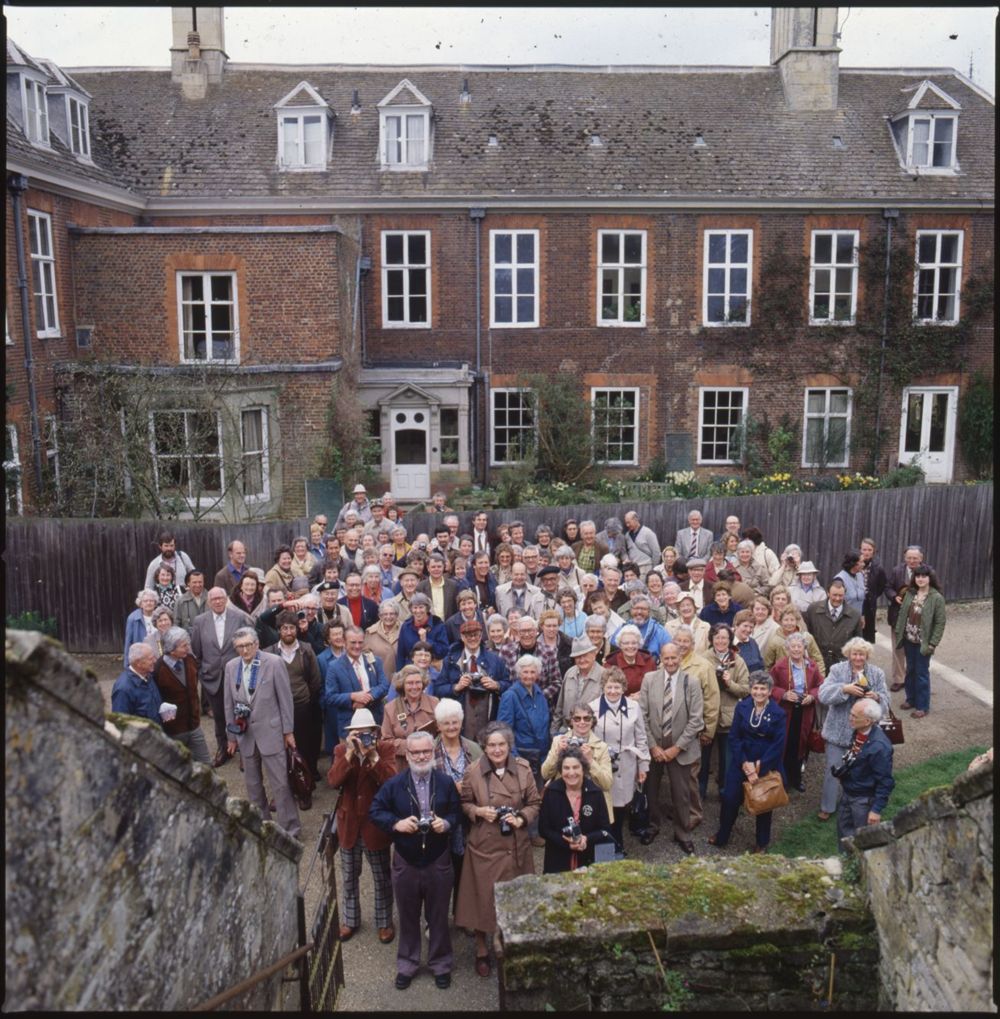
A large group shot showing members from the Alpine Garden Society (AGS) International Conference at the Dower House (Boughton House). (around 1975)
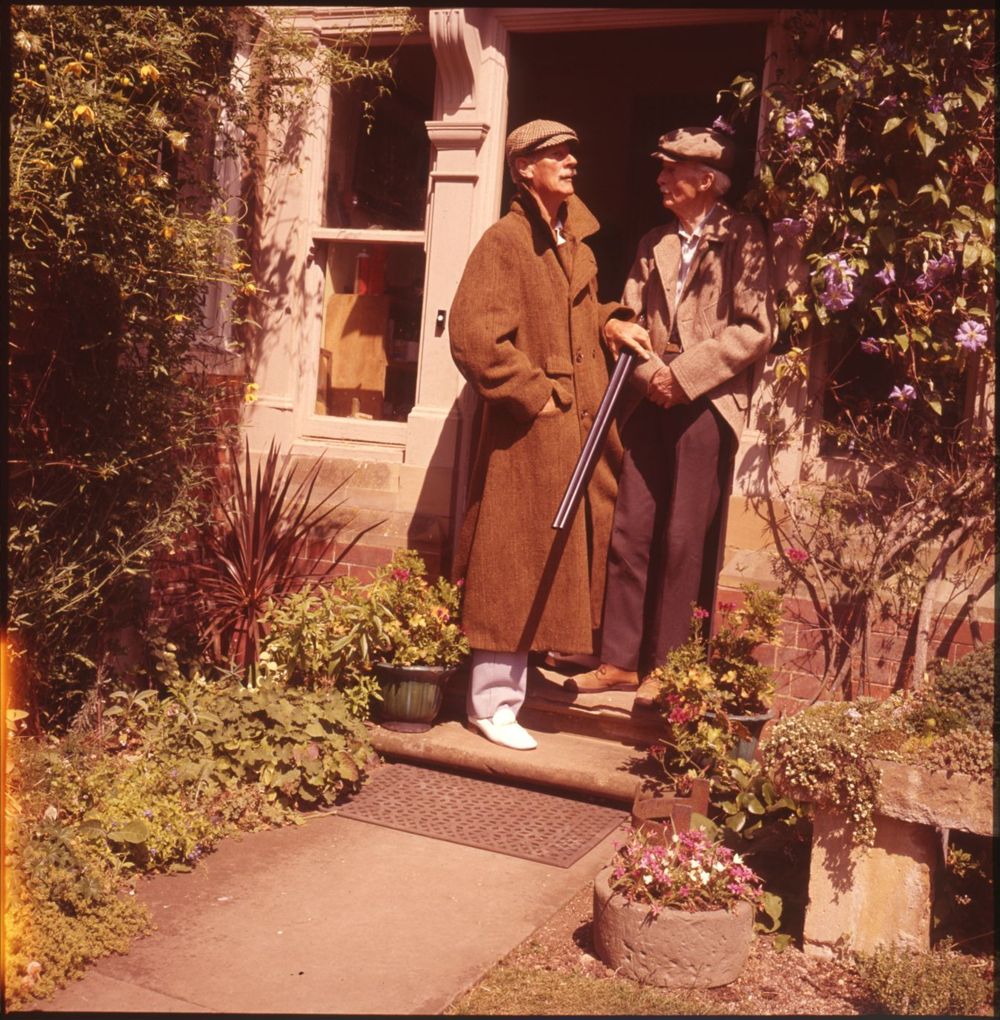
Diplomat and plantsman Sir David Scott (1887-1986) with portrait and fashion photographer Norman Parkinson (1913-1990) in the doorway of the Dower House (Boughton House). Scott is holding a shotgun in the crook of his elbow.
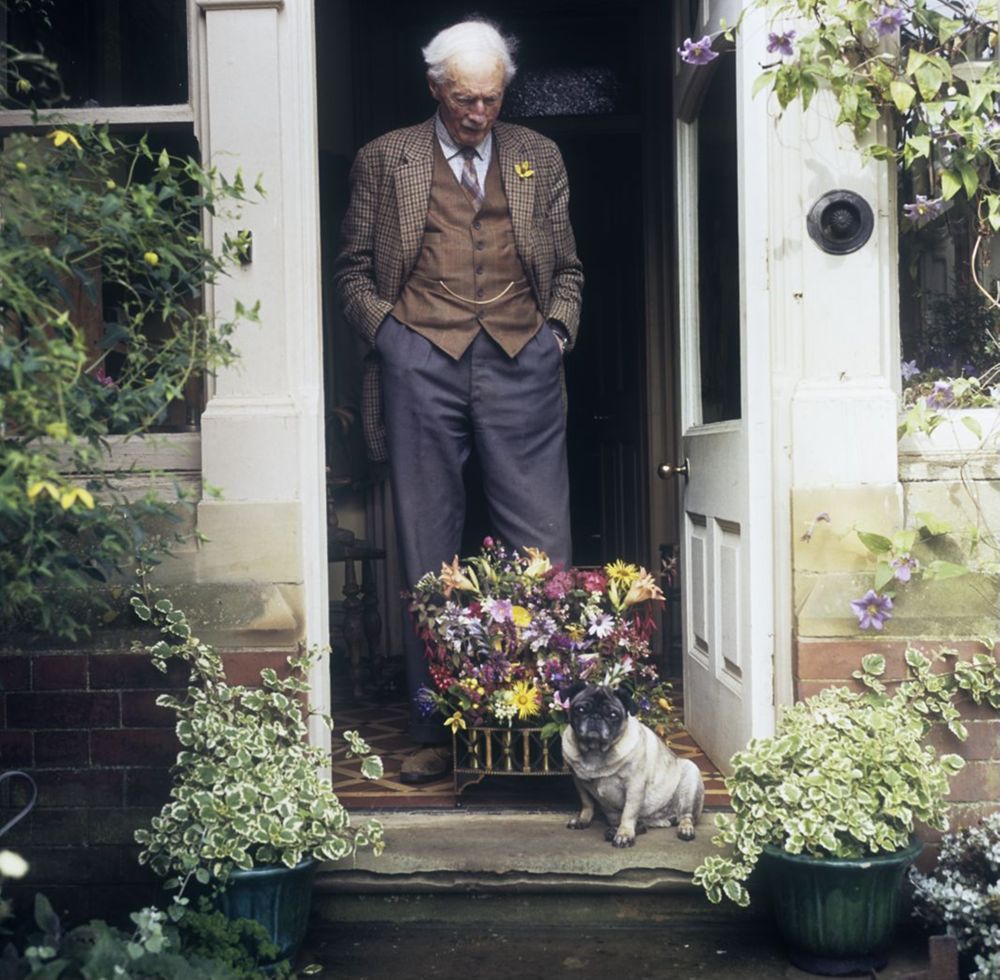
Sir David Scott (1887-1986) with his pug. Scott is in the doorway of the Dower House (Boughton House) looking down at a small display of flowers. The dog is likely Kate, the last pug David owned.
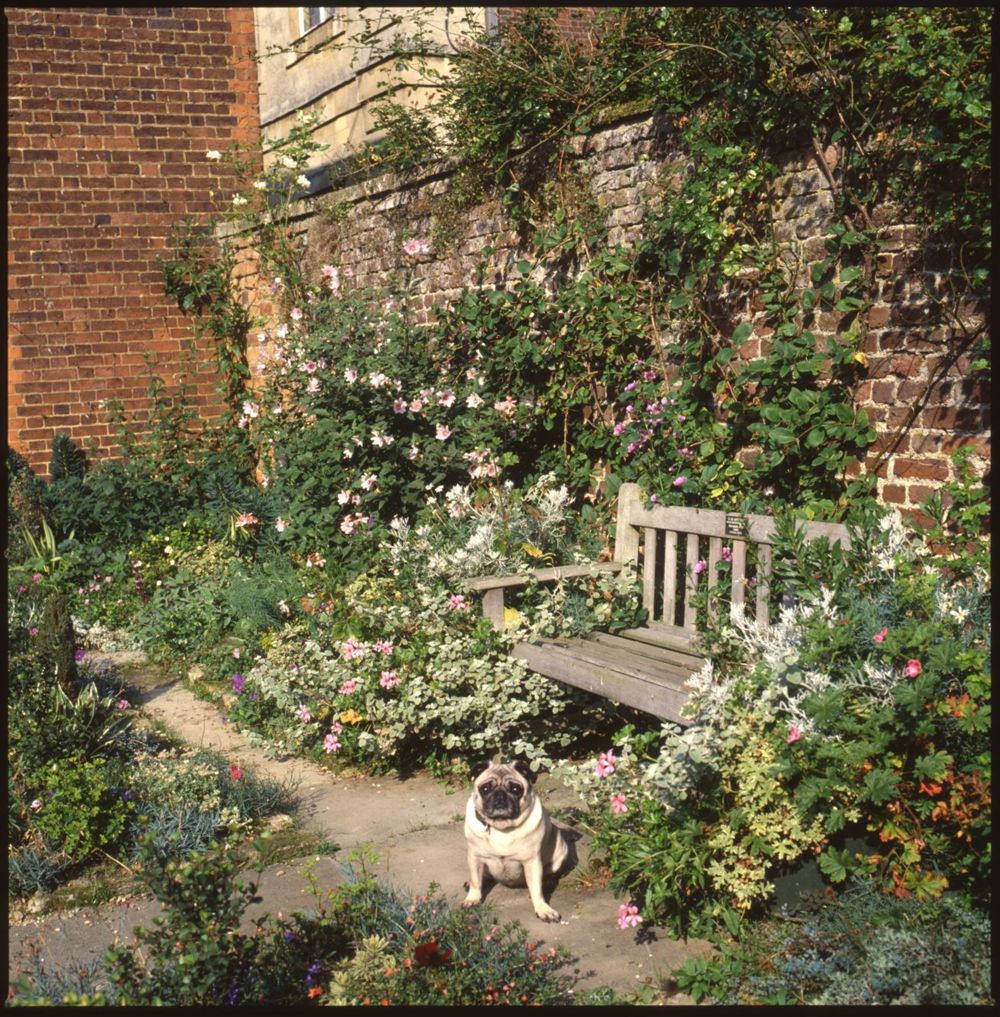
Valerie Finnis’ pug in the garden at The Dower House, Boughton House.
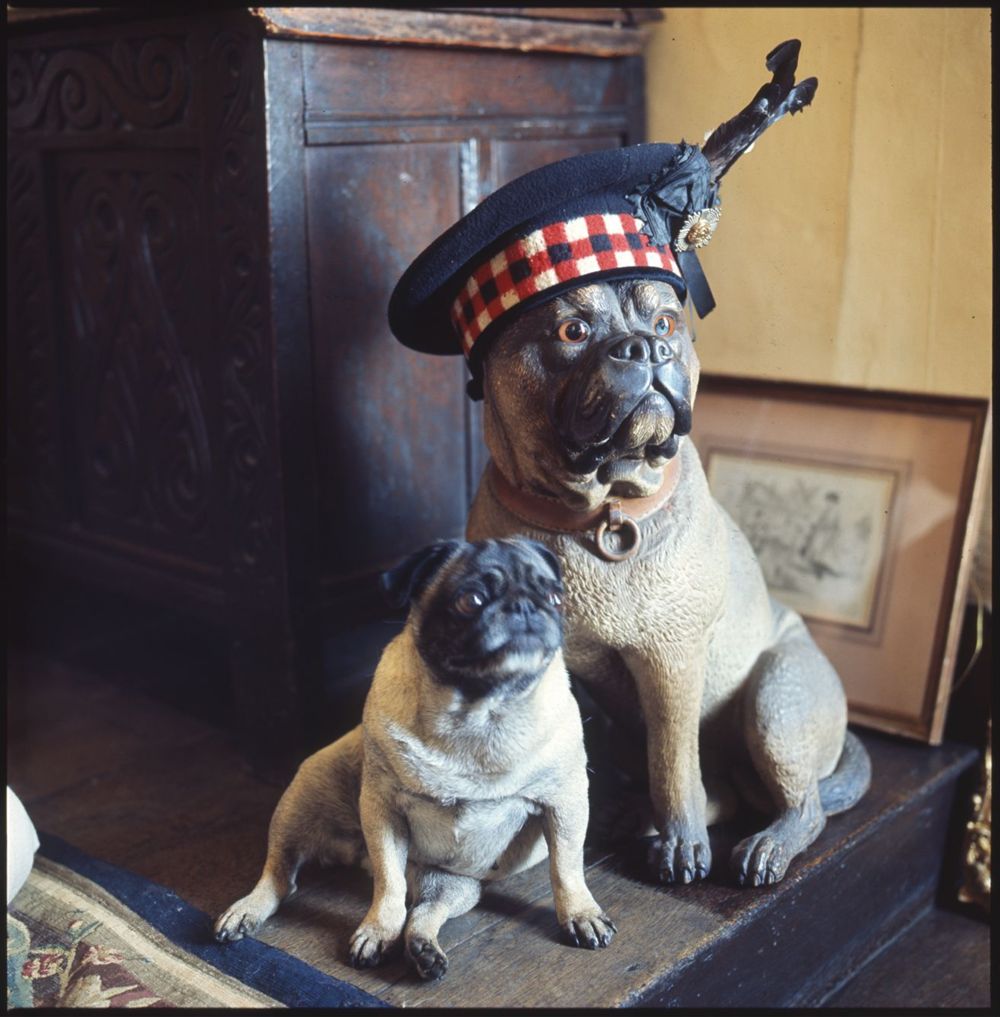
Valerie Finnis’ pug sitting next to a statue of a pug
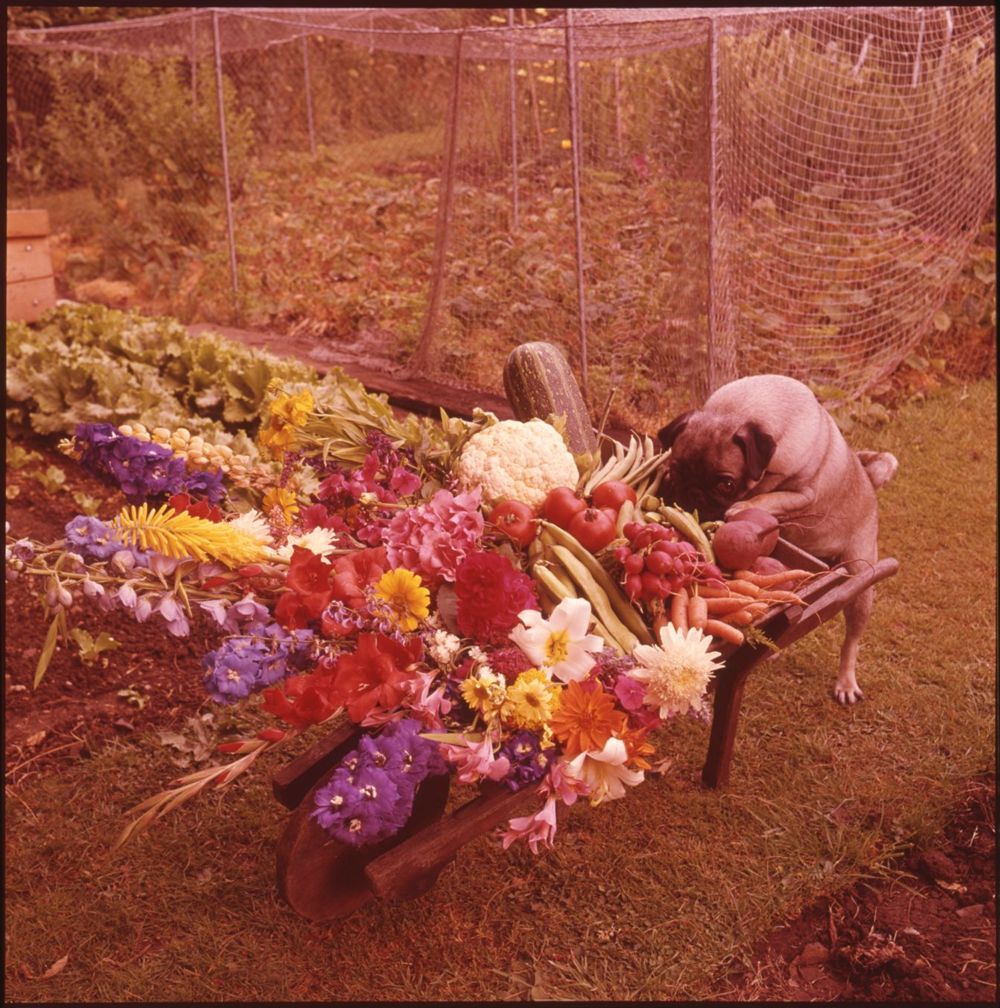
Valerie Finnis’ pug pushing a wheelbarrow in the garden at The Dower House, Boughton House.
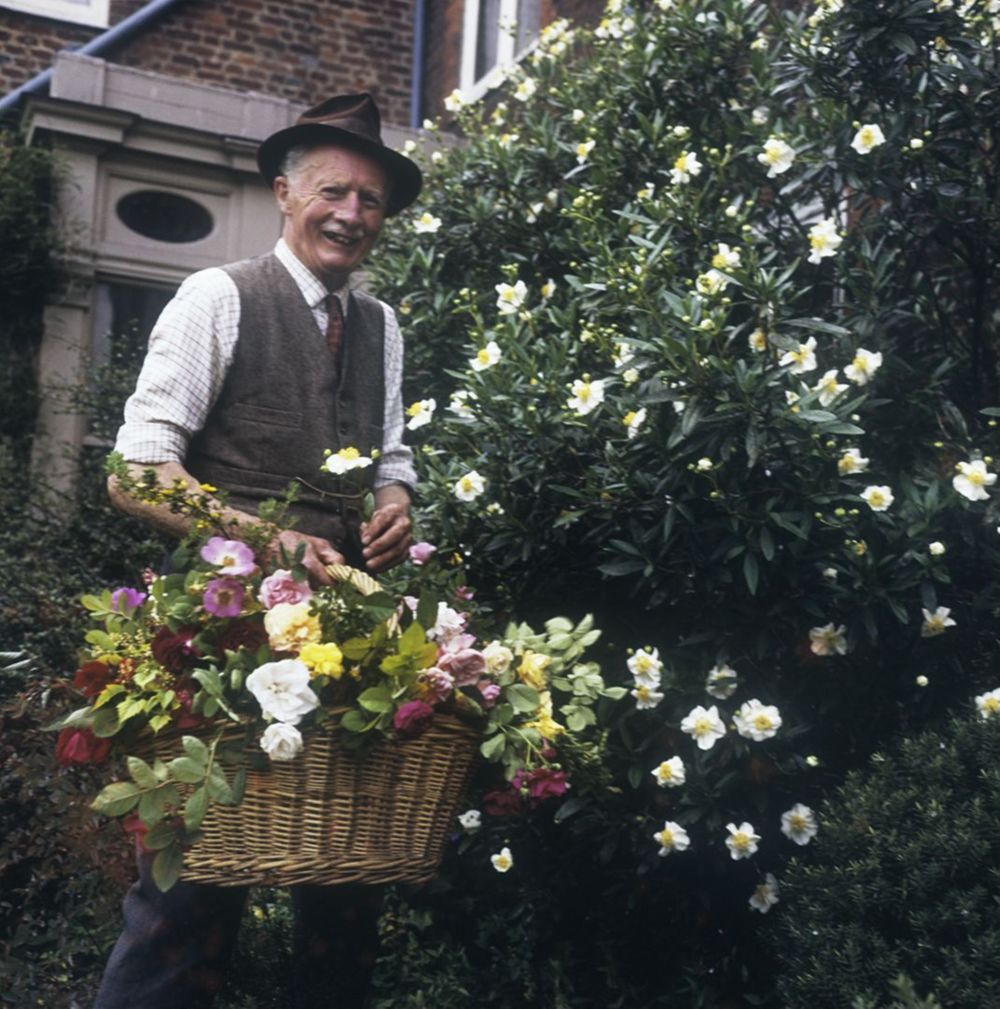
Diplomat and plantsman Sir David Scott (1887-1986) with a large basket of his old roses in his garden at the Dower House (Boughton House). He is standing next to a Carpenteria californica planted by his mother, Ada Mary Montagu Douglas Scott (nee Ryan) (1855-1943) in 1911.
Further reading:
Valerie Finnis Collection at the RHS online here
The Merlin Trust, Finnis’ charity set up to assist young gardeners here
Valerie Finnis Wikipedia here
Cecil Beaton at Waterperry – a previous post from 2022 here
 Planting Diaries