
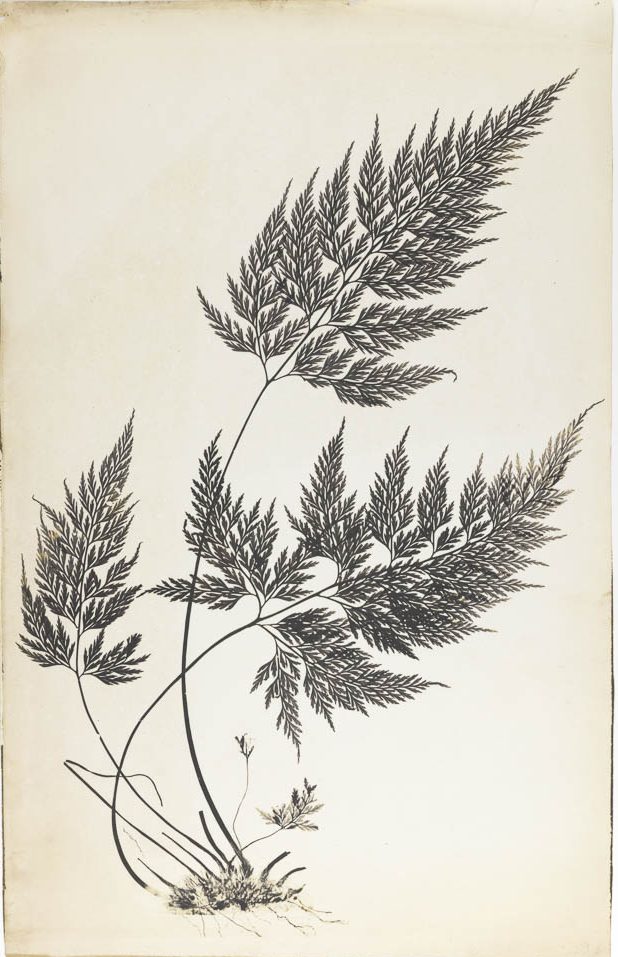
Irish Spleenwort fern. Salted paper print from a photogenic drawing contact negative Salt prints. The British Ferns – Photographed from Nature. Cecilia Glaisher (British, 1828-1892 ). All images courtesy The Fitzwilliam Museum, unless otherwise stated.
The British Ferns: Represented in a Series of Photographs from Nature by Mrs Glaisher was the title of a book project with promising beginnings, but for unknown reasons was never published. It was planned in the early 1850s as a series of volumes of salt print photographs, a collaboration between artist and photographer Cecilia Glaisher (1828 – 1892) and Edward Newman (1801 – 1876), a natural history writer and author of A History of British Ferns (1840), a handbook aimed at amateur growers. Newman’s text was popular, running to four editions by the 1860s and establishing him as an expert in the field.
Cecilia Glaisher was born in Greenwich, where her father John Henry Belville was an astronomical assistant at the Royal Observatory. In 1843 she married James Glaisher (1809 – 1903) who was also employed at the Royal Observatory as Superintendent of the newly created Meteorological and Magnetic Department. It seems likely that Cecilia started to experiment with photogenic drawing, the process pioneered in the UK by William Henry Fox Talbot, with the encouragement of her husband in the early 1850s.
Ferns were very much on trend in Victorian Britain when the nation was gripped by fern fever, or pteridomania. Fern enthusiasts, both professional and amateur, sourced specimens for their collections from nurseries and from the countryside, while imagery of ferns abounded in decorative prints, fabrics, and ceramics.
Dozens of books about ferns were published during this period, some purely academic, others packed with illustrations, seeking to delight readers and explain cultivation techniques. There was also a rush to explore new ways to represent ferns and allied plants, like mosses, using the latest technology of photography. Anna Atkins’ cyanotypes of algae which she self published in 1843 is a well known example.
Nature printing was a much older printing method that experienced some new development in the mid 19th century. Flat leaves, such as ferns, were ideally suited to this process, which traditionally were inked and pressed onto paper. Henry Bradbury (1829 – 1860) patented a process where plant specimens pressed into lead plates that could be electroplated to become printing plates. These plates were hand coloured producing lifelike coloured illustrations, such as those published in Ferns of Great Britiain and Ireland Nature Printed (Moore / Bradbury 1855).

Nature printed fern from The Ferns of Great Britain and Ireland (Moore / Bradbury 1855) Biodiversity Heritage Library
An article in The Athenaeum Magazine from 1855 sheds light on the progress of Glaisher and Newman’s fern photography project. By June of that year, Glaisher had produced a sequence of salt print photographs which were exhibited at the Royal Society where they were reviewed favourably:
‘There were exhibited a collection of British ferns by Mrs Glaisher, from specimens collected by Mr Newman. These beautiful copies, the size of life, and perfect in all their details, promise to be of value to the botanist, to whose requirements they are better adapted than any that have yet been placed at his command. Their effect is that of delicate sepia drawings, and at the same time that the venation of the leaves is displayed with the fidelity and delicacy of the original, it is, as in nature, only to be detected on near inspection.’
The forthcoming publication was also mentioned:
‘Our acquaintance with the natural history of the ferns, and their peculiar elegance of form, is likely to be much increased by this valuable and interesting series, which, we understand, is in course of publication by Mr Newman.’
Glaisher’s elegant and accomplished photographs now held in The Fitzwilliam Museum’s collection show the ferns supplied by Newman in close botanical detail. Multiple views of the same fern species demonstrate her experiments with composition. Sometimes leaves are shown singly, or grouped together in varying numbers, while young plants are placed next to mature specimens for contrast. Tiny wall-rue ferns are arranged together forming a complex pattern reminiscent of a Victorian dress fabric. Larger specimens have their stems bent to fit into the consistently sized rectangular space required for publication.
So, why did this project falter? A number of possible reasons have been suggested including the complexities of printing the photographs in sufficient quantity to make publication financially viable. Also, the appearance of Ferns of Great Britiain and Ireland in 1855, with its spectacular coloured nature prints, before Glaisher and Newman were ready to publish their work, might also have been a factor.
We can only think that the collapse of the fern project must have been a disappointment to Cecilia Glaisher, but fortunately there was another opportunity waiting for her. Together, the Glaishers produced a series of one hundred and fifty illustrations of snowflakes for James Glaisher’s research paper for the Meterological Society, On the Severe Weather at the beginning of the year 1855: and on Snow and Snow Crystals. James’s initial sketches of the individual snowflakes, observed through lenses from their house in Blackheath, were re-drawn and enlarged by Cecilia in a clear, diagrammatic style. Cecilia also produced photographic copies of James’s snowflake drawings using salt prints.
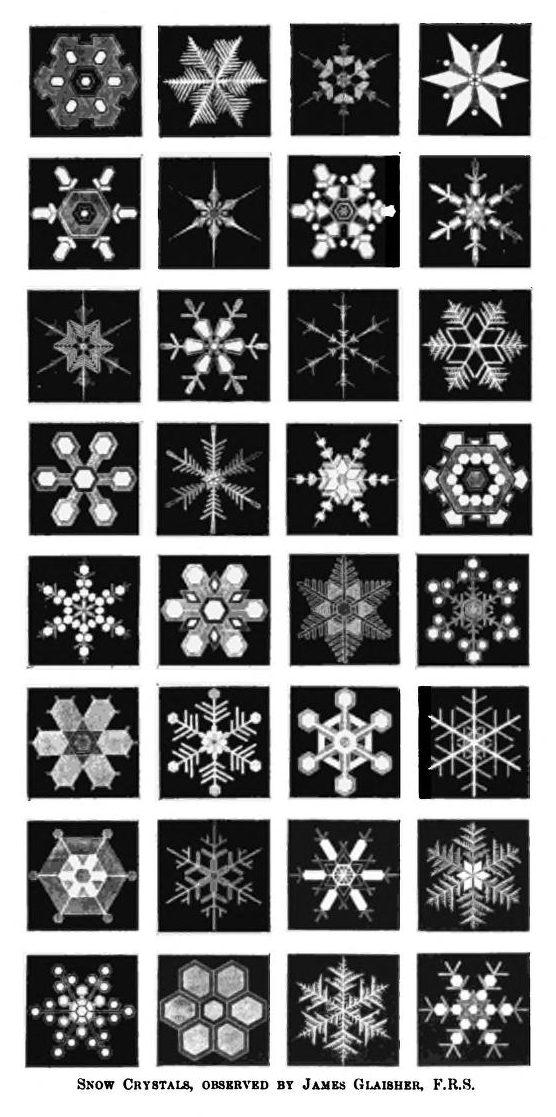
Quarterly Journal of the Royal Meteorological Society
Although Cecilia Glaisher’s fern photographs weren’t published, they were preserved by her children and her son James presented them to The Fitzwilliam Museum in 1928 with some of her snowflake drawings and a series of highly accomplished nature prints depicting leaves and ferns. One of the limitations of nature printing is that it works best with flat objects and in a series of images showing oak specimens Glaisher has addressed this by adding hand drawn details of branches and acorns.
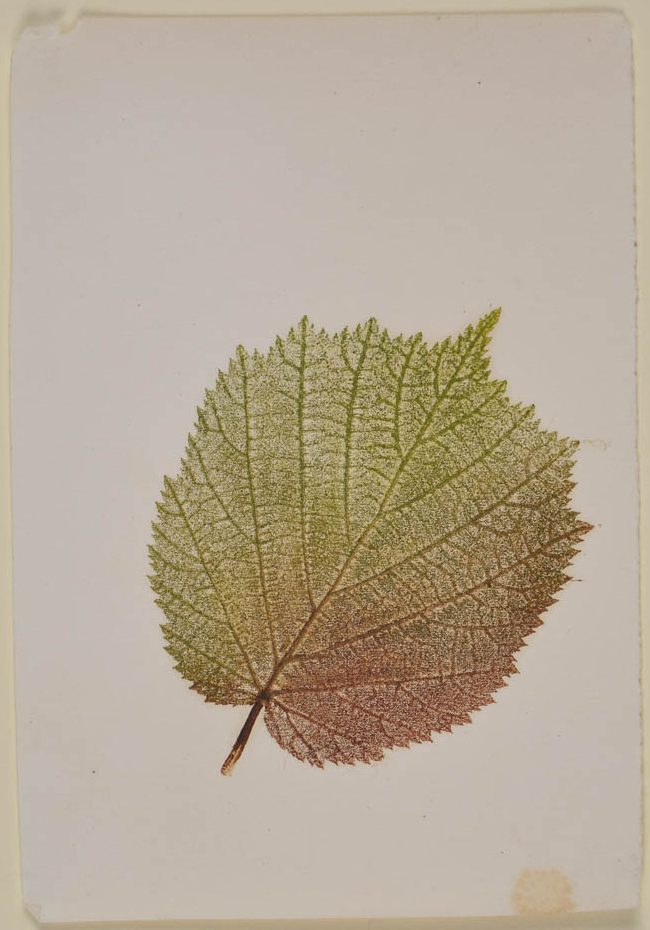
Hazel leaf. Nature print in green and brown c. 1857
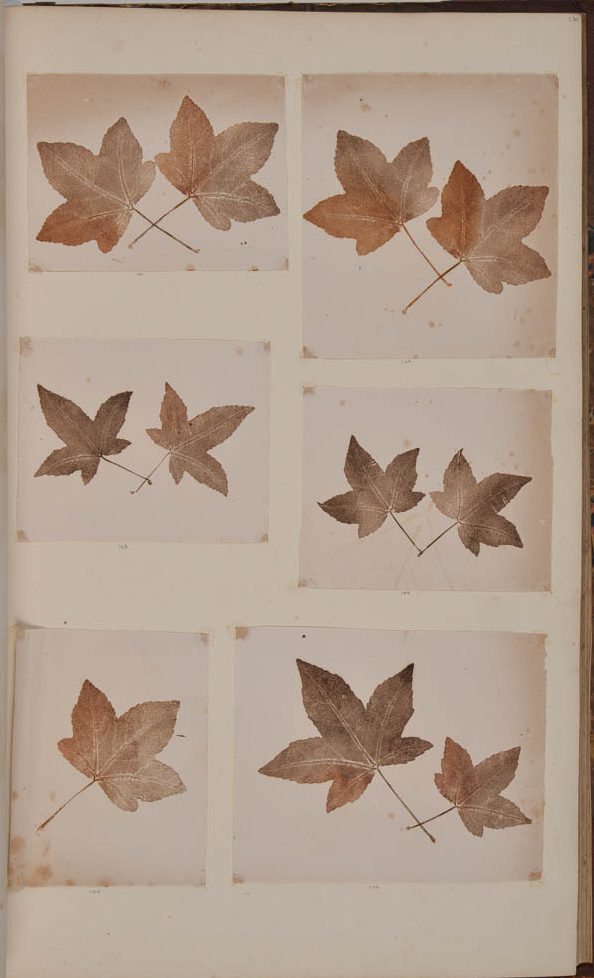
Maple leaves printed in brown. c. 1857
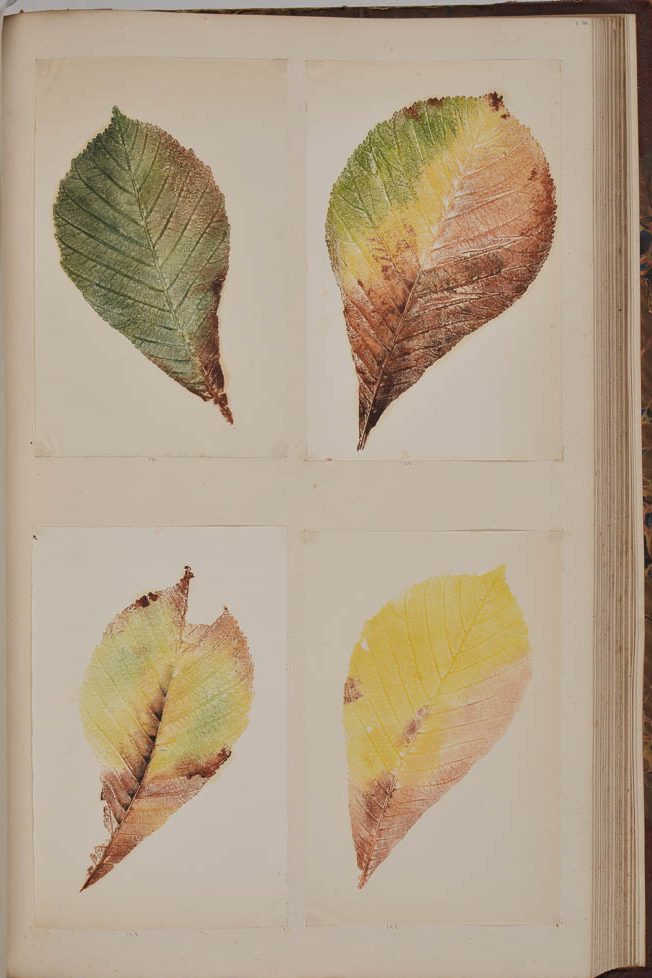
Horse chestnut leaf. Printed in green, brown and yellow. c. 1857
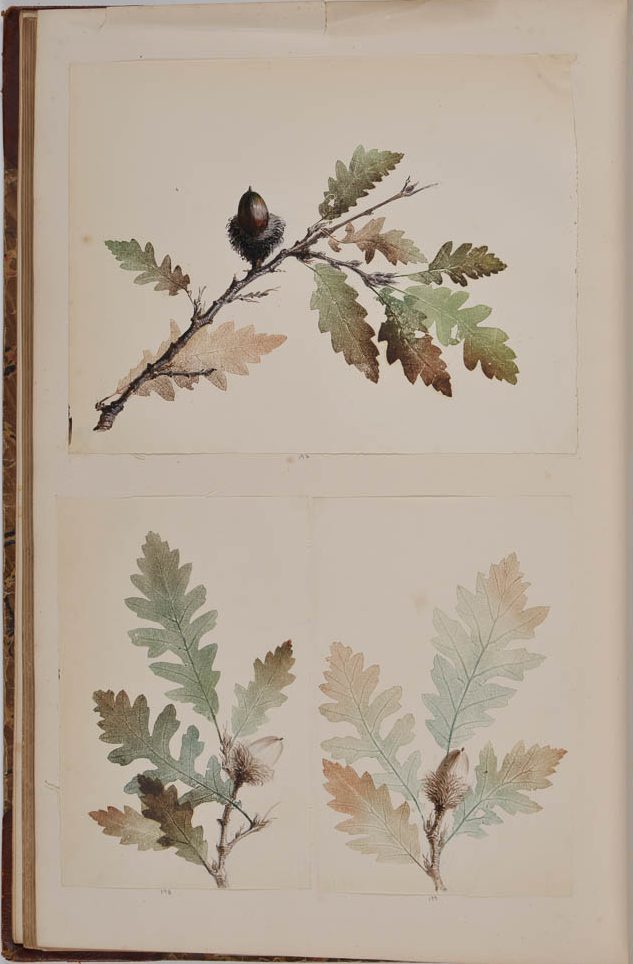
Turkey oak branch with leaves and acorn. Printed leaves in brown and green with hand drawn branch and acorn. c. 1857
Had The British Ferns: Represented in a Series of Photographs from Nature by Mrs Glaisher been published as planned, Cecilia Glaisher’s name would be much better known today as a photographer. Her ability to work with great precision and her systematic approach are skills that seem to lend themselves best to her still life photography. While her snowflake drawings are undoubtedly accomplished, they are rather stiff and mechanical, with any flaws in the structures smoothed out. But photography seems to release Glaisher from any tendency towards rigidity, her skills at arrangement and composition allowing the natural forms of plants, including their inevitable imperfections, to flow freely.
There’s lots more information about Cecilia Glaisher on the website dedicated to her work – see links below:
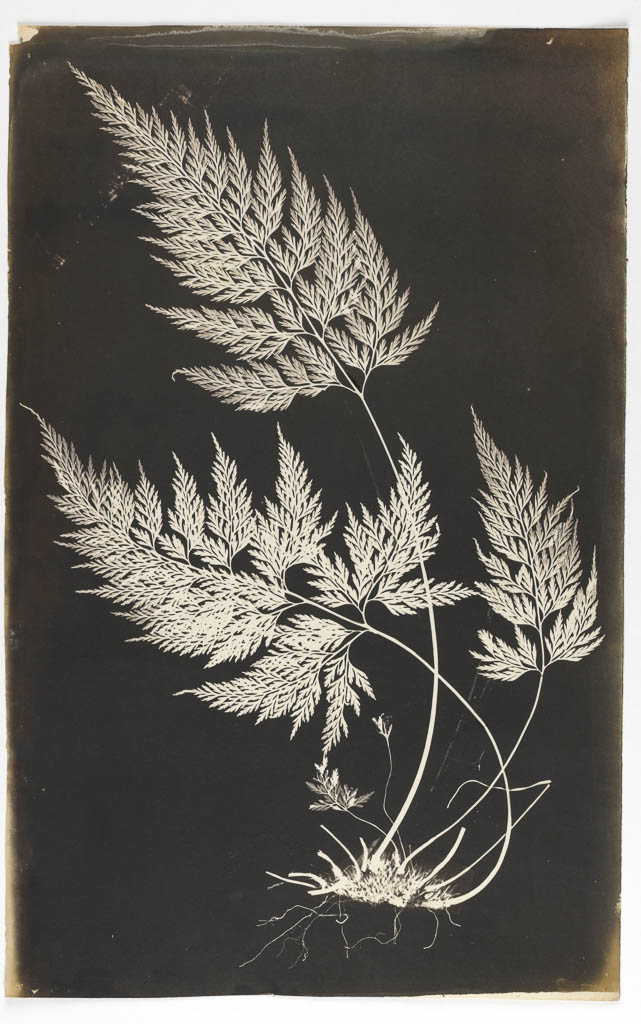
Irish Spleenwort fern. Photogenic drawing contact negative.
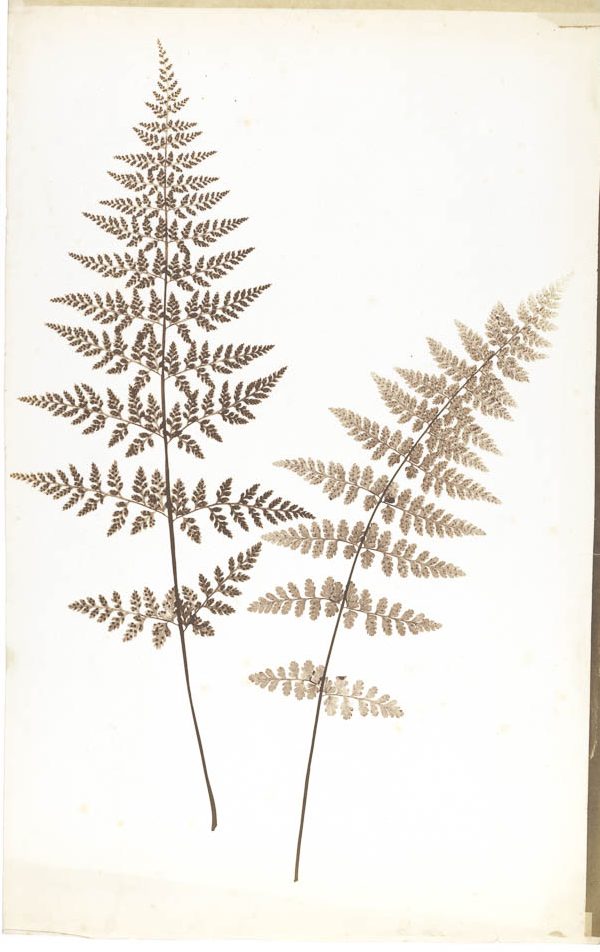
Narrow Buckler-fern, or Withering’s Fern. Salted paper print from a photogenic drawing contact negative.
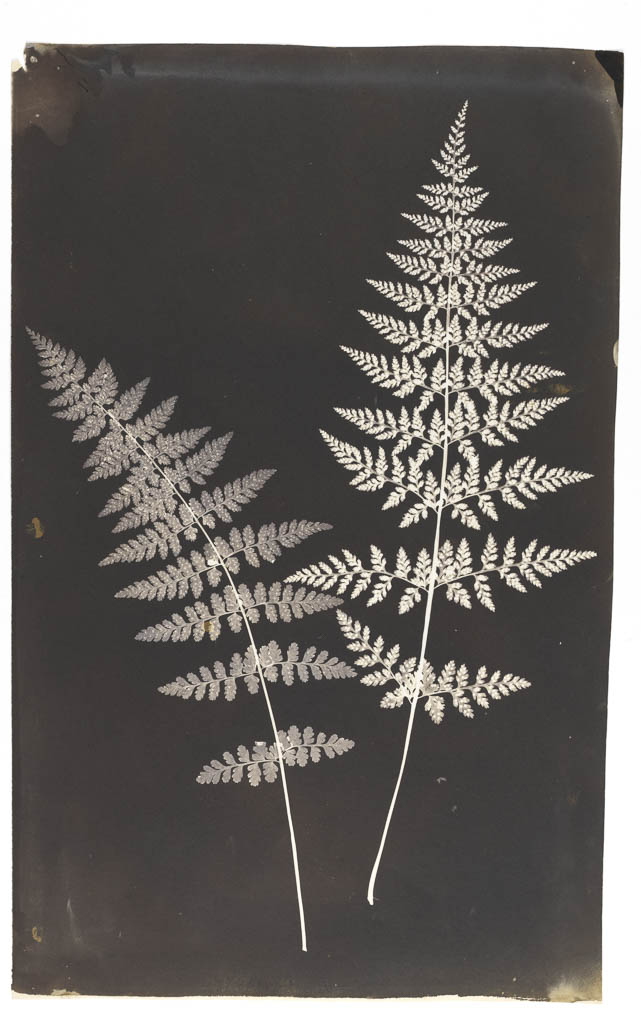
Narrow Buckler-fern, or Withering’s Fern. Photogenic drawing contact negative.
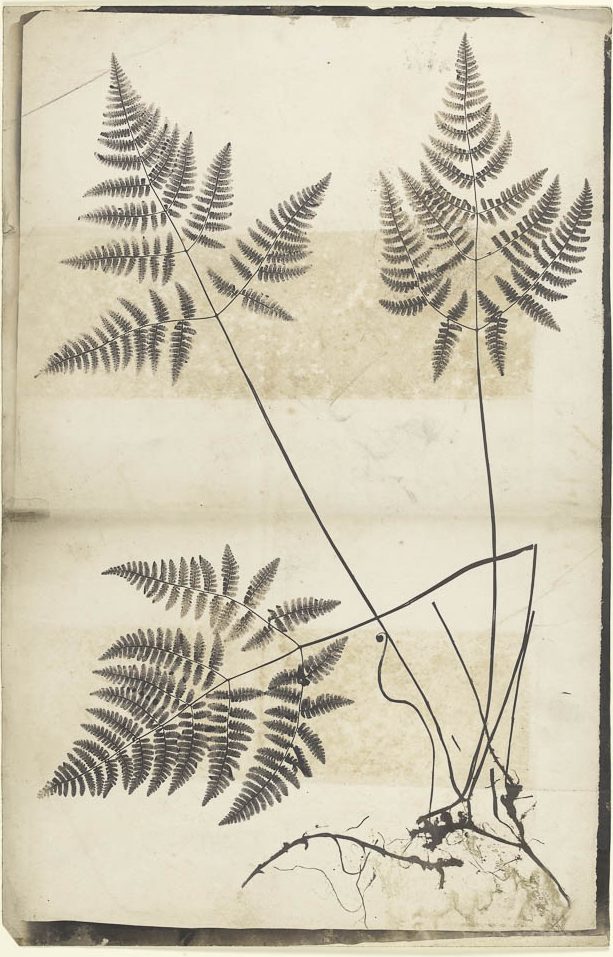
Limestone (Oak) Fern, or Smith’s Fern. Salted paper print from a photogenic drawing contact negative.
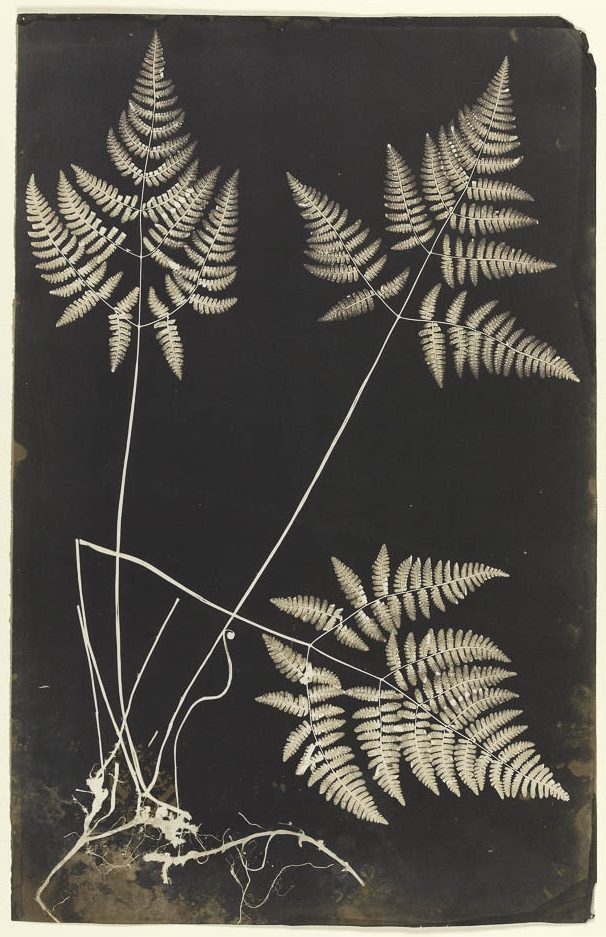
Limestone (Oak) Fern, or Smith’s Fern. Photogenic drawing contact negative.
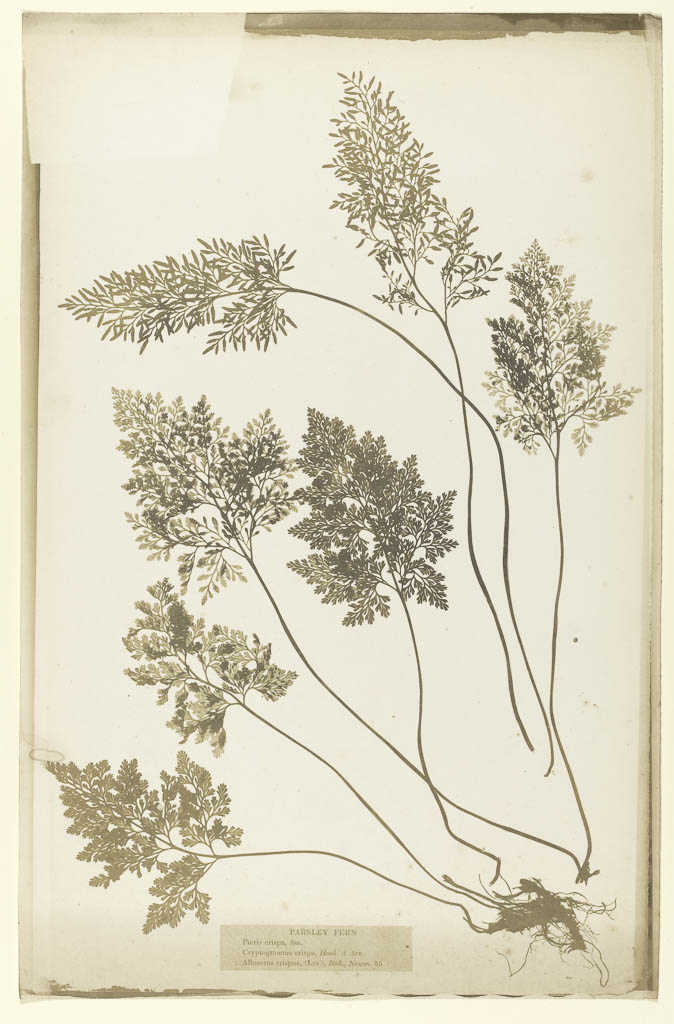
Parsley Fern, Rock brakes. Salted paper print from a photogenic drawing contact negative.
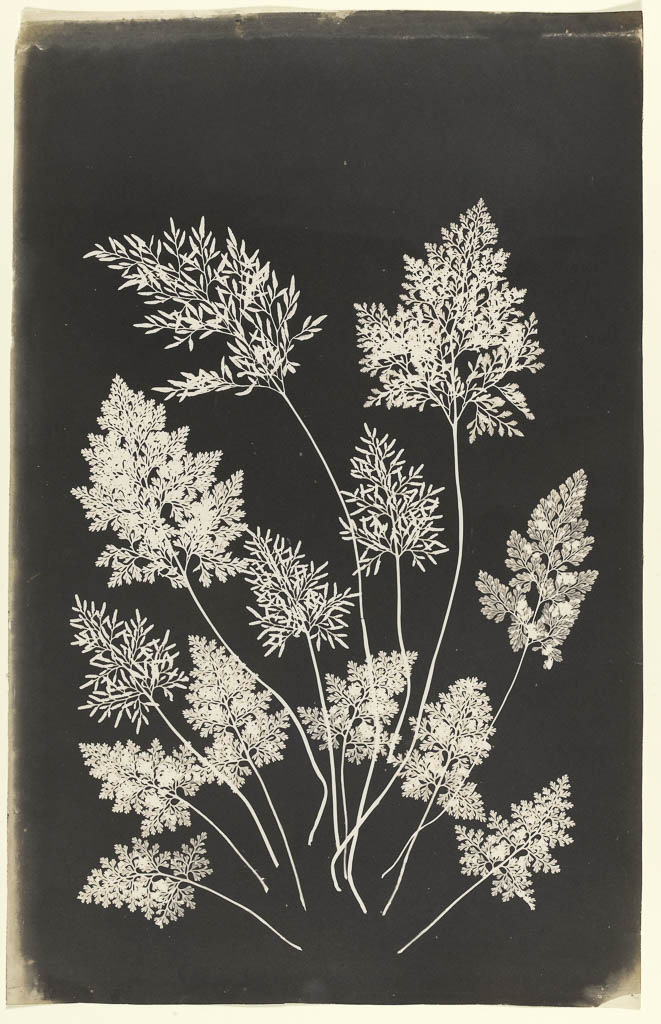
Parsley Fern, Rock brakes. Photogenic drawing contact negative. Thirteen frond composition.
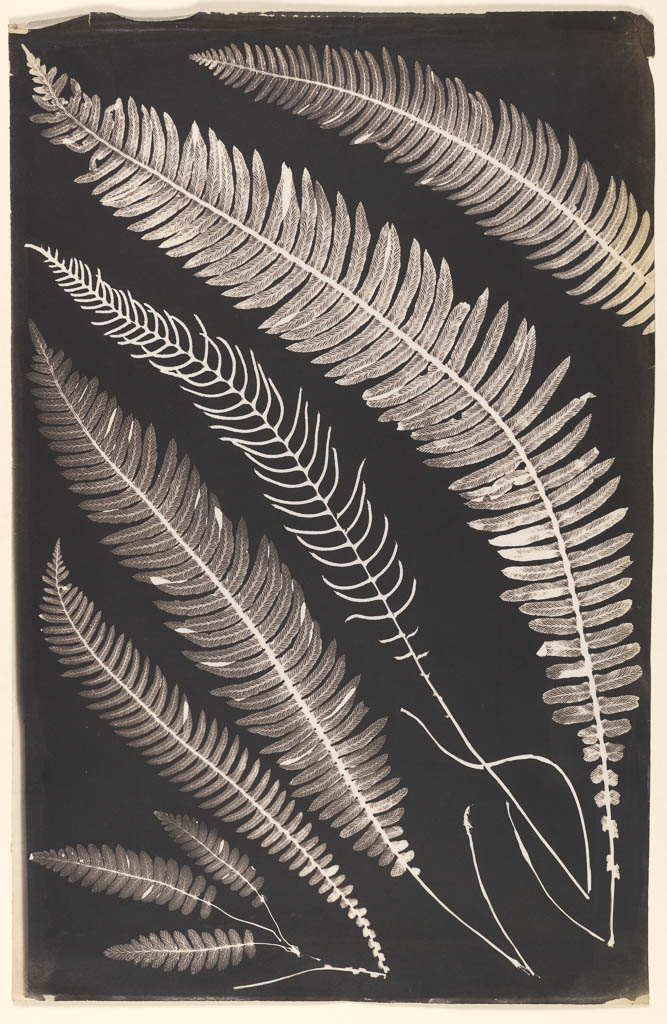
Hard fern. Photogenic drawing contact negative. Sterile and fertile fronds.
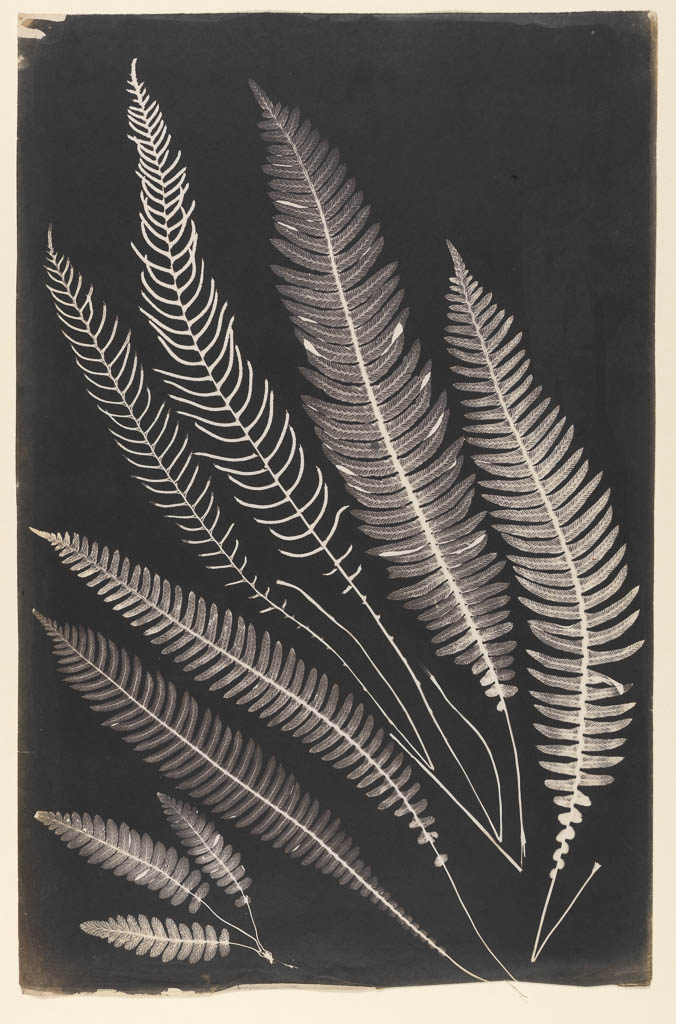
Hard fern. Photogenic drawing contact negative. Sterile and fertile fronds.
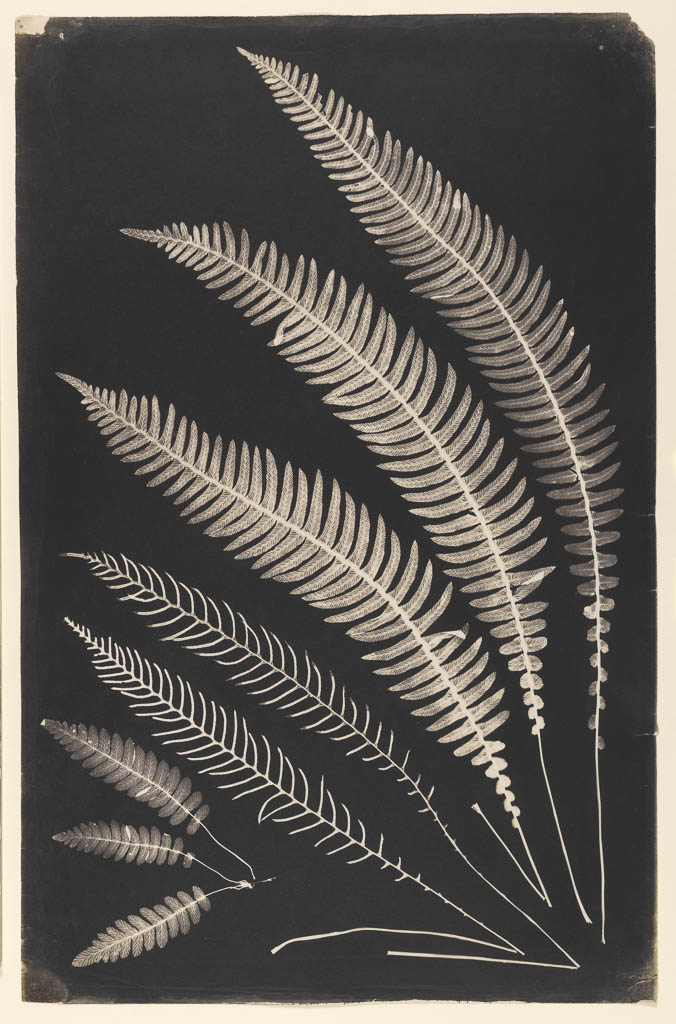
Hard fern. Photogenic drawing contact negative. Sterile and fertile fronds.
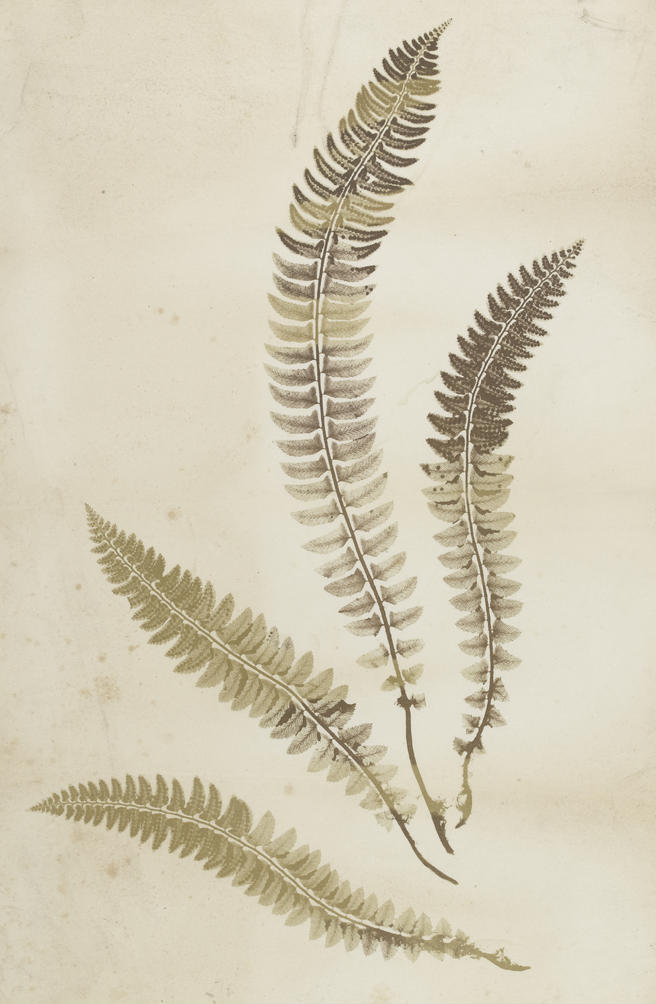
Holly fern. Salted paper print from a photogenic drawing contact negative. Four specimens, ‘lantern composition’.
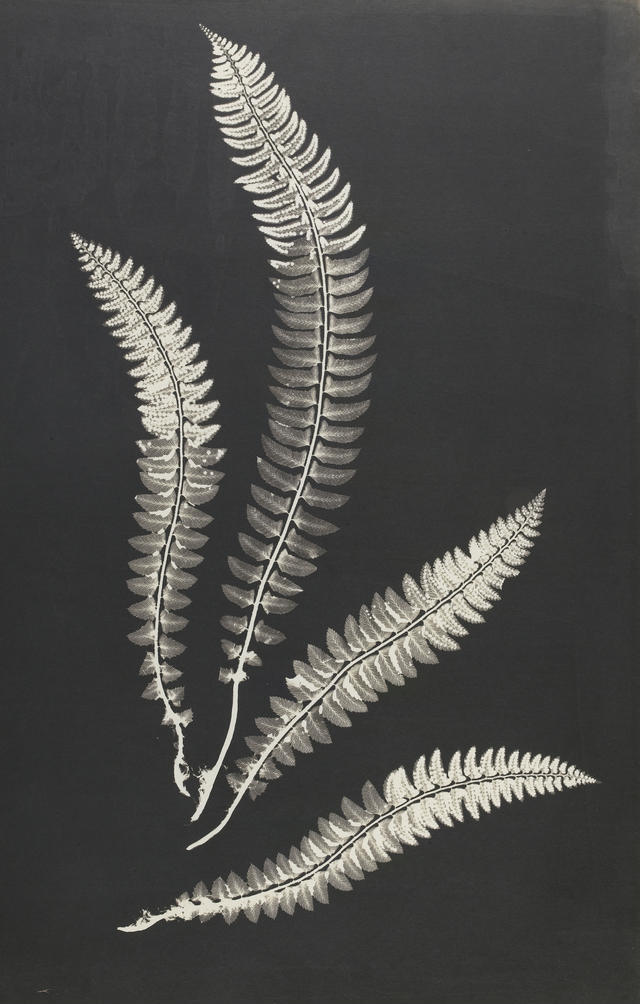
Holly fern. Photogenic drawing contact negative. Four specimens, ‘lantern composition’.
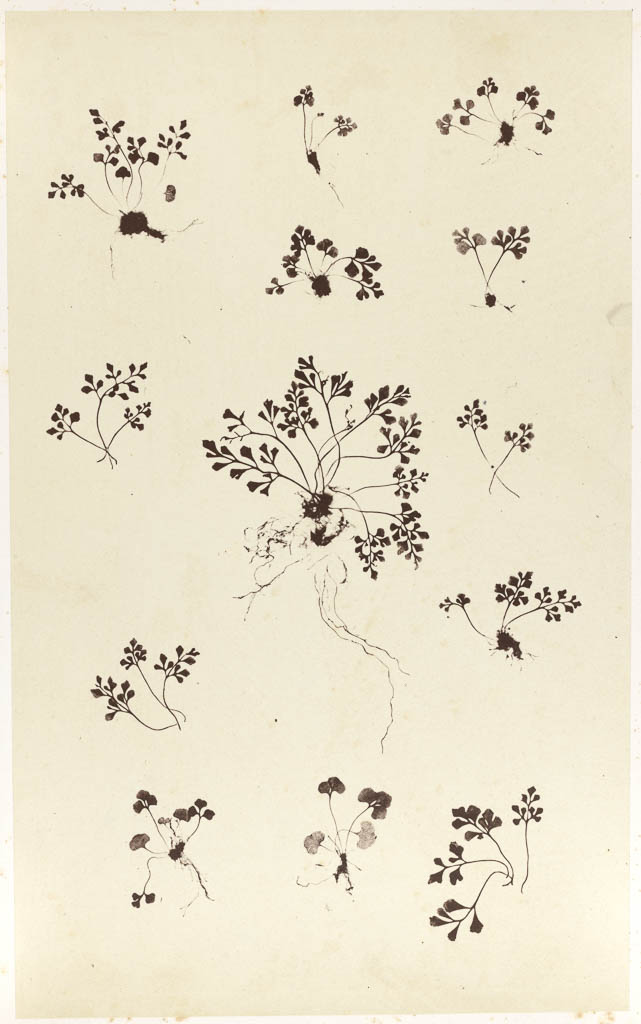
Wall-rue fern, or Rue-leaved Spleenwort. Albumen print from a photogenic drawing contact negative.
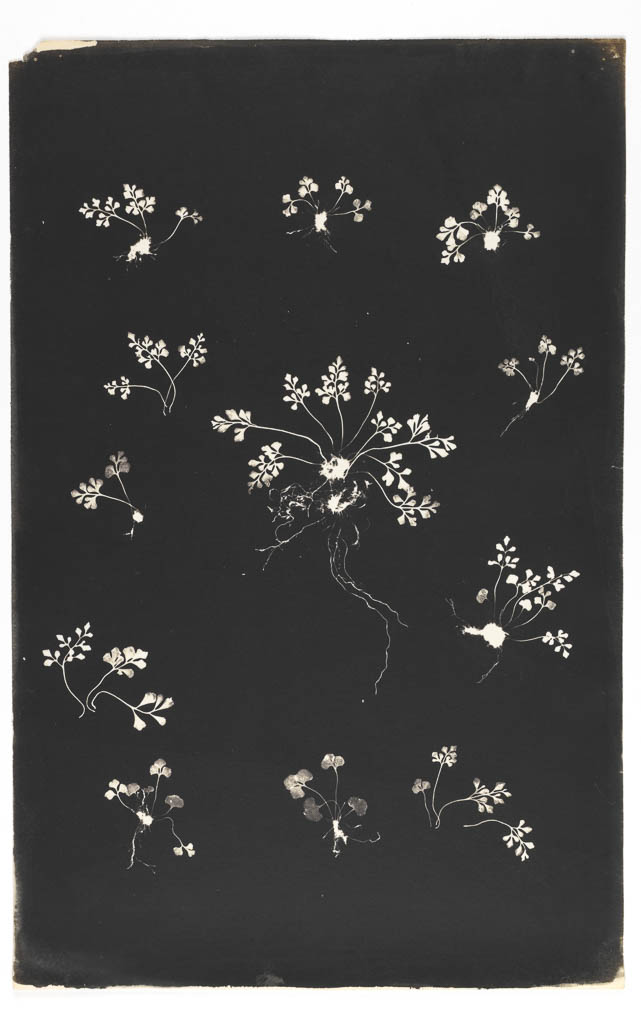
Wall-rue fern, or Rue-leaved Spleenwort. Photogenic drawing contact negative.
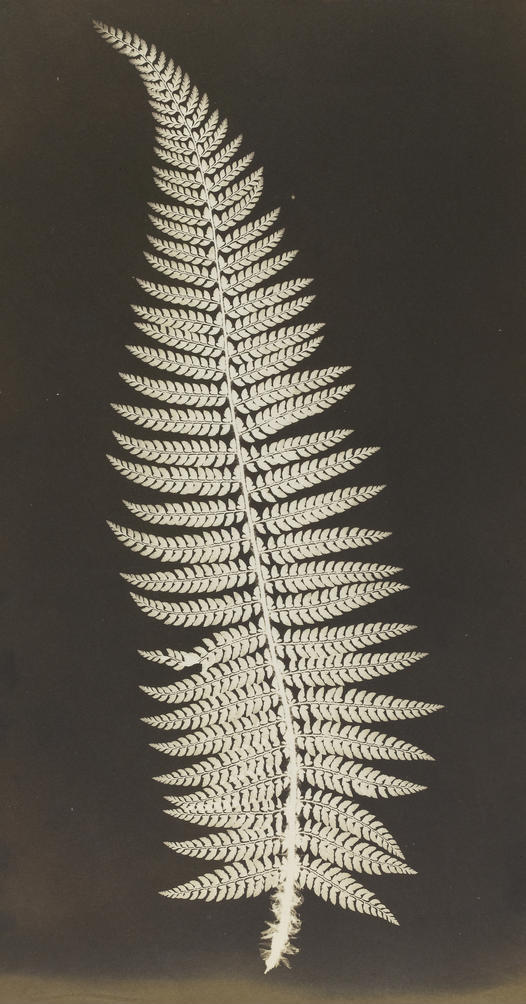
Soft Shield-fern, or Willdenow’s Fern. Photogenic drawing contact negative. Single frond.
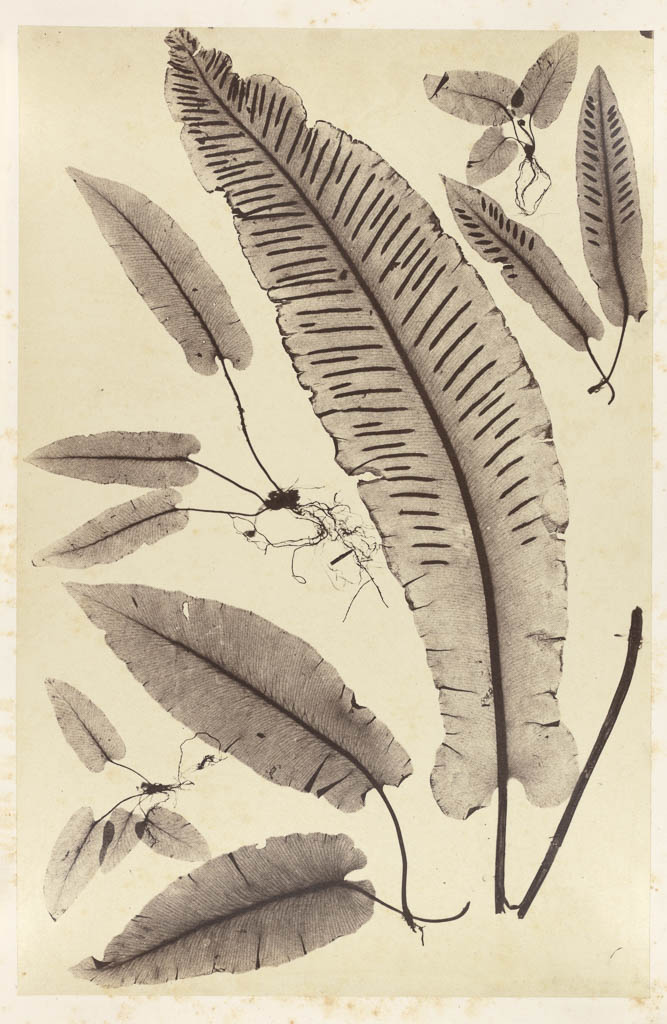
Hart’s-tongue fern. Composition including sporelings, ‘enlarged’ composition. Albumen print from a photogenic drawing contact negative.
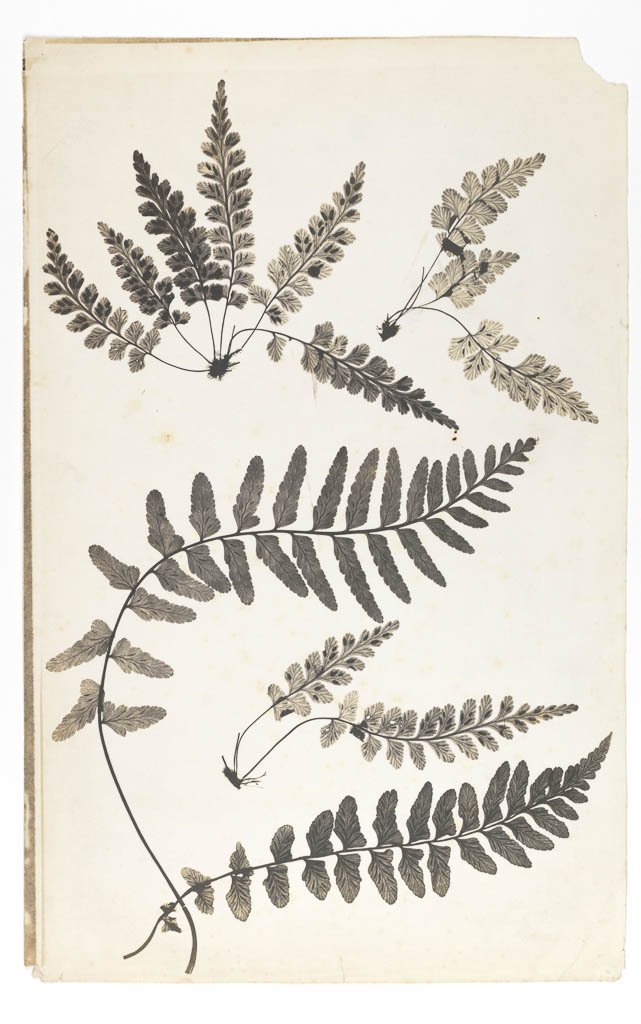
Sea Spleenwort fern. Salted paper print from a photogenic drawing contact negative.
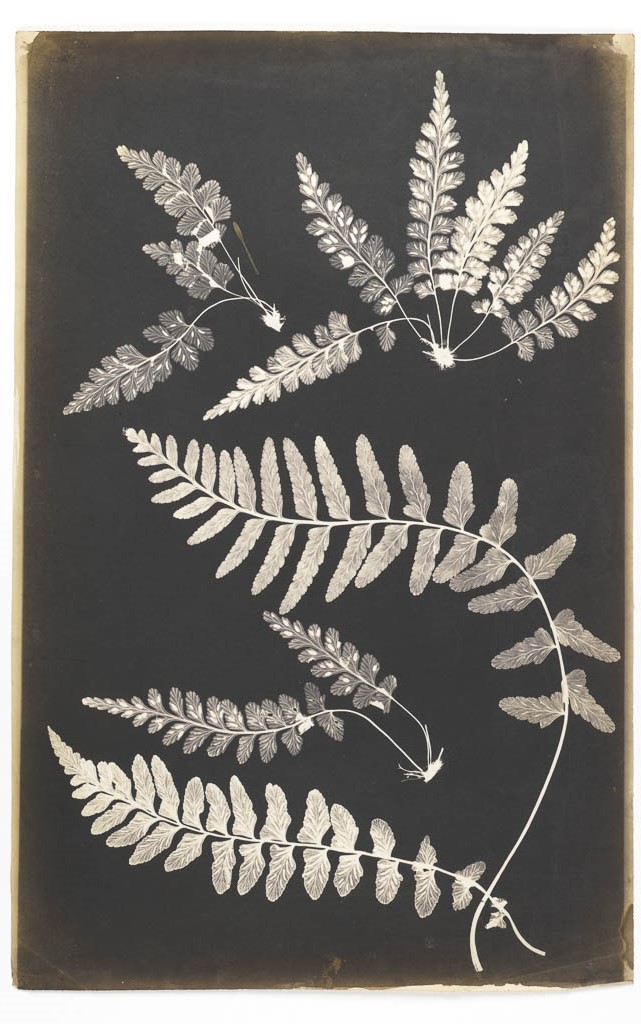
Sea Spleenwort fern. Photogenic drawing contact negative. Composition with young plants, with water-drop mark.
Further reading:
Cecilia Glaisher’s work from The Fitzwilliam Museum: here
Cecilia Glaisher’s website: here
Cecilia Glaisher on Wikipedia: here
Edward Newman on Wikipedia: here
James Glaisher on Wikipedia: here
The Athenaeum Magazine, June 1855: here
 Planting Diaries