

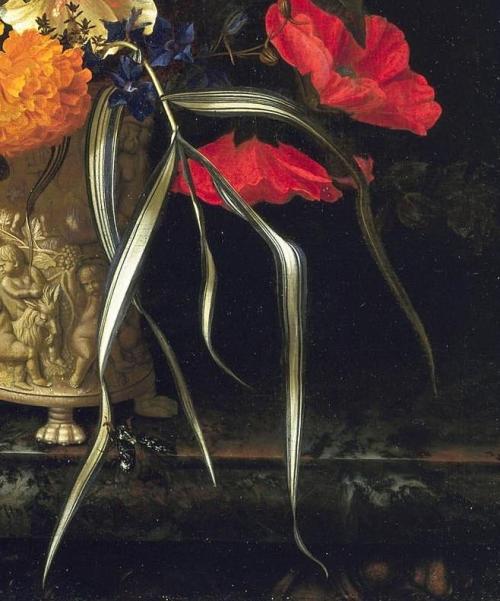
Study of flowers in a vase; with wrestling putti on the vase and roses tumbling out, a poppy lying across the base. 1720 Captions and images © The Trustees of the British Museum
Jan van Huysum (1682 – 1749) is considered amongst the finest Dutch painters of still life arrangements of fruit and flowers. Based in Amsterdam, his work was highly sought after by collectors all over Europe in the 18th century and remains well represented in museums and galleries worldwide today. Van Huysum was born into an artistic family, with three brothers also working as painters, and his father Justus noted for his skill in flower painting and decorative arts.
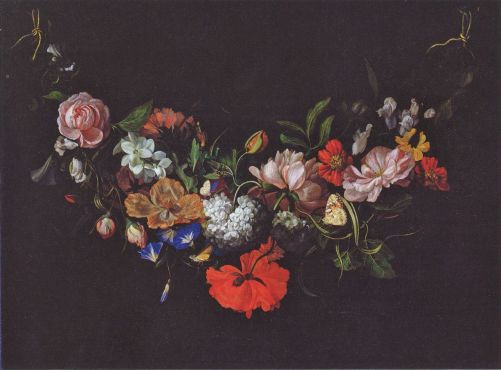
The illusion created by van Huysum’s flower paintings, of abundant flowers and foliage recorded before their freshness fades, has much to do with the artist’s apparent suspension of time. When we consider the vase life of the flowers we might expect them to last perhaps a few days before they begin to deteriorate. But this timeframe seems too short to produce the fine detail in a painting containing dozens of blooms.
Another clue that the arrangements are more complex than might appear at first glance is that they frequently contain flowers that belong to different seasons. Tulips which should finish flowering in May, appear alongside hollyhocks and French marigolds which bloom later, in June or July. Flowers with short stems are blended seamlessly into these arrangements, although in reality they would wilt very quickly, unable to reach a source of water.
All these anomalies seem to suggest the paintings are composite works, and demonstrate the formidable skill of the still life artist, the creator of a moment of floral profusion beyond what is practically possible.
Perhaps with the aim of preserving the mystique of his artistry, or discouraging the prospect of competition in a lucrative market for still life works, Jan van Huysum was said to be protective of his painting techniques. So this collection of flower studies, bequeathed to The British Museum in 1753 by Sir Hans Sloane, provides helpful insights into the process of planning his elaborate paintings.
Loose, fluent sketches of magnificent arrangements of flowers, foliage and fruit show individual specimens carefully placed, with the largest, structural stems and blooms used to form a framework, into which smaller flowers could be inserted later.
Detailed flower studies demonstrate how different plant stems behave when cut and the shapes they make, how they arch or trail, or how the weight of double flowers pull a stem downwards. Tulips, which continue to grow after cutting, appear full of movement, their stems twisting and bending as their mature flowers open fully. Hollyhocks are chosen for their height and volume in the composition of an arrangement as well as for their beautiful flowers.
Textures of both flowers and foliage are closely observed. Van Huysum seems to delight in the coarse, glaucous leaves of the opium poppy, its robust foliage a useful contrast with delicate plants. He often chooses to paint flowers facing away from the viewer, capturing the slightly waxy sheen of the undersides of tulip and poppy petals.
Some of van Huysum’s naturalistic studies record imperfections; a few rose leaves are damaged, perhaps by caterpillars, and a trailing nasturtium stem shows some dying leaves, with a papery texture. In this way, details in Dutch flower paintings allude to themes of vanitas, the suggestion that life in all its beauty is but a fleeting moment, soon to disappear.
Van Huysum’s image library of flowers in full bloom must have been a valuable reminder of their forms and scale, in the months when these plants were unavailable to draw from life. Each study possesses a contemplative stillness, reflecting the quiet grace of each plant.
His flower studies also provide an overview of the fashionable and collectable flowers cultivated in the gardens of his wealthy clients. Flowers with variegated petals, like the striped or broken tulips and pinks were highly prized, as were double roses like Rosa centifolila. Sometimes known as the cabbage rose, or the Provence rose, this plant with its large, pink flowers was developed by growers in The Netherlands in the 17th century and later grown extensively in southern France for use in the perfume industry.
Thanks to the success of Jan van Huysum’s work in his lifetime, there are many examples of his flower paintings on view in public collections in the UK – Art UK has a useful list. Strawberry Hill House in Twickenham is currently hosting an exhibition of two works from a private collection, until 8th September 2024. The British Museum has fifty three of van Huysum’s flower studies in its collection some of which appear here – link to all of them below.

Flower study; a yellow parrot tulip

Flower study; a Cornflower and a Tulip

Flower study; a variety of Tulip, red and white stripes

Flower study; an open Tulip, pink-red and white stripes

Flower study; a variety of Rose, two pink and white flowers

Flower study; two pink rose buds starting to open

Flower study; two pink Roses in full bloom, with two buds and foliage

Flower studies; pink roses in full-bloom and an orange flowerhead below

Flower study; a variety of Iris

Flower study; Pinks, two red and white striped flowerheads with buds

Flower study; flowerhead of a Pink with red and white stripes, twigs of a tree above with leaves and berries

Flower studies; including two Pansy flowers and a ragged red and white Tulip (?)
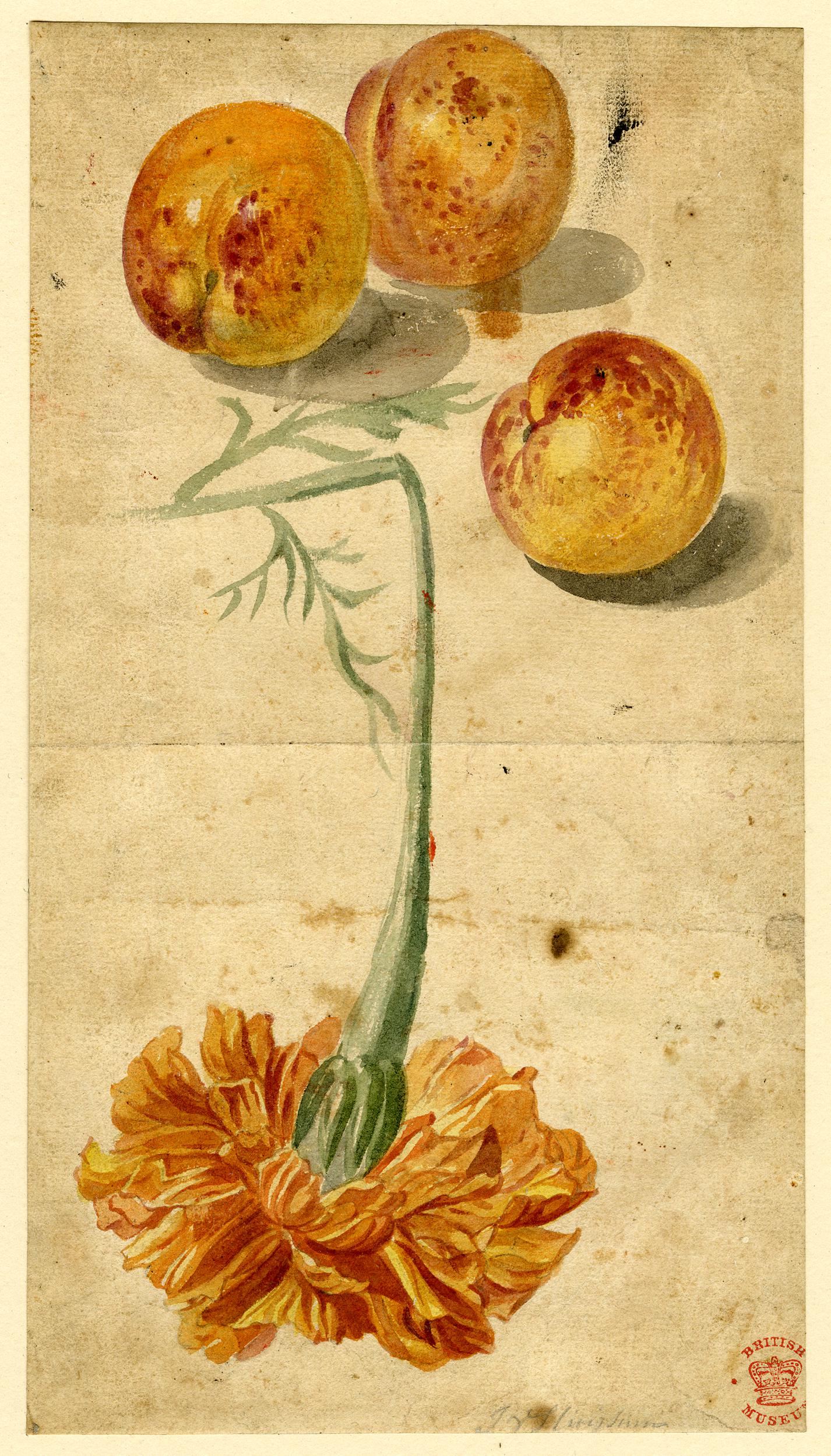
Flower and fruit study; an orange flower, and three peaches (?)

Flower study; trailing foliage with an orange flower
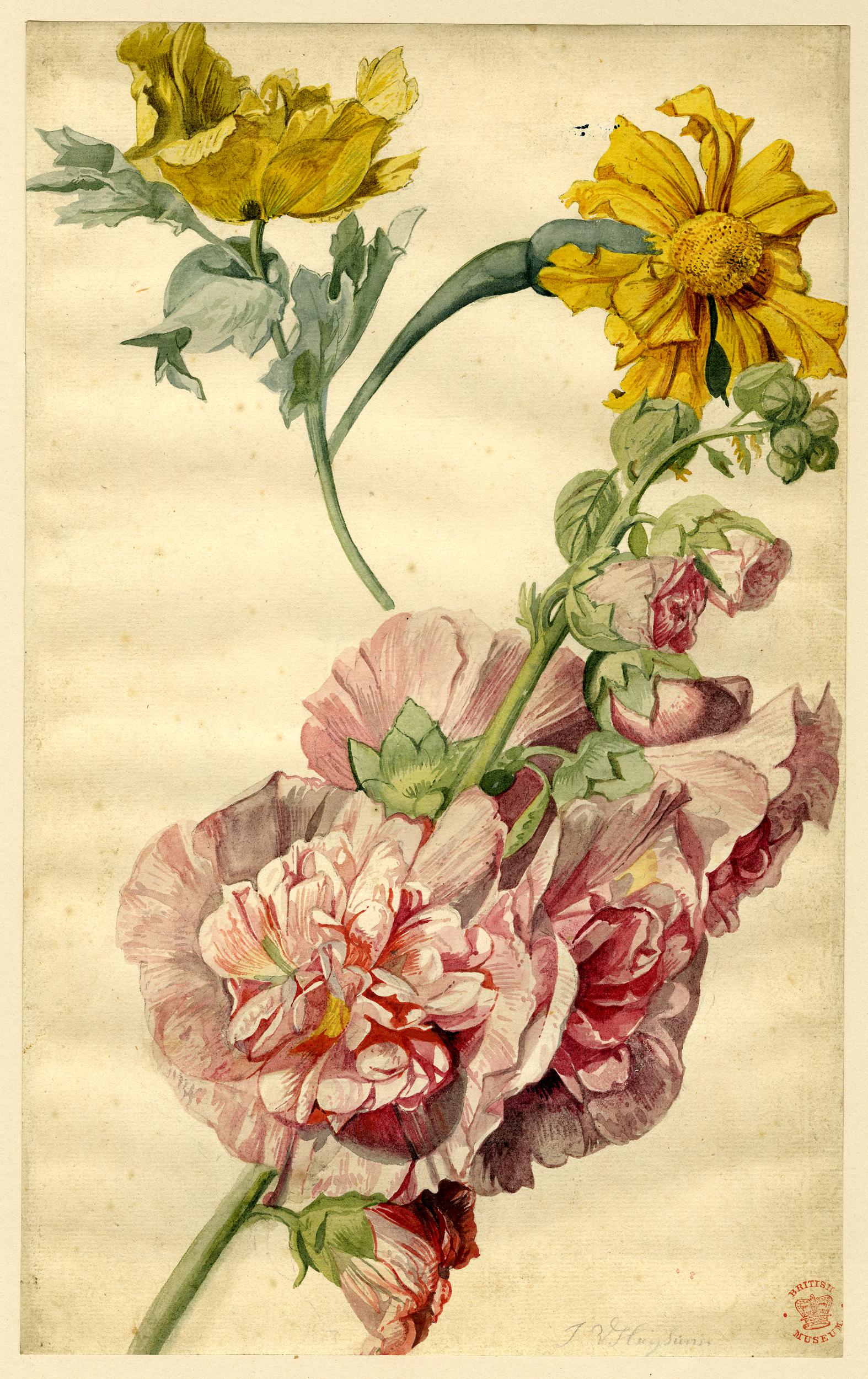
Flower study; shades of pink with two yellow flowers above

Flower study; four open red blooms and five buds on a stem

Flower study; a ragged red Poppy and a trailing stem with small red and pink flowers

Study of foliage
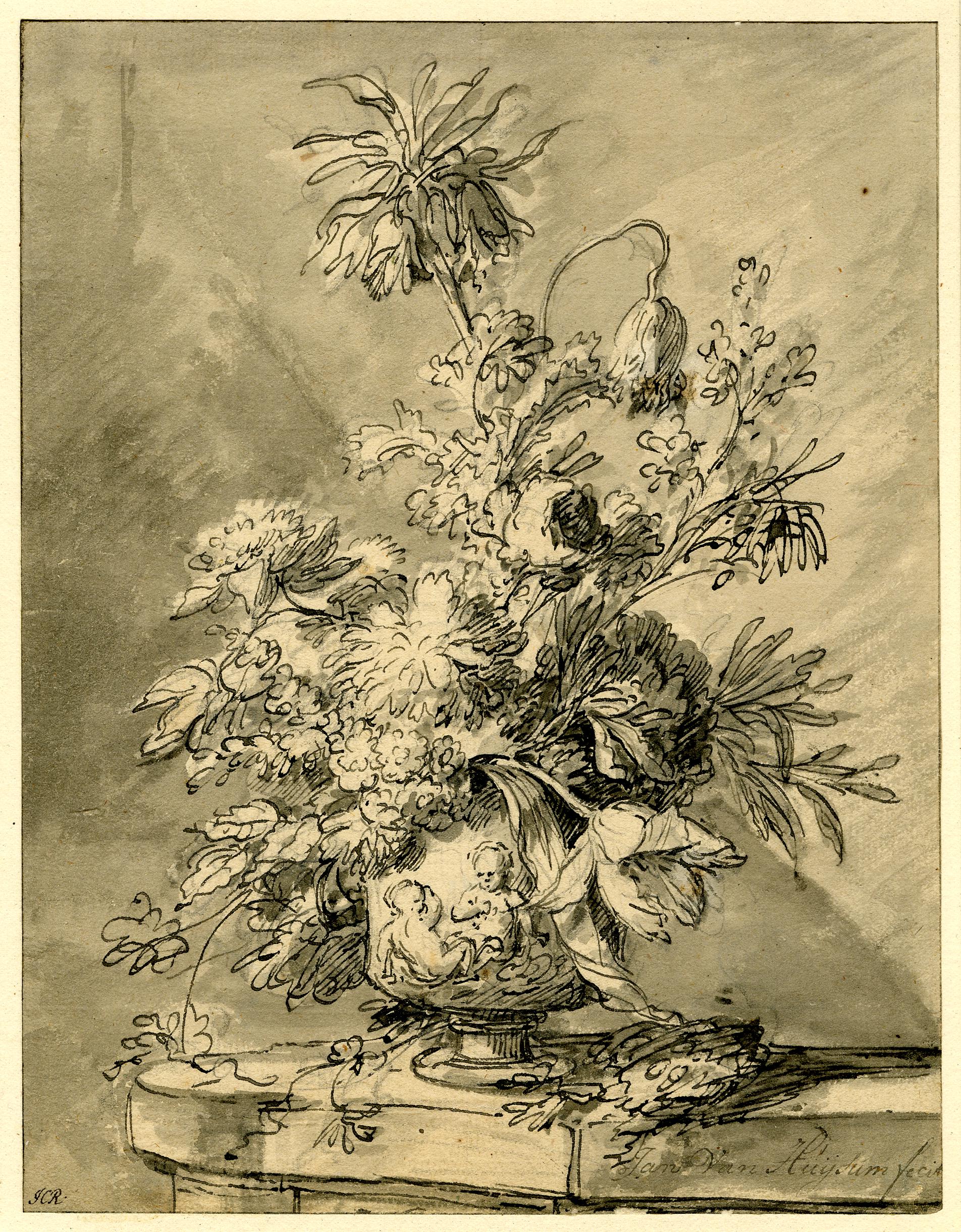
Study of flowers in a vase; two putti on the vase

Study of flowers in a vase; putti wrestling on the vase
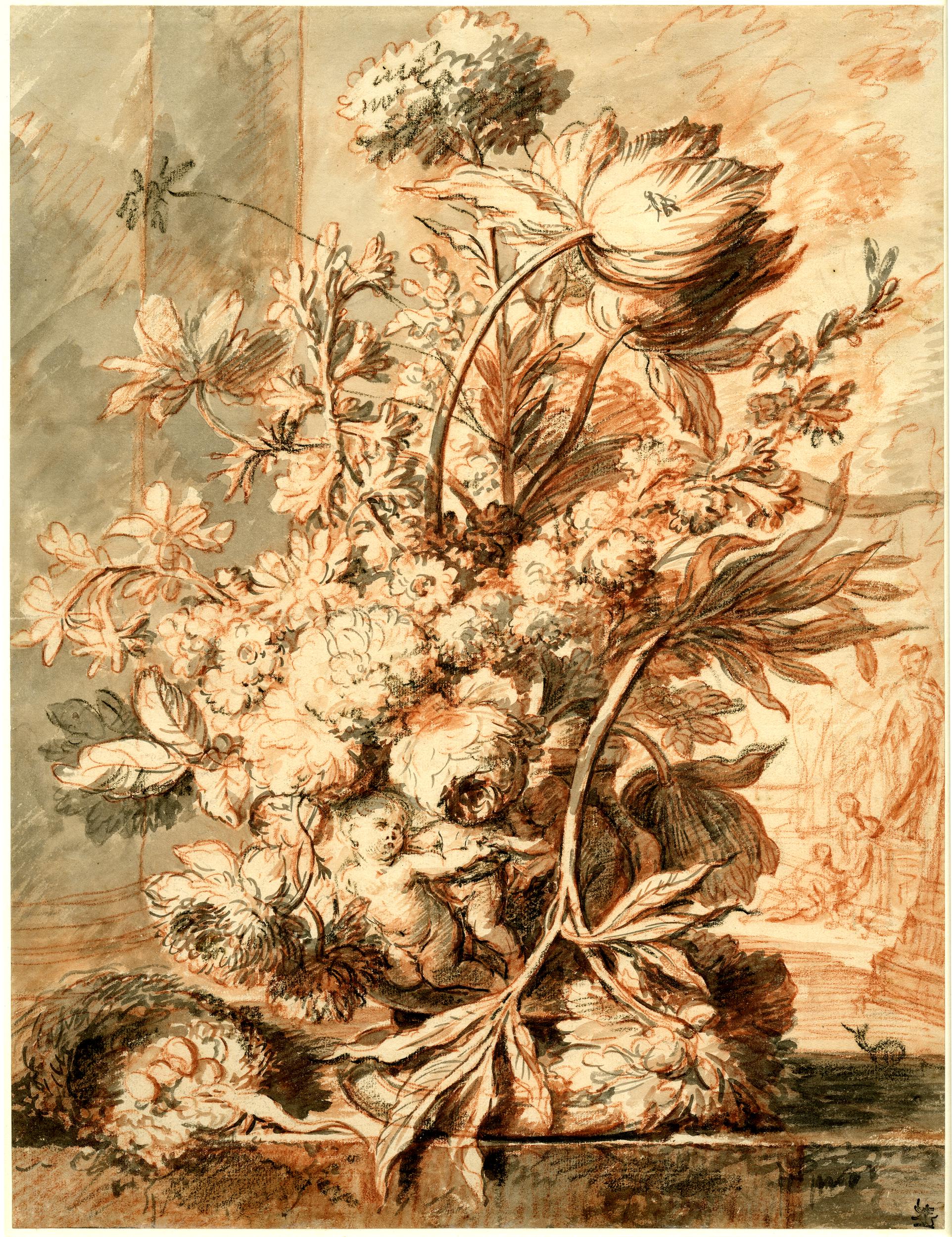
Study of flowers in a vase; with wrestling putti on the vase and a fly on one of the flowers, a statue and two figures beyond

Vase of flowers; the vase decorated with an image of two seated children or putti
Further reading:
Exhibition of two paintings by Jan van Huysum at Strawberry Hill House here
Art UK’s listing of works by Jan van Huysum here
Jan van Huysum on Wikipedia here
Jan van Huysum’s flower studies at The British Museum here



 Planting Diaries