
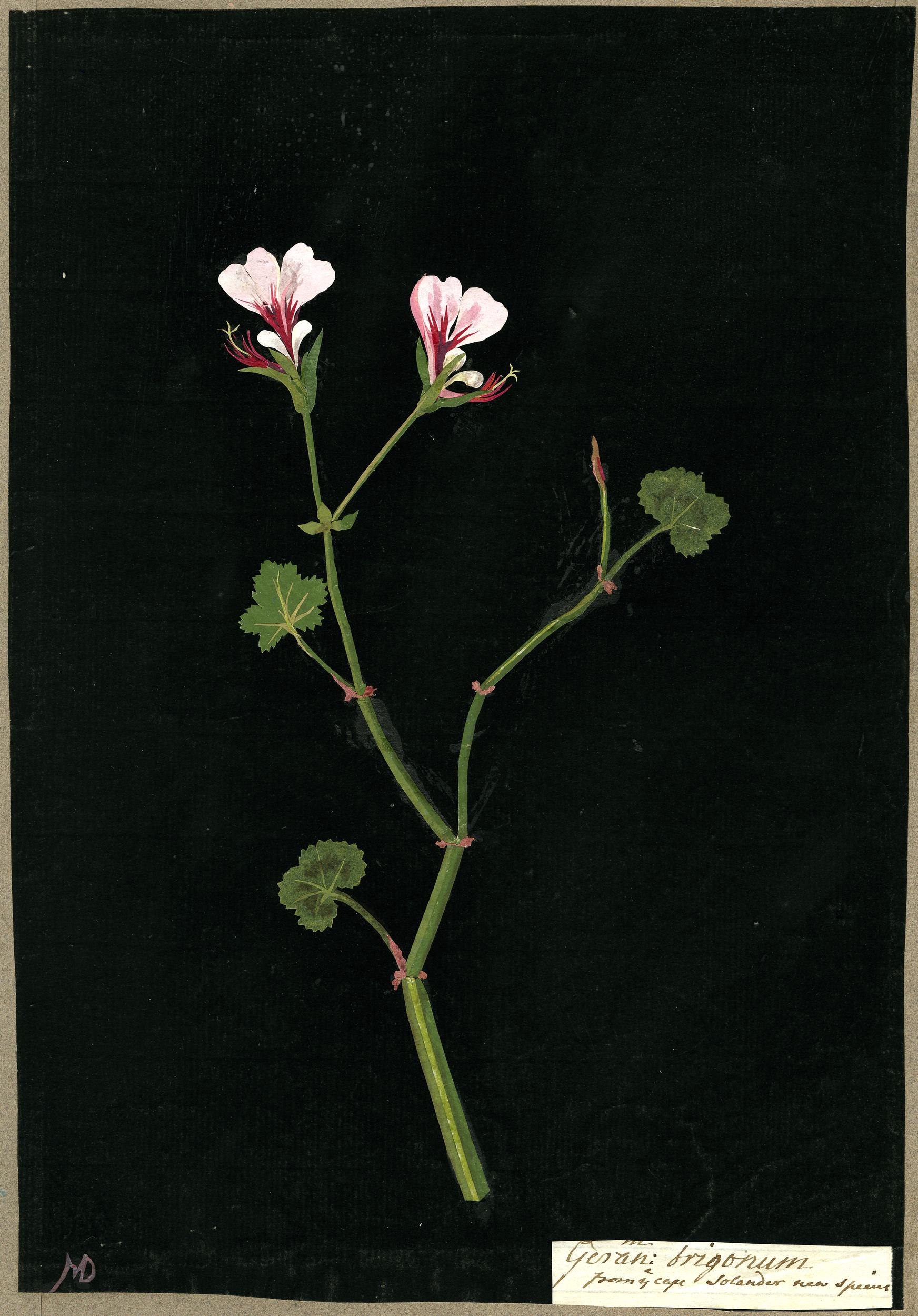
Geranium Trigonum, from an album (Vol.IV, 82). 1778
Two pairs of white petals streaked with deep pink at their centres seem to glow against their inky black background, demanding our attention despite their modest size. Carried on tall stems with few leaves, these flowers belong to Geranium trigonum, a scrambling subshrub from the South West Cape, in South Africa. The velvety texture of the leaves and stems of Geranium cucullatum, also from the South West Cape, is suggested by tiny fragments of coloured paper. This plant’s fine covering of hairs are an adaptation providing protection from the fierce rays of the sun. Contrasting tones in pink highlight the petals and buds of Geranium zonale, emphasising the three dimensional character of the individual flowers and the rounded composite flower head.
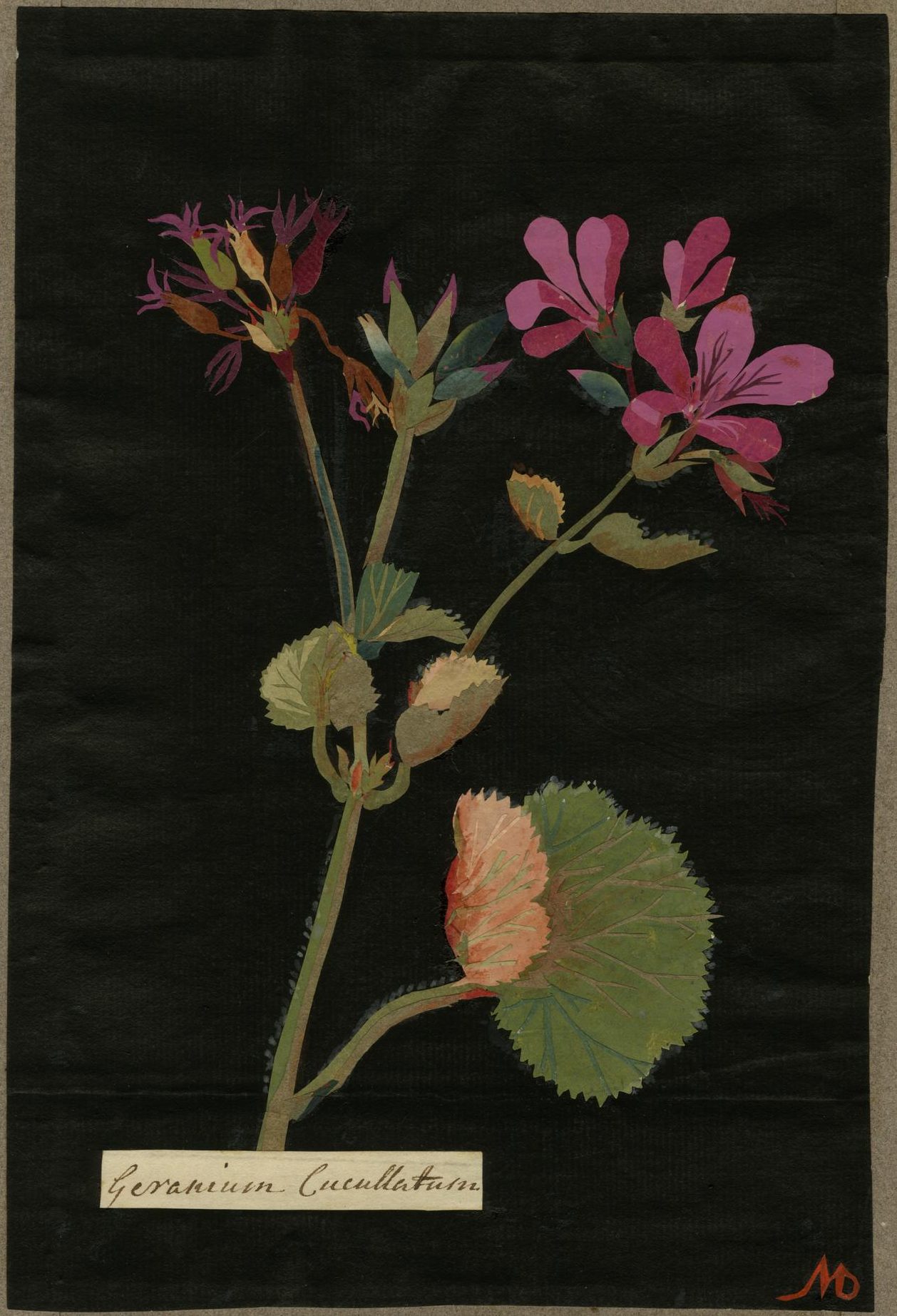
Geranium Cucullatum (Monodelphia Decandria), from an album (Vol.IV, 87). 1774
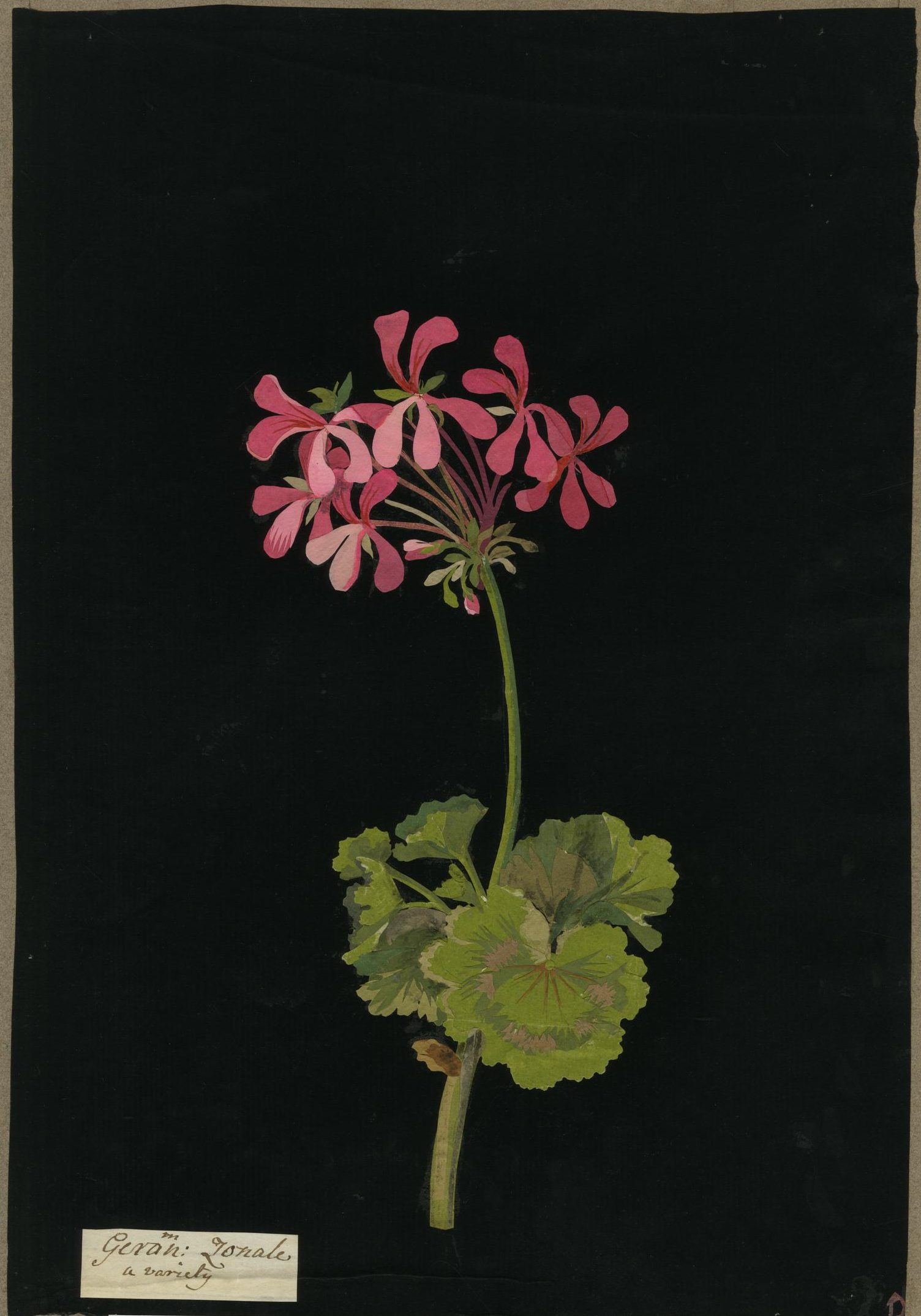
Geranium Zonale, from an album (Vol.IV, 84). 1778
These examples, from more than twenty detailed pelargonium studies made by Mary Delany (1700 – 1788), were produced in the 1770s towards the end of her life, and form part of a series of almost a thousand of her plant portraits now held at The British Museum. Delany’s collage images were constructed using cut out coloured paper, secured onto a painted background using wheat based adhesive. Delany, who was skilled in drawing, embroidery, shell work and cutting silhouettes, called these images her paper mosaicks.
Delany’s choice of plants depicted in her collages was wide ranging, from familiar garden plants like daffodils and roses, to wild flowers and weeds, including thistles and bindweed. She also recorded dozens of plants newly imported into England, such as Magnolia grandifora, passion flower, nerines, aloes, and of course, South African geraniums.
According to Molly Peacock, author of The Paper Garden (2011), a survey and appreciation of Delany’s life and artistic output, it was a fallen geranium petal and its similarity in tone to a piece of coloured paper that inspired Delany’s great late life project.
Geraniums (or pelargoniums) are plants familiar to everyone today, valued for their brightly coloured blooms, long flowering season and tolerance of dry conditions. But in the eighteenth century, these plants were rarities, transported from South Africa by nurseries mainly concentrated in London, specialising in exotic stock for sale to a fashionable clientele. These species geraniums collected from the wild were the ancestors of our modern pelargonium plants. One of Delany’s labels, Gernanium zonale a variety, would seem to suggest that the process of breeding hybrids of these plants was already underway in the 1770s.
In the botanical world of the late eighteenth century there was no clear distinction made between the hardy, herbaceous geraniums native to Europe and the tender plants newly introduced from South Africa which needed protection from frost. Carl Linnaeus included all the species in one genus, Geranium, and these were not separated until 1789, by the French botanist Charles Louis L’Héritier de Brutelle. Today, both plant families are still commonly (and rather confusingly) referred to as geraniums.
A geranium flower with bright red petals arranged with a stem of Lobelia cardinalis is identified as one of Delany’s earliest collages, labelled as her ‘first essay’ (1773). This decorative piece establishes the core of her design style, with precisely cut elements assembled to suggest flowering stems, their colours vibrant against a dark background.
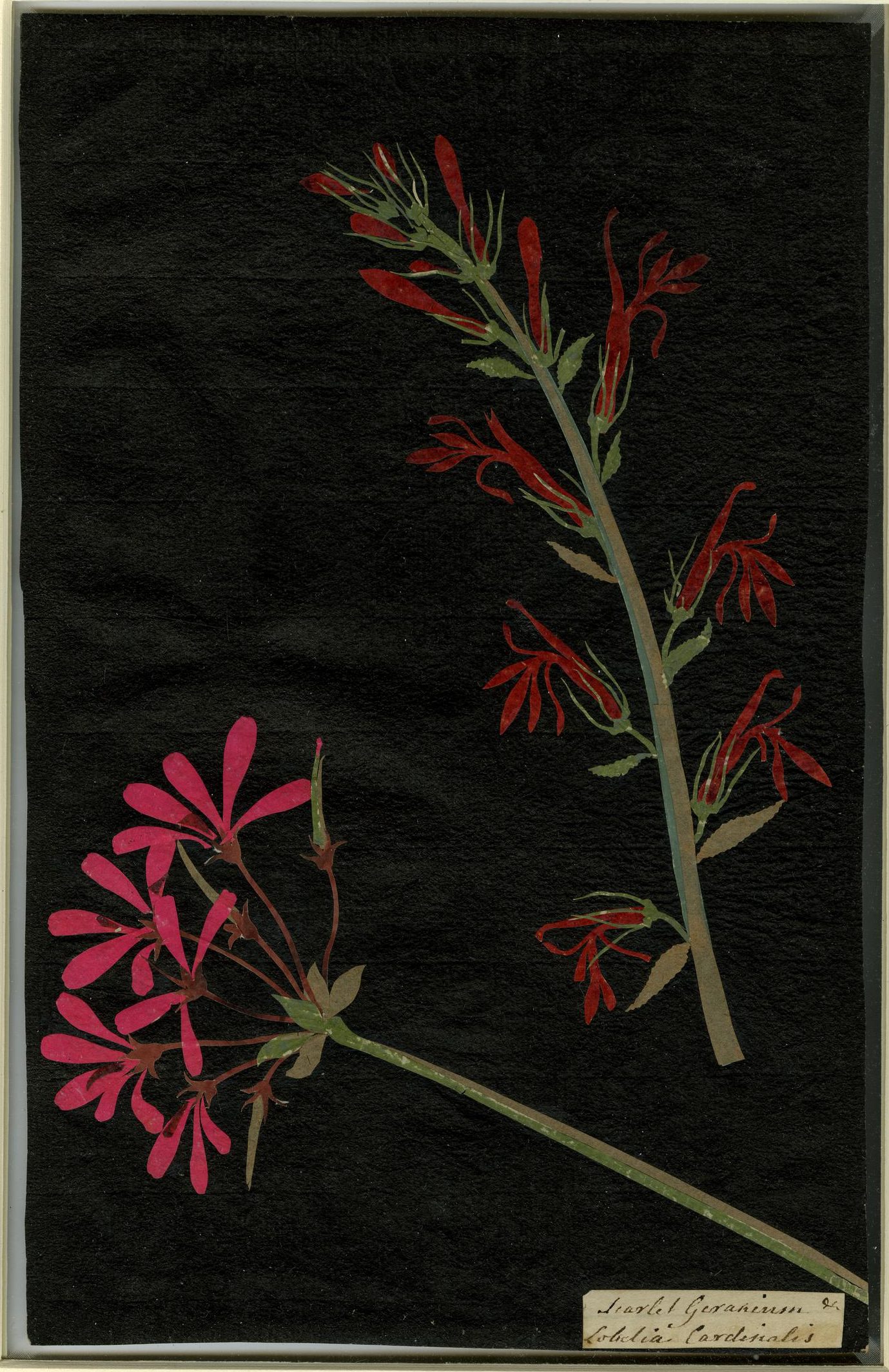
Scarlet Geranium and Lobelia Cardinalis, formerly in an album (Vol.V, 29). 1773
From this piece, Delany’s collages developed rapidly in their sophistication and ambition. She started to produce botanical style portraits of single specimens, with accurate details of anthers, stigma and calyx for each flower, as well as foliage, buds and seed heads arranged to convey the character of each plant. Delany frequently records damage and signs of ageing on these plants, emphasising their physicality. She always supplied a label for each collage with the plant’s Latin name, using the Linnean classification system, as well as the common name.
This botanical angle in Delany’s work was likely a result of meeting renowned botanists Joseph Banks and Daniel Solander as guests of her friend Margaret Bentinck, Dowager Duchess of Portland, with whom she shared an enthusiasm for plants. Delany was a frequent guest at Bentinck’s home at Bulstrode, Buckinghamshire, after she was widowed for a second time in 1768.
Born in Wiltshire to Colonel Bernard Granville and Mary Westcombe, Mary Delany’s family had hopes of her becoming a lady in waiting at the court of Queen Anne, but these plans were upended following the queen’s death in 1714 and installation of the Hanoverians. Instead, Mary was married aged seventeen to Alexander Pendarves, Member of Parliament for Launceton, who was more than forty years her senior.
After Pendarves’s death in 1725, Mary lived with friends and relatives, spending some of her time in Ireland where she met Irish clergyman Dr Patrick Delany. Many years later, in 1743, they were married, two years after the death of Dr Delany’s first wife. A much happier marriage than her first, the Delanys shared an interest in gardening, and derived great pleasure from their garden at Delville, near Dublin in Ireland.
It has been suggested that Delany’s botanical collage project was in some part a response to her bereavement after the death of her second husband; a commemoration of their love of flowers. But her collages are more than just a shrine to the past. They seem to speak of a renewed life following the loss of her husband; an openness to learning and fresh ideas, a resurgence of creativity, and a sense of confidence in her work, with a desire for recognition.
Always sociable and a great networker, in her seventies and eighties Delany continued to make new contacts, and it is said that King George III and Queen Charlotte would send unusual plants from their own garden for Delany to use as source material for her collages.
Today, examples from the ten volumes of Mary Delany’s Flora Delanica are regularly on display in the British Museum’s Enlightenment Gallery. When I last visited, two of Delany’s collages were placed next to a small collection of Chelsea porcelain, adorned with images of flowers. The entire collection of collages is available as part of The British Museum’s online collection – see links below.
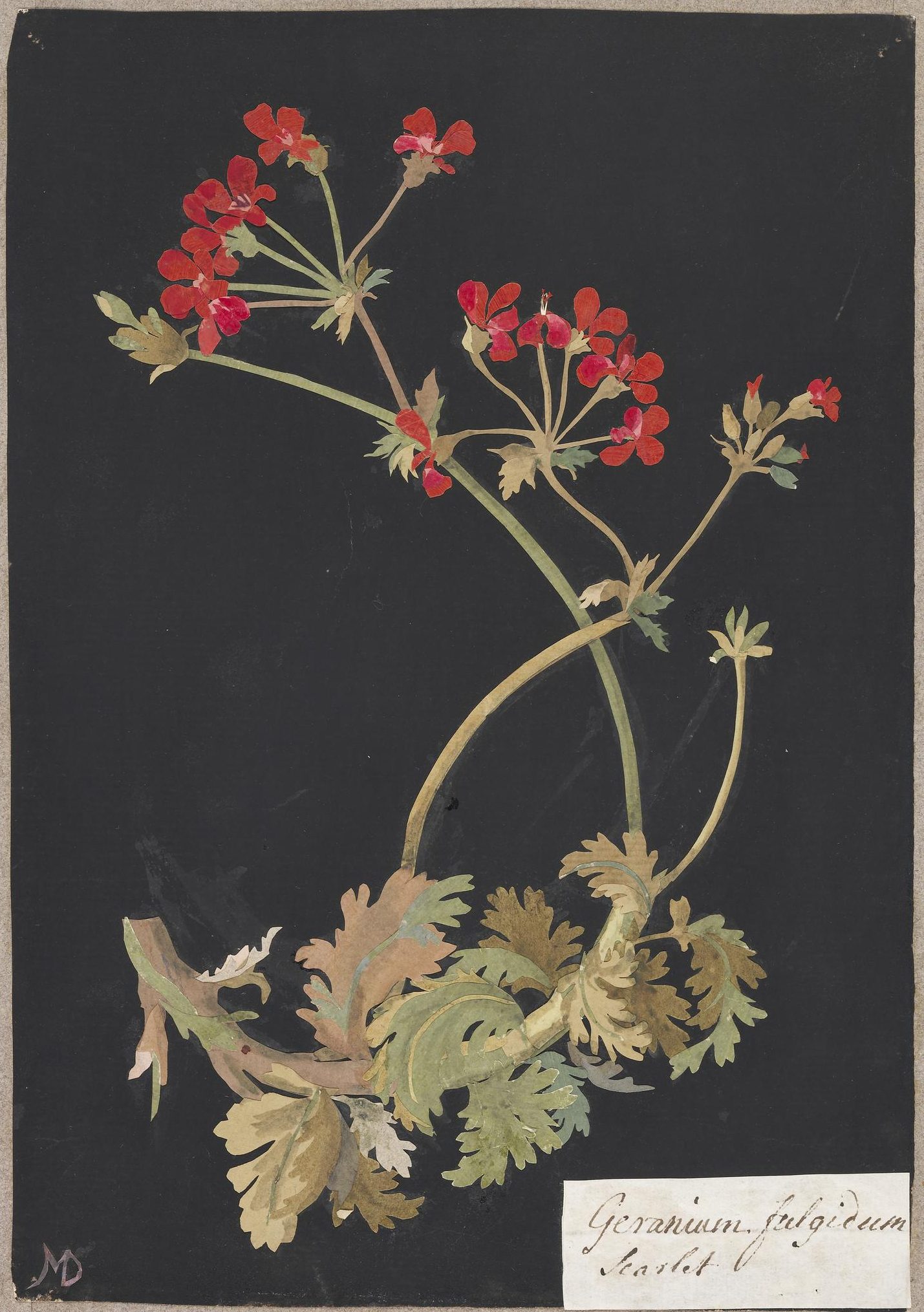
Geranium Fulgidum (Monodelphia Decandria), from an album (Vol.IV, 91); Scarlet geranium. 1775
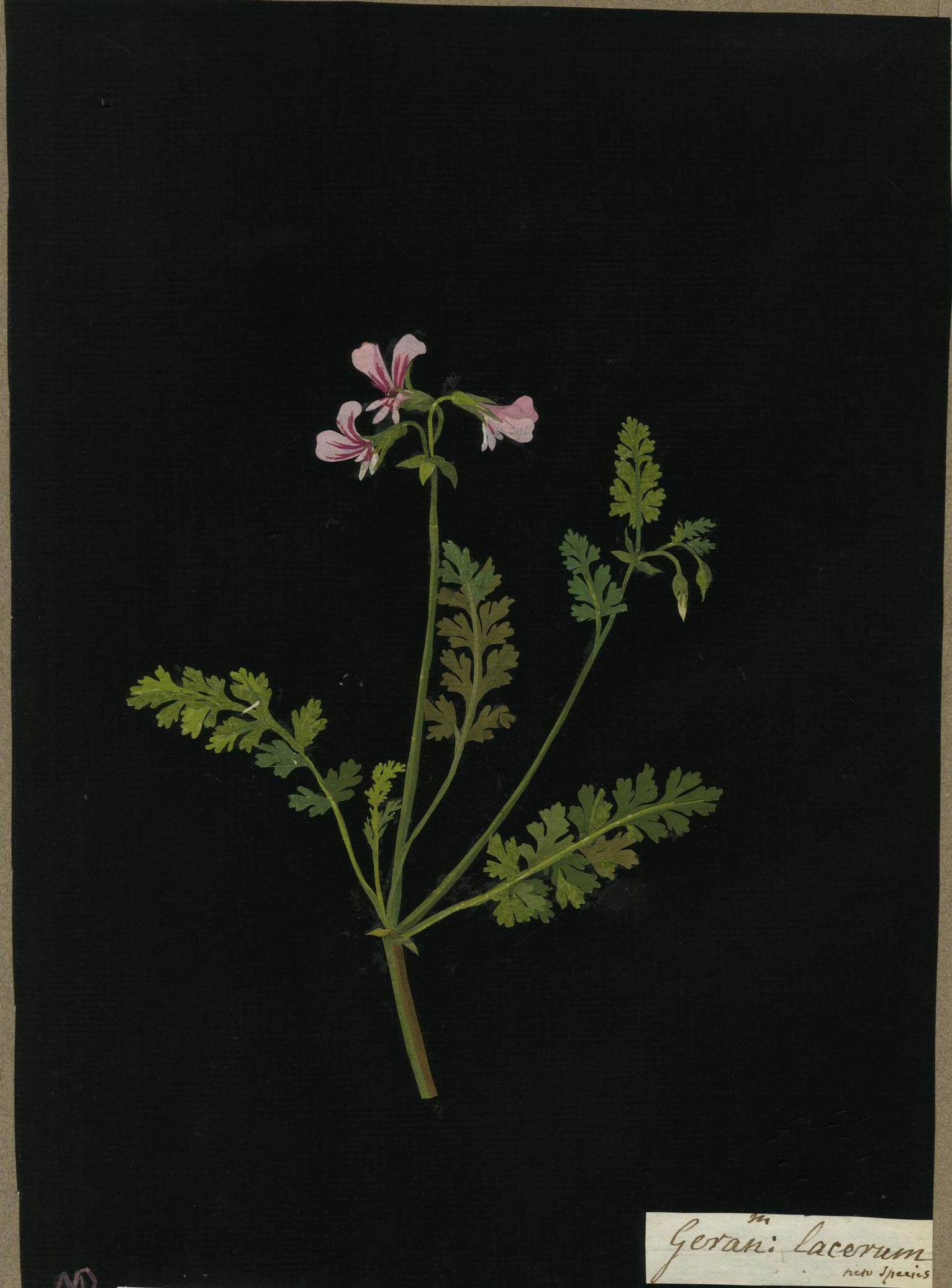
Geranium Lacerum (Monodelphia Decandria) new sepcies Solandri, from an album (Vol.IV, 74). 1778
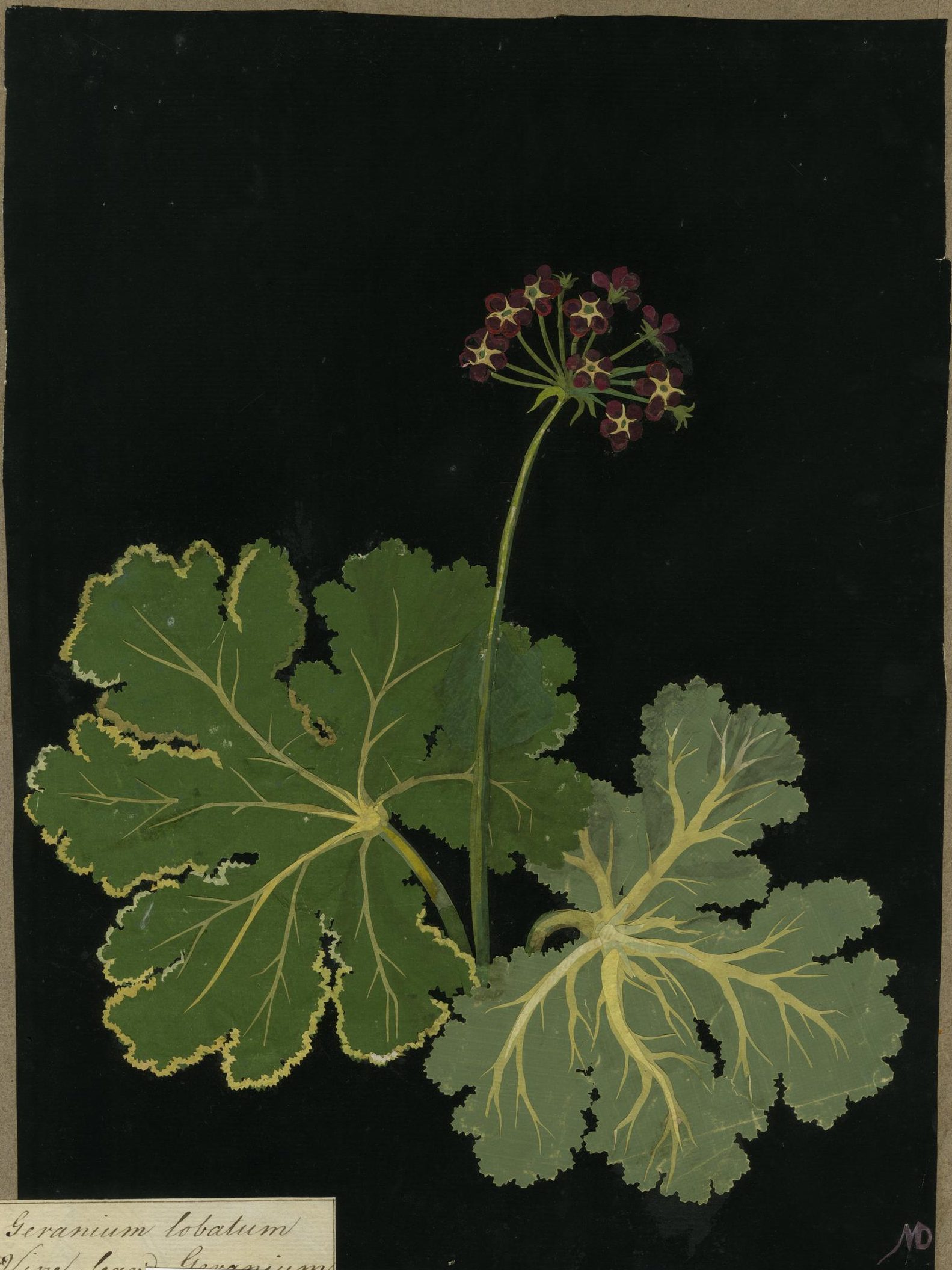
Geranium Labatum, from an album (Vol.IV, 76); Vine-leaved geranium. 1780
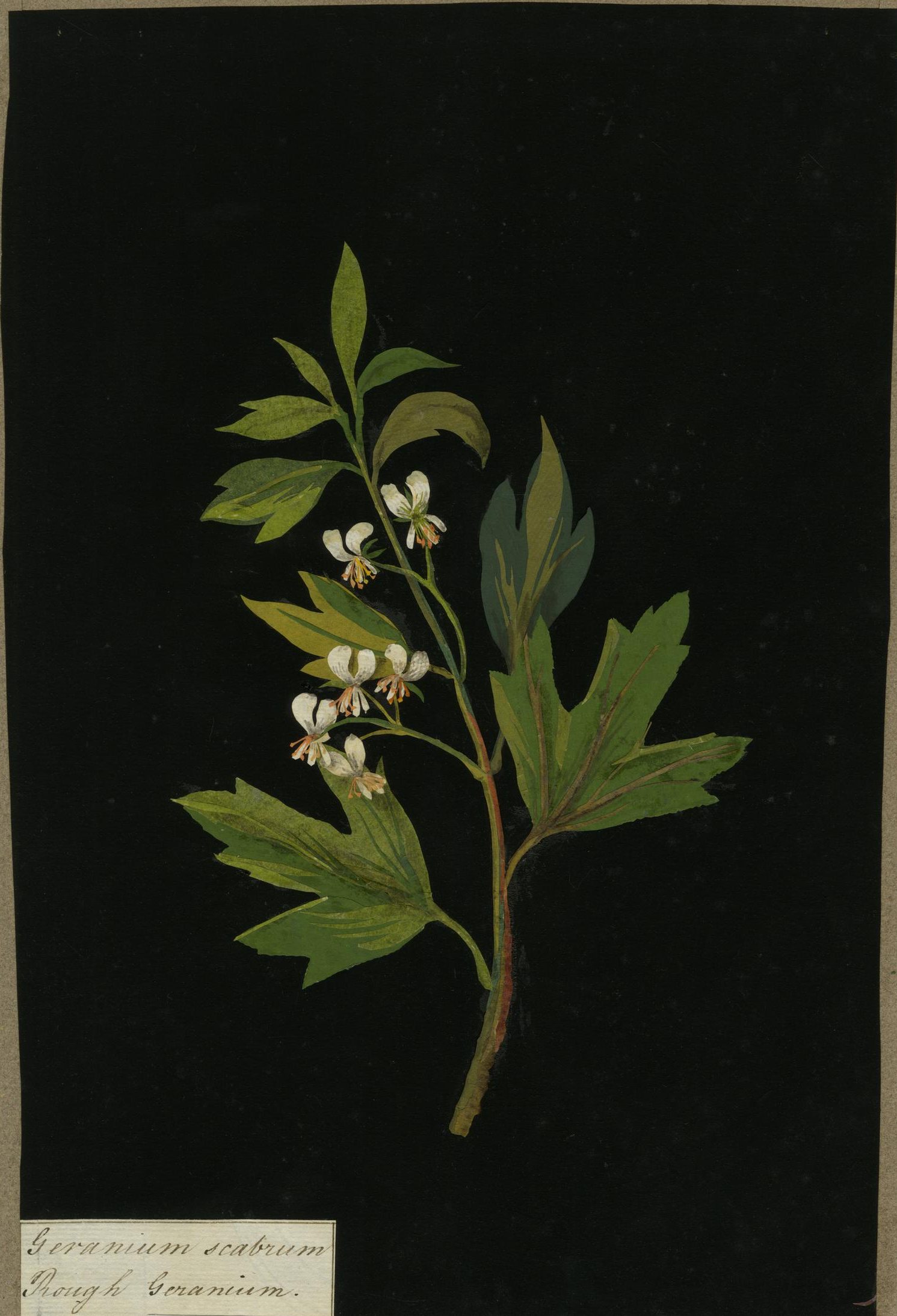
Geranium Scabrum, from an album (Vol.IV, 78); Rough geranium. 1779
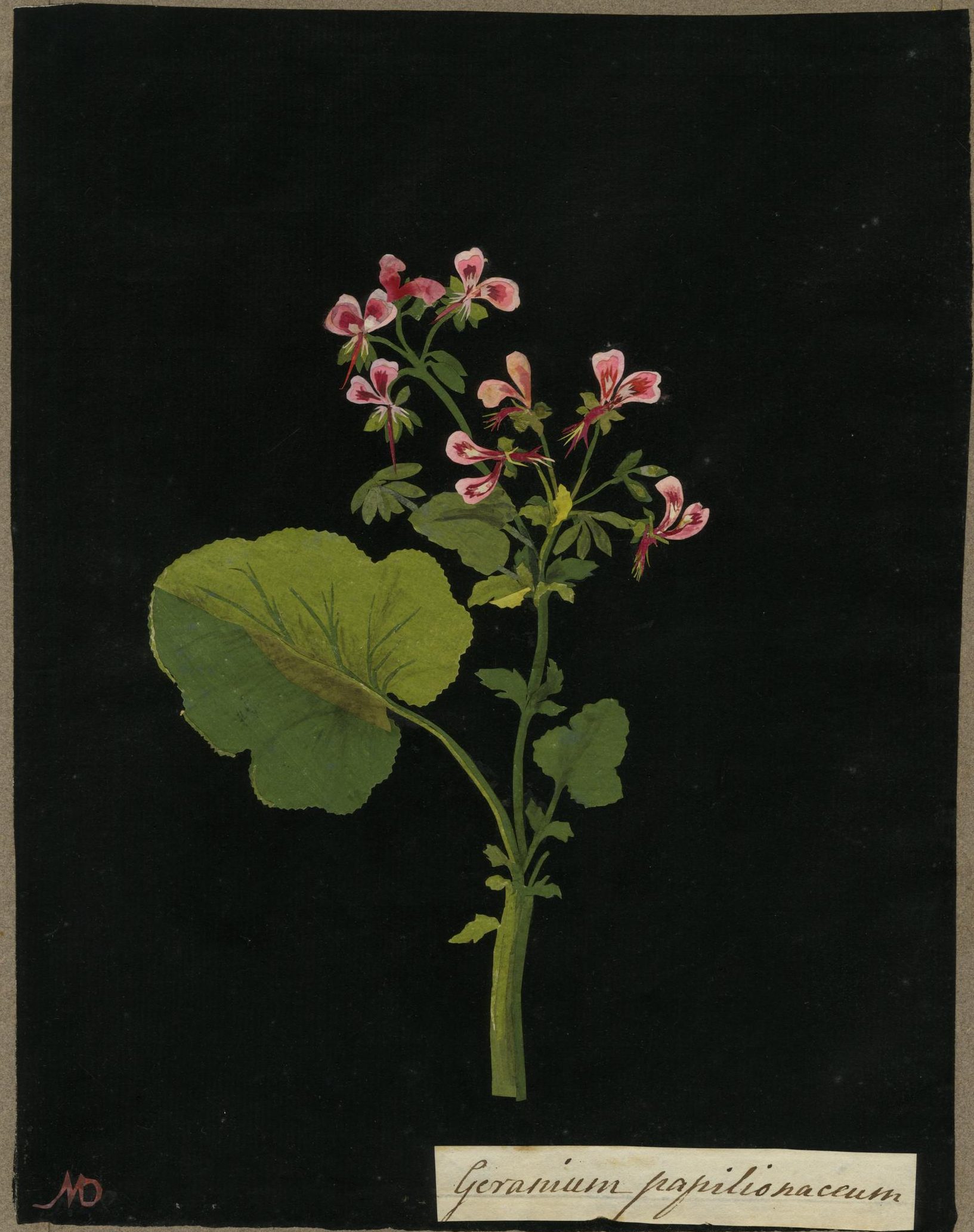
Geranium Papilionaceum (Monodelphia Decandria), from an album (Vol.IV, 70). 1778
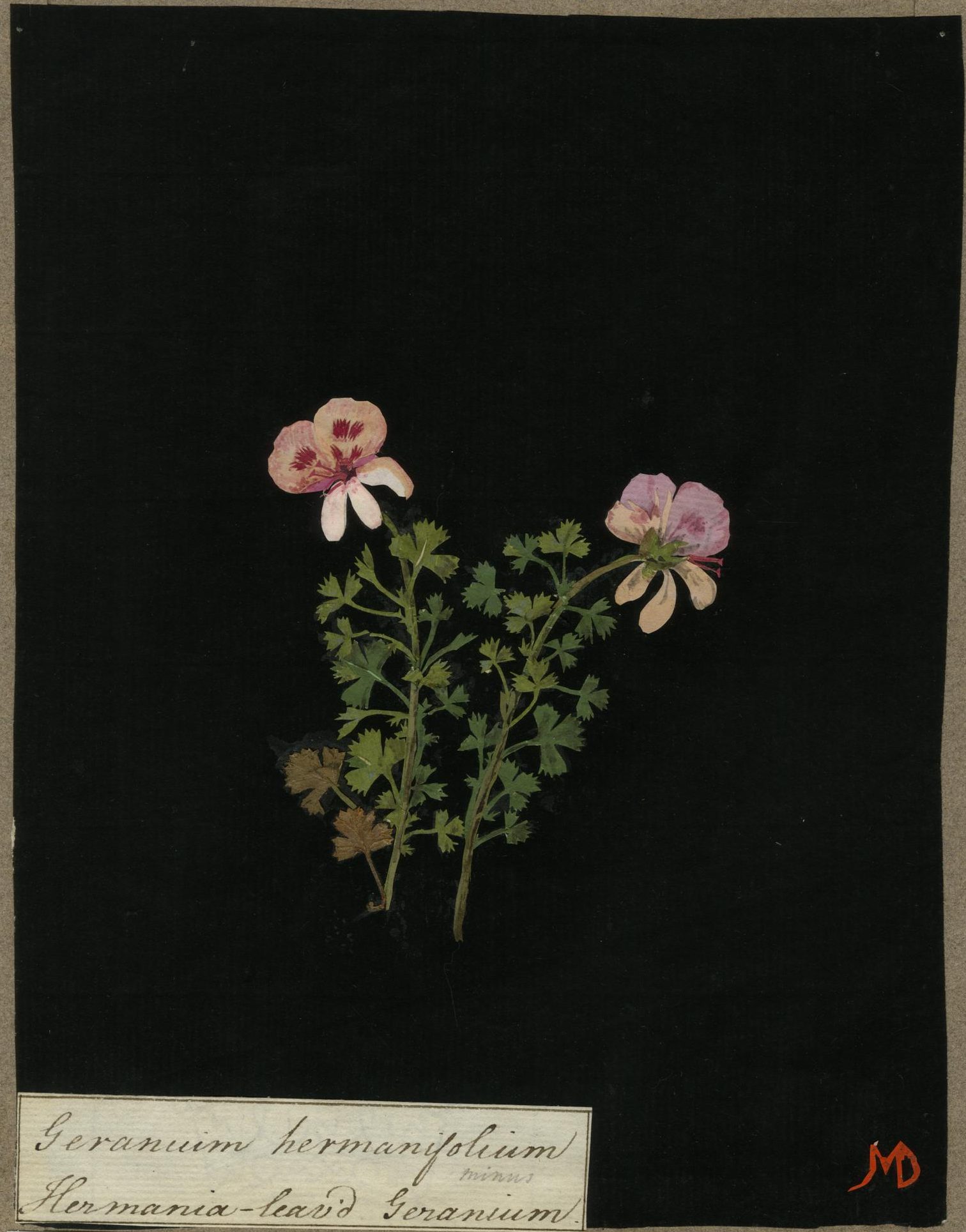
Geranium Hermanifolium (Monodelphia Decandria), from an album (Vol.IV, 69); Hermania-leaved geranium. 1777
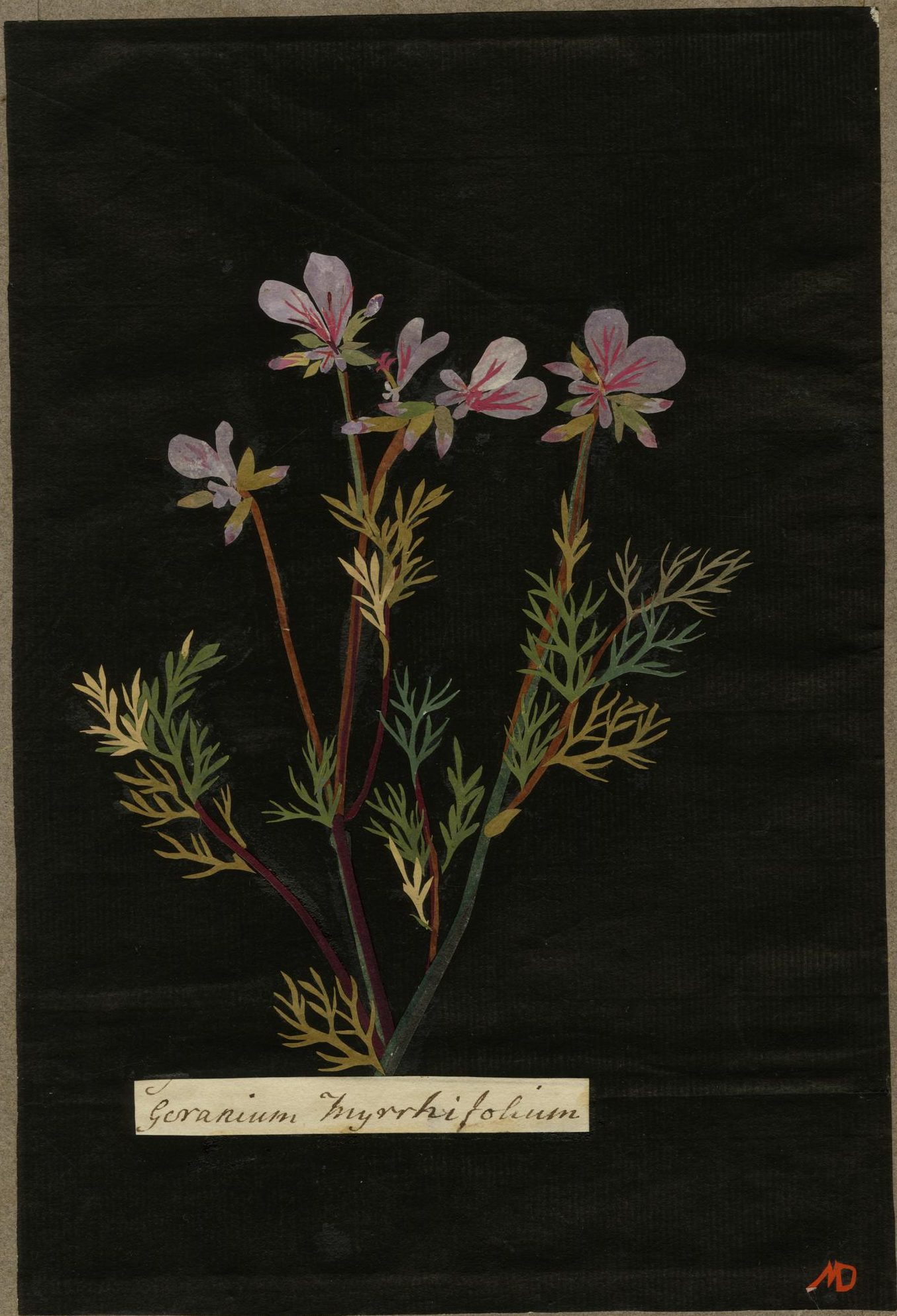
Geranium Myrrhifolium (Monodelphia Deccand.), from an album (Vol.IV, 67); Knotty geranium. 1774
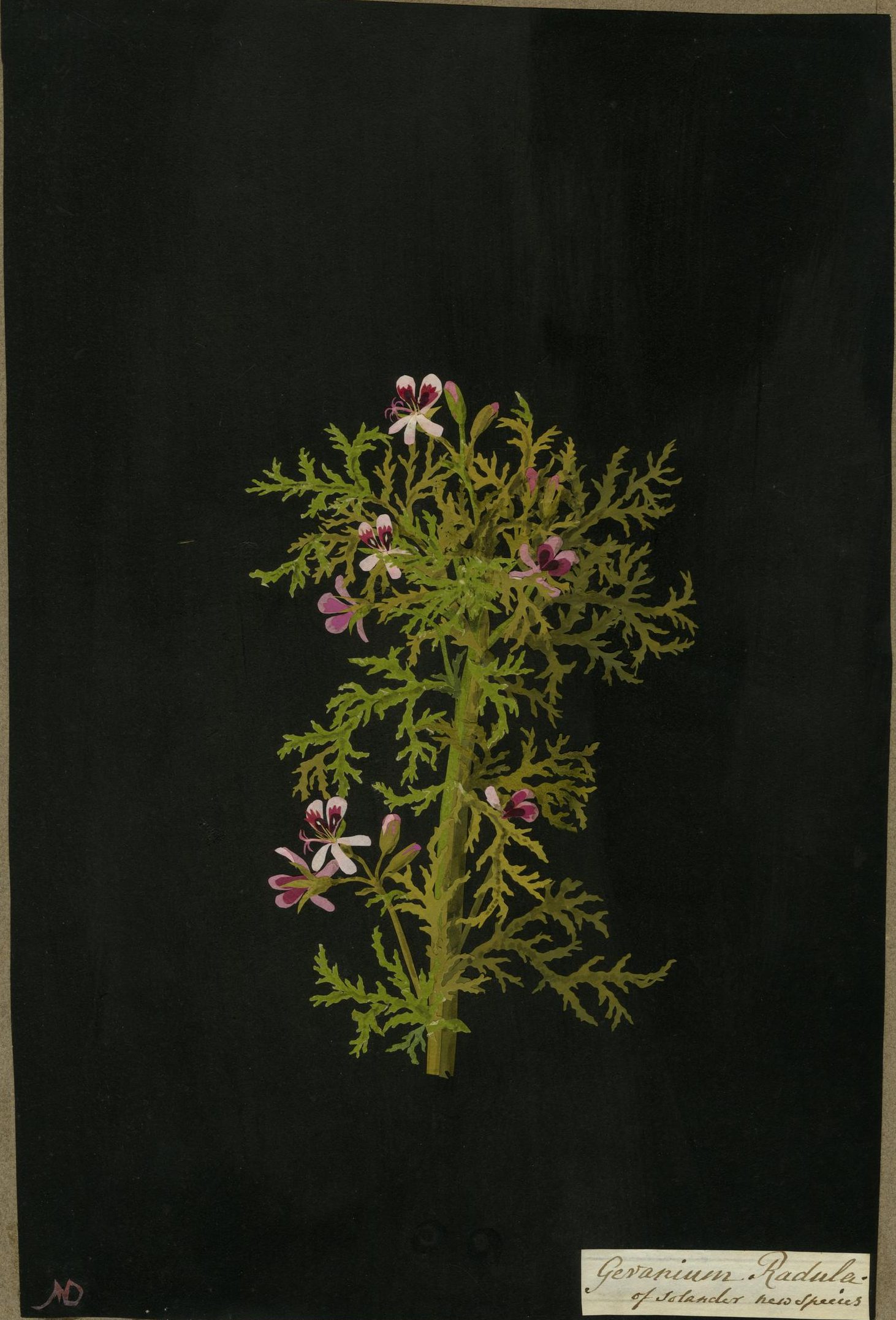
Geranium Radula (Monodelphia Decandria) of Solander new species, from an album (Vol.IV, 73). 1778
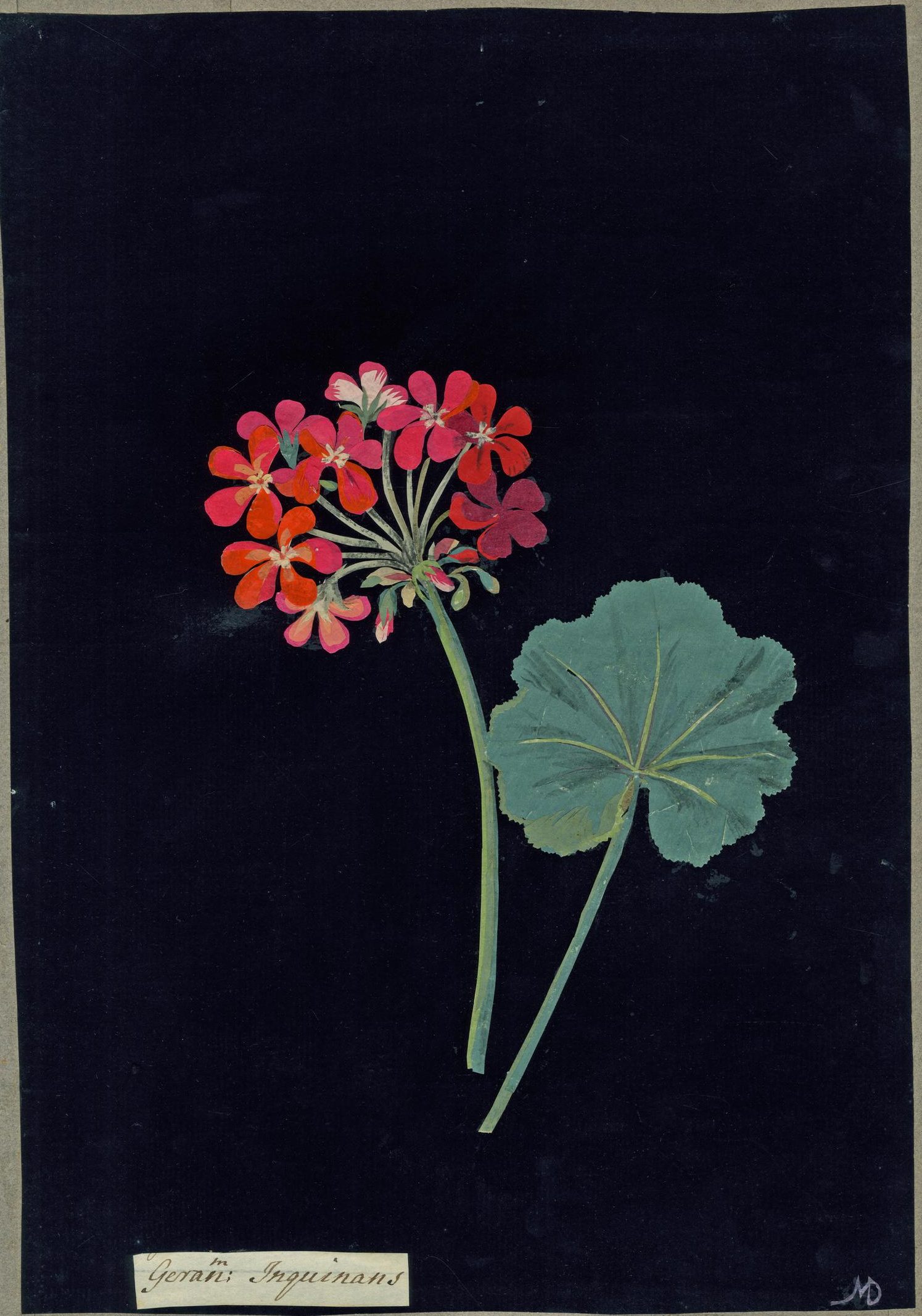
Geranium Inquinans, from an album (Vol.IV, 72). 1778
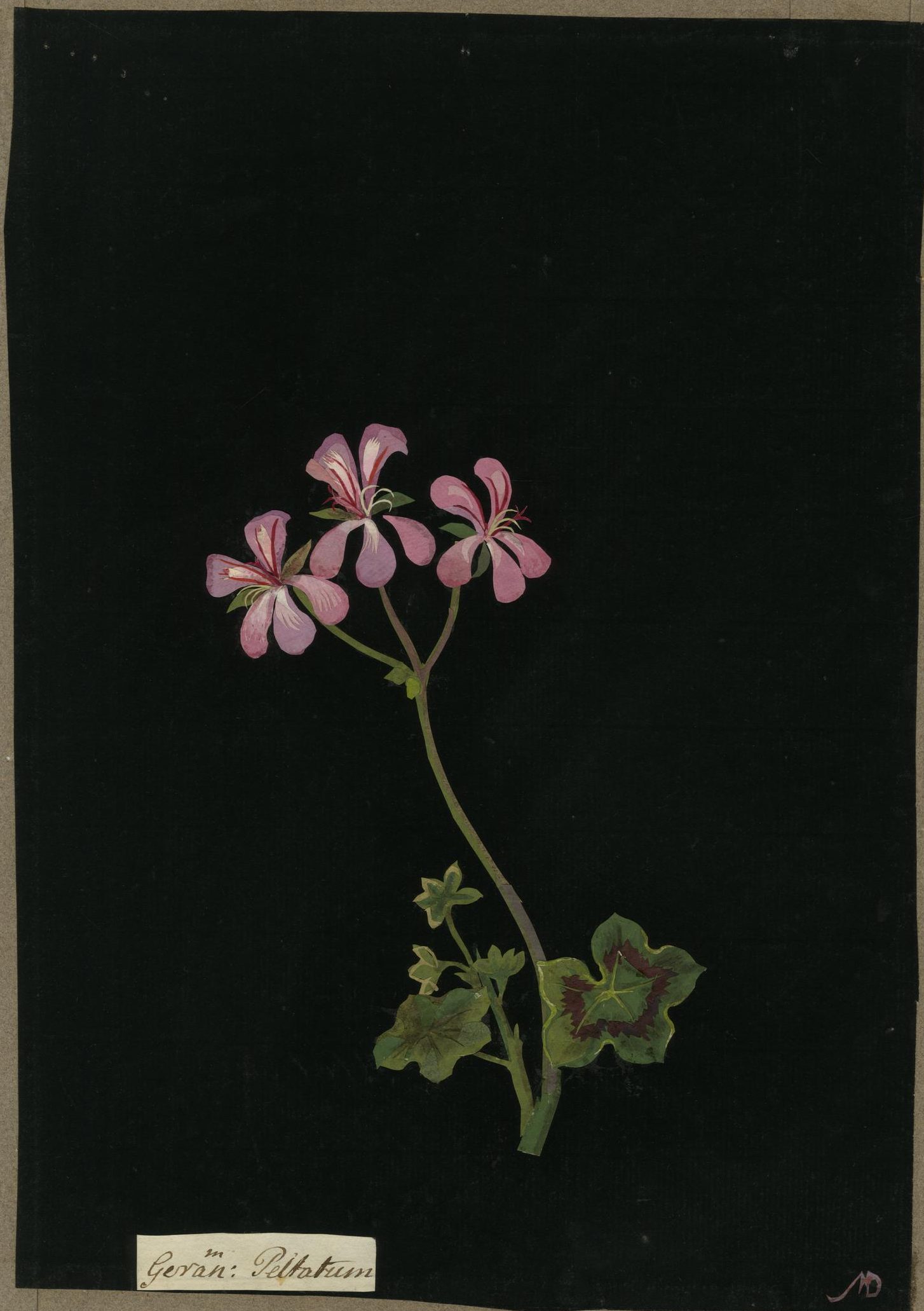
Geranium Peltatum, from an album (Vol.IV, 71). 1778
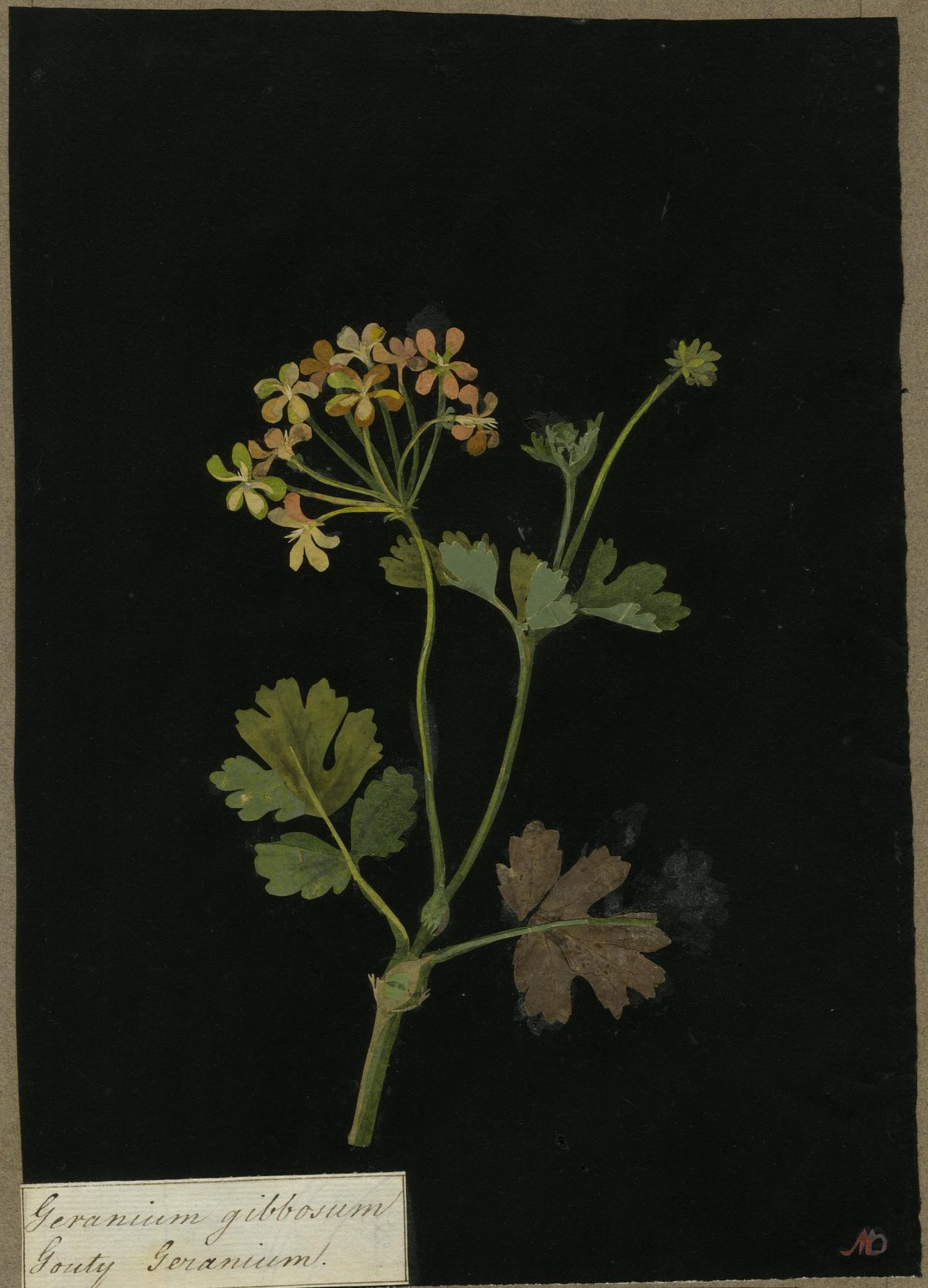
Geranium Gibbosum, from an album (Vol.IV, 93); Gouty geranium. 1779
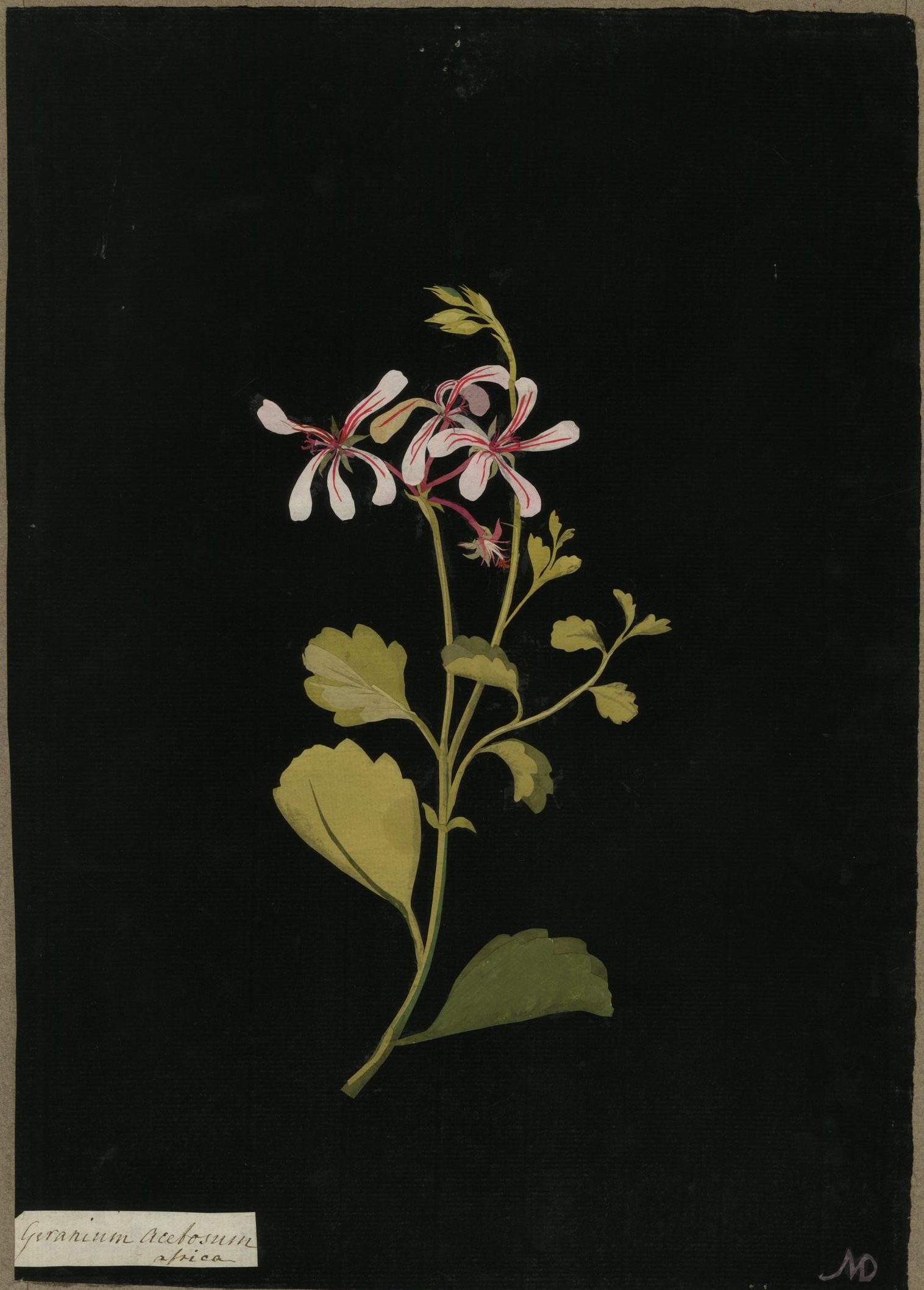
Geranium Acetosum (Monodelphia Decandria), from an album (Vol.IV, 90); Sorrel leaved geranium. 1777
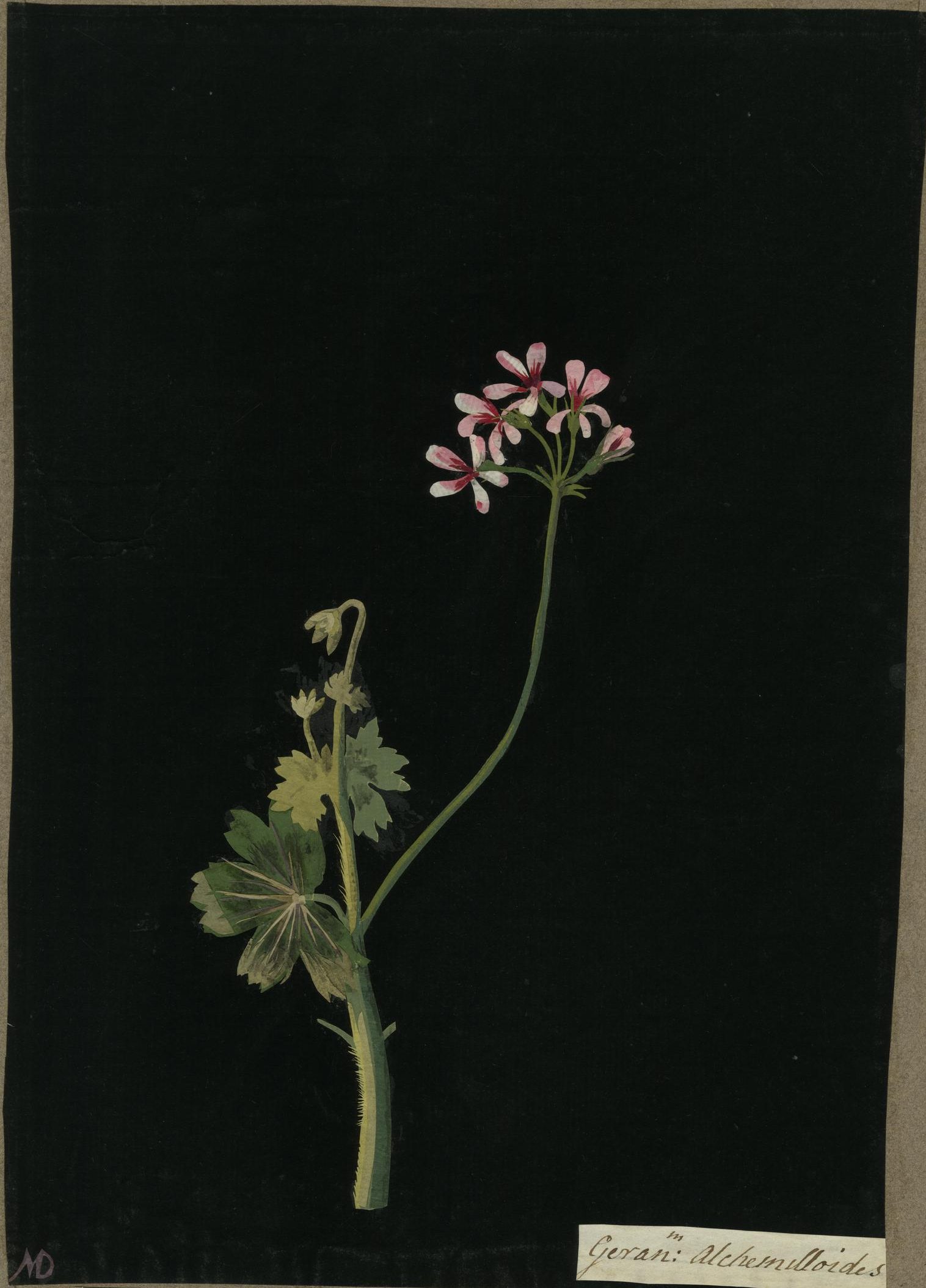
Geranium Alchemilloides, from an album (Vol.IV, 89). 1778
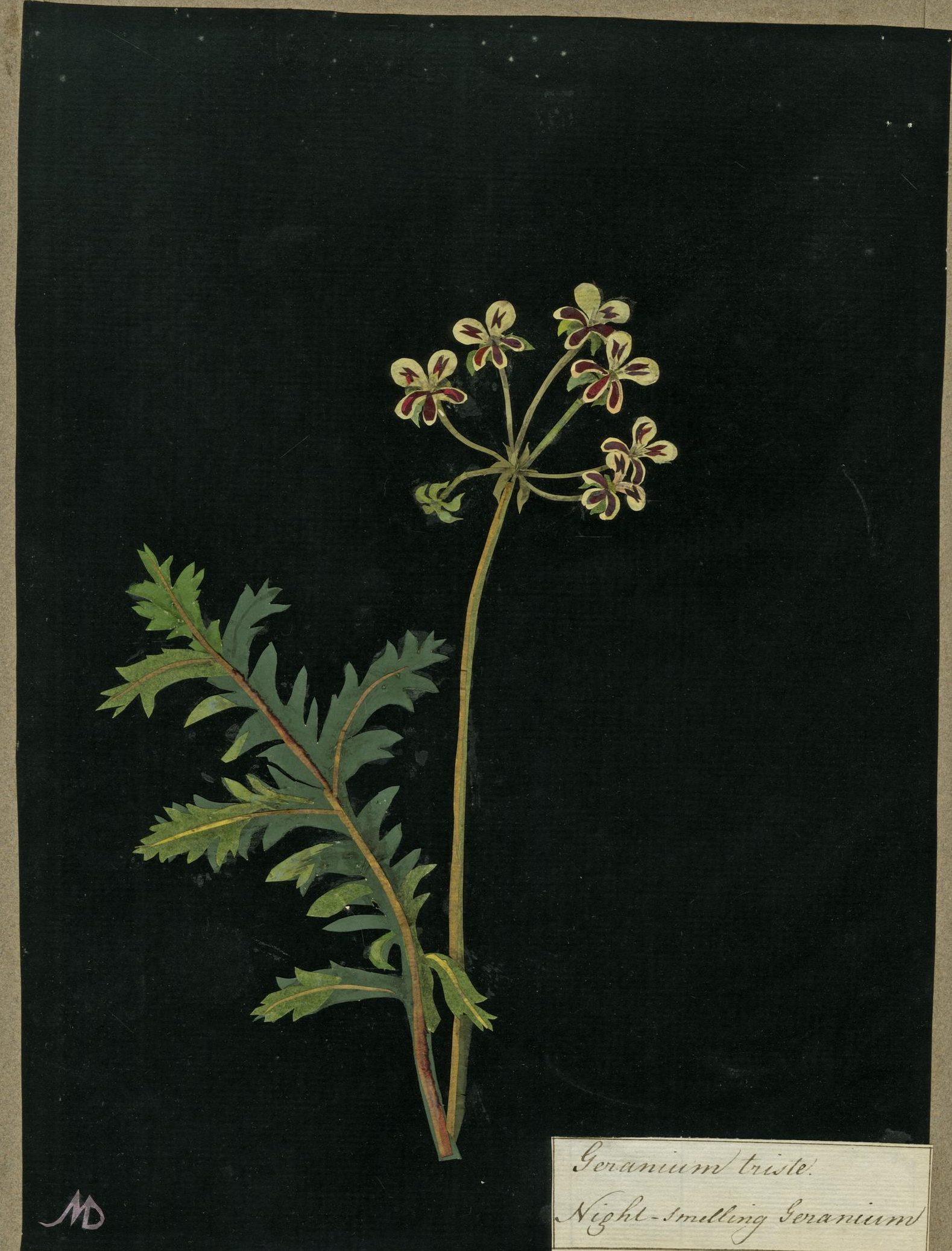
Geranium Triste, from an album (Vol.IV, 83); Night-smelling geranium. 1779
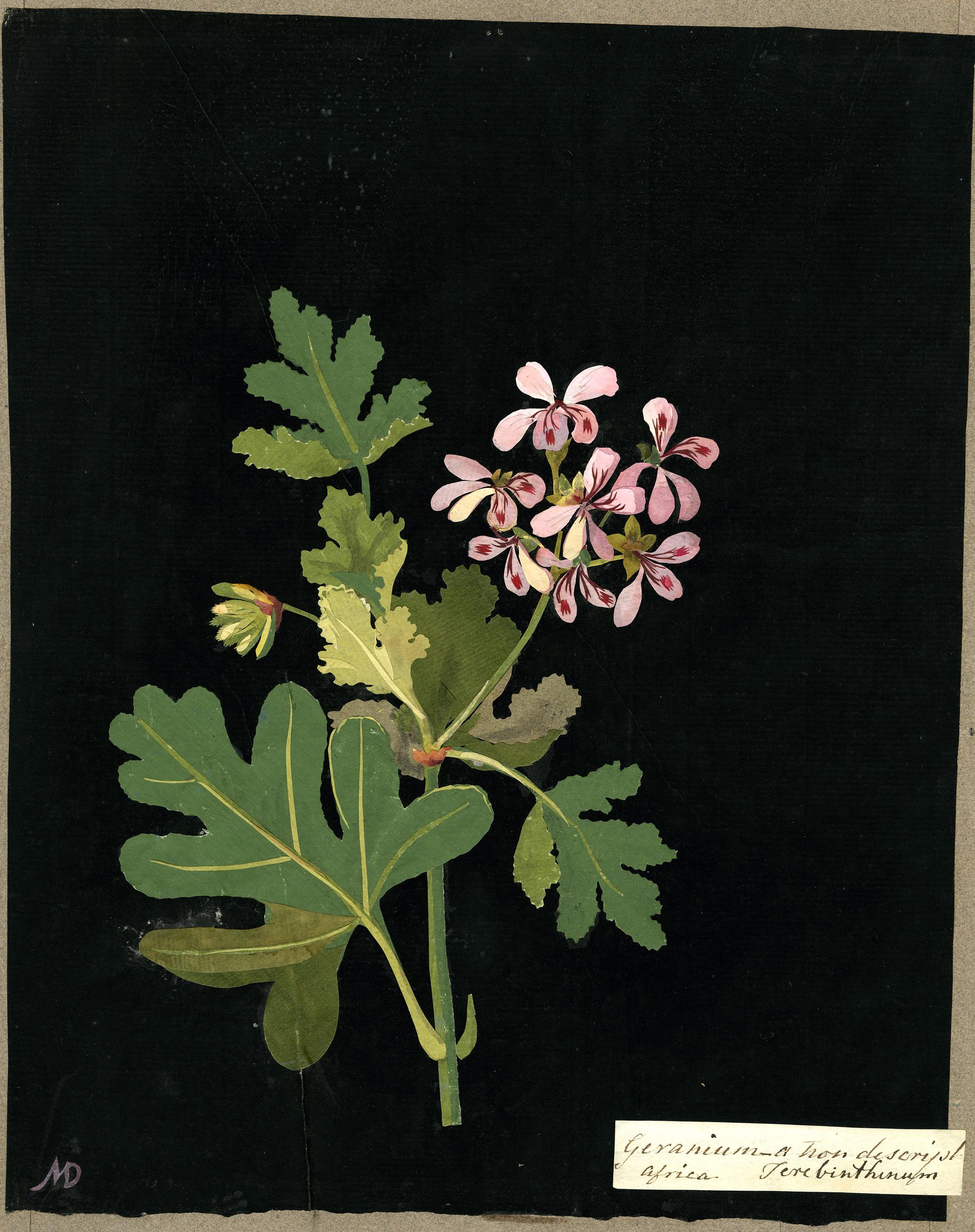
Geranium African terebinthinum (Monodelphia Decandria), from an album (Vol.IV, 81). 1776
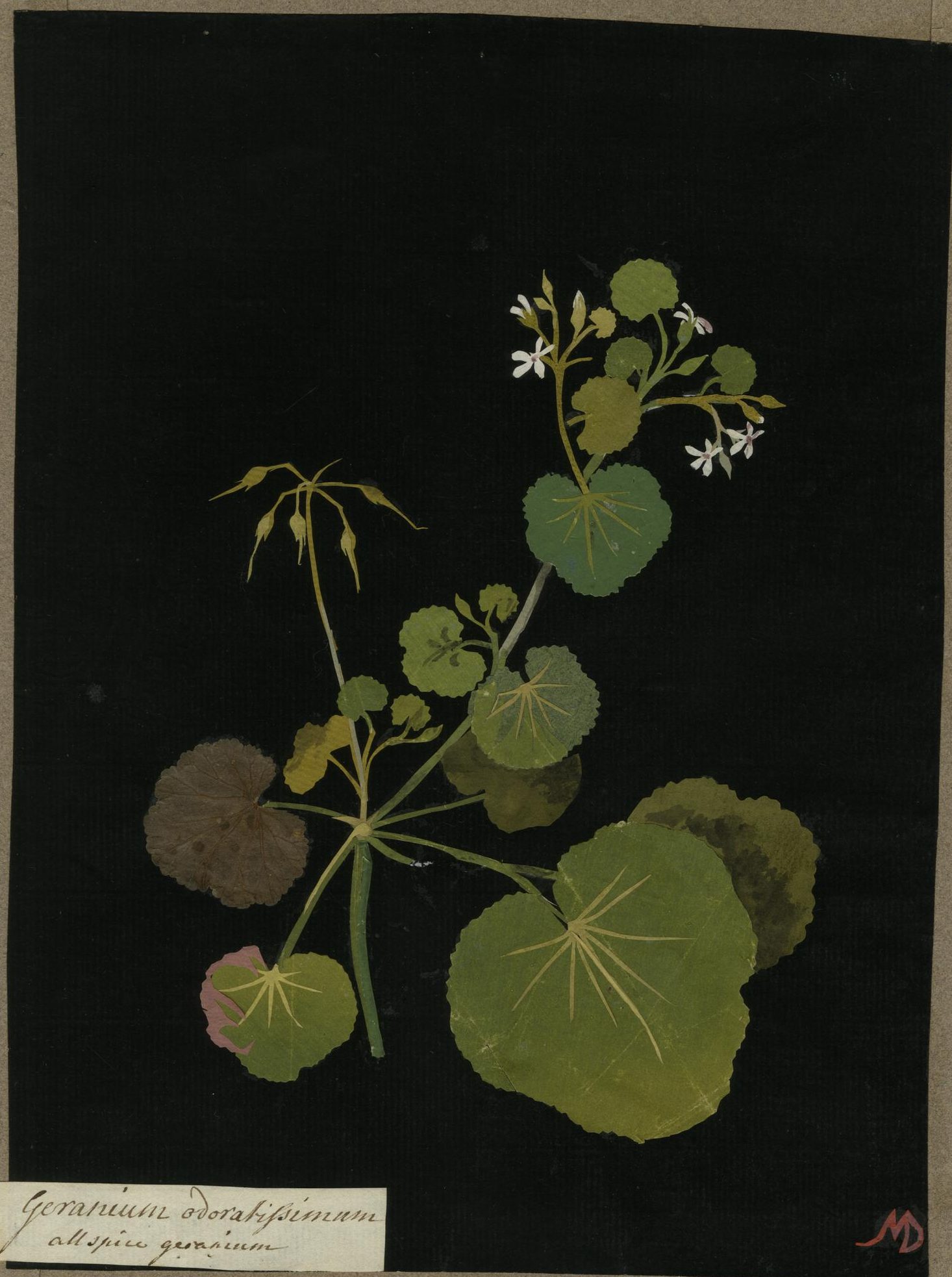
Geranium Odoratissimum (Monodelphia Decandria), from an album (Vol.IV, 68); Allspice Geranium. 1777
Collage of coloured papers, with bodycolour and watercolour, and with leaf sample, on black ink background
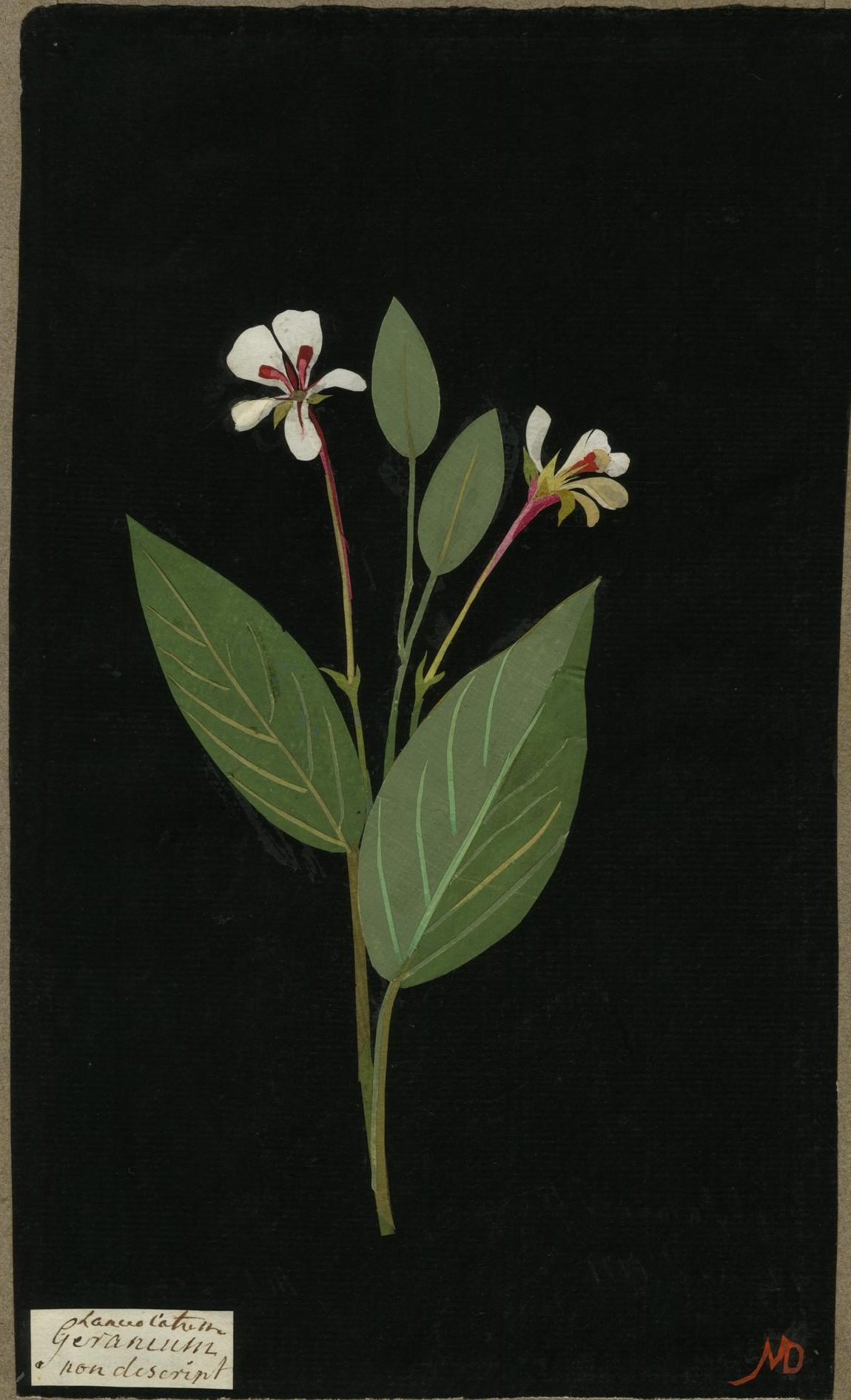
Geranium Lanceolatum (Monodelphia Decandria), from an album (Vol.IV, 75). 1777

Geranium Capitatum (Monodelphia Decandria), from an album (Vol.IV, 88). 1776
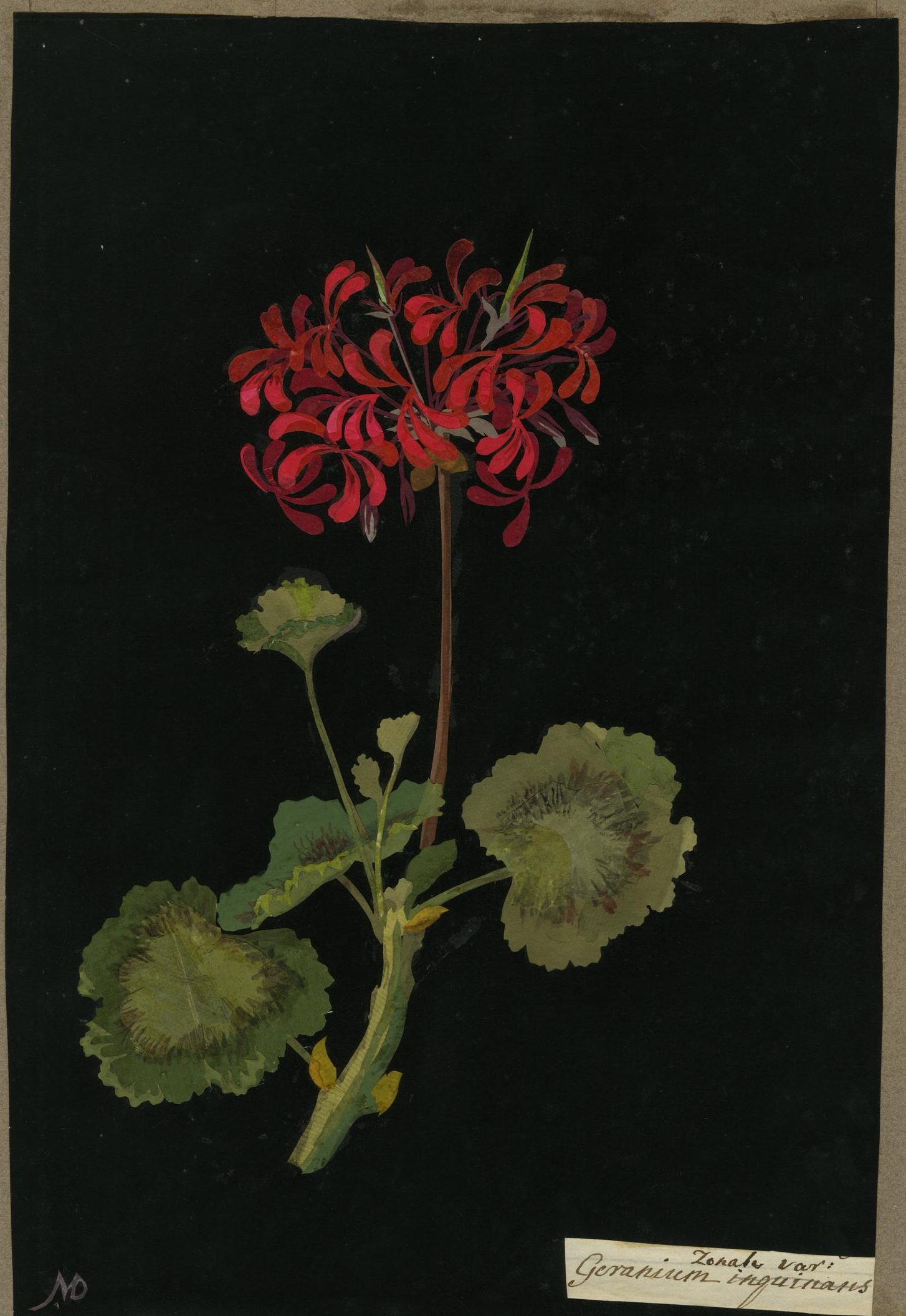
Geranium Zonale (Monodelphia Decandria), from an album (Vol.IV, 85). 1778
Collage of coloured papers, with bodycolour and watercolour, on black ink background.
All images © The Trustees of the British Museum
Further reading:
Mary Delany Wikipedia here
Mary Delany, British Museum Online Collection here
Kew Plants of the World Online here
Pelargonium Wikipedia here
 Planting Diaries